 emulsive rss (unofficial)
How I transformed cyanotype prints into a video for Vivienne Westwood
#articles #darkroom #featured #featuredprojects #cyanotype #eddcarr #londonfashionweek #northernsustainabledarkroom #viviennewestwood
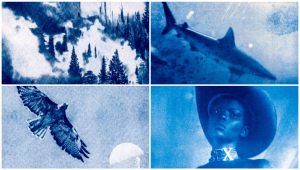
How I transformed cyanotype prints into a video for Vivienne Westwood
#articles #darkroom #featured #featuredprojects #cyanotype #eddcarr #londonfashionweek #northernsustainabledarkroom #viviennewestwood
How I transformed cyanotype prints into a video for Vivienne Westwood
#articles #darkroom #featured #featuredprojects #cyanotype #eddcarr #londonfashionweek #northernsustainabledarkroom #viviennewestwood

Creating a Cyanotype Video for London Fashion Week
London Fashion Week takes place twice a year and is an event in which the biggest designers exhibit their upcoming collections to the world. Following my cyanotype-printed music video being exhibited on Piccadilly Circus as part of Dazed Circa 2021, I was contacted by DUST Magazine about covering one of the shows for London Fashion Week.
As my own practice focuses on the ecological crisis, sustainable photography, and climate change, I requested that I cover a designer with a robust sustainability policy. My contact at DUST immediately suggested Vivienne Westwood, as they have recently committed to a number of sustainability and climate commitments.
Due to coronavirus, their fashion week presentation was screened online, meaning I was provided with the video and a press pack of stills featuring their Spring-Summer ‘22 collection. The theme of the collection is ‘S.O.S’, incorporating nautical themes with a commitment to sustainably produced clothing as a challenge to the climate crisis.
The video was imagined from the original Vivienne Westwood concept of SOS, extending this idea to marine life and the challenges they face during the ecological crisis. Further to that, the footage is edited to create a symbiosis between the models, their clothing, and the marine life, in view of an ethic where humans and nonhumans are on equal footing.
Expanding on the brand’s commitment to sustainability, I hand-printed each frame using the cyanotype method, a famously low-toxic and sustainable photo technique. In total, I printed 440 frames of cyanotype for the video, which has a framerate of 12fps.
To do so, I first did a digital edit of the footage, blending stock footage and the Vivienne Westwood show footage. I then split the footage into individual frames and printed them as digital negatives. Following this, I printed the footage in the Northern Sustainable Darkroom, my non-profit darkroom facility.
<https://petapixel.com/assets/uploads/2021/09/BTS.mp4>
When printing, I used two different paper types: cartridge paper and tracing paper. The tracing paper creates an otherworldly effect, as the cyanotype doesn’t properly absorb. This sequence starts at the octopus scene, to give a sense of the alien that some marine life holds.
<https://petapixel.com/assets/uploads/2021/09/BTS2.mp4>
Following printing, I scanned the prints and dropped them into Final Cut to create the animation. Jack Kennedy then did the sound design, using a variety of electronic techniques to compliment the themes of the piece. It is now part of DUST Magazine ’s ‘On the Row’ editorial, showcasing the best of London Fashion Week.
The video also exists as a living object in the world -- as a pile of cyanotypes on my desk!
About the author : Edd Carr is an independent filmmaker and artist based in the UK specializing in analog/alternative production methods. The opinions expressed in this article are solely those of the author. Carr is the co-founder of SCREW Gallery and the project lead of Northern Sustainable Darkroom in Leeds. You can find more of Carr's work on his Vimeo, and Instagram.
#features #ideas #walkthroughs #alternative #cyanotype #eddcarr #londonfashionweek
Film Photography Podcast
Episode 273 - June 15, 2021
Discussions include Edd Carr's Cyanotype Tycho Jones music video, Daniel Meshel shoots FPP 4×5 X-Ray Film, listener letters and more! With Michael Raso and John Fedele.
DOWNLOAD (right click, save as)
The post Film Photography Podcast 273 appeared first on The Film Photography Project.
Sensational Cyanotype! Edd Carr’s Alternative Process Music Video
Last week I had the pleasure of receiving an e-mail from photographer Edd Carr who wrote, "I was hired to make a music video for Tycho Jones by Globe Town Records of Shoreditch, London. As I was given total creative freedom, the video also deals thematically with birds and their relationship to culture and the climate crisis. I'd love it if you could share, or be interested in a feature on your website."
With its striking blue hue and rapid juxtaposition of images, it's immediately apparent this unique video was made using an alternative photographic process. What was Edd's creative approach? It turns out the entire video was printed in Cyanotype, a total of five thousand frames printed and animated together! But what's a Cyanotype? I asked Edd to shed some light on this incredible process and how and why he adapted it for this video. Here's what he had to say:
For folks who do not know, what are Cyanotypes?
Cyanotypes are a historic photographic process, that is done via contact printing instead of using a camera. Two chemicals are combined: ferric ammonium citrate and potassium ferricyanide. Made into a light-sensitive emulsion, this can then be painted onto a variety of surfaces for exposure. As a contact process, you place your negatives directly onto the sensitized surface, and expose to UV light. This produces a chemical reaction which produces the famous cyan-blue colour, which are then washed in water. They were famously used for replicating architect's drawings due to their low cost and ease of reproduction - where the common moniker of 'blueprints' comes from. The process was invented by John Herschel, and are today one of the most popular alternative photographic processes.
What inspired you to use cyanotypes for this project?
A few things. Firstly, my own practice involves the adaptation of alternative photographic processes into moving image - as well as innovating new methods of animation. For example, I have made animations using pinholes, 35mm stills, lumen prints and more. I also animated on natural materials, such as my animations on soil and wood. I had done a couple of clips using cyanotypes, for my film A Guide to British Trees. However, I had never done an entire animation in this way due to cost and time reasons. Therefore, when given the support and backing of the music label, I thought it was the perfect time to attempt this photographic and filmmaking first. In addition, I felt that cyanotype, and its aesthetic was a good fit for the musician and his own themes of escape, anxiety, and release.
How do you photograph each frame? (as much detail as possible - did you use a still camera, movie camera?)
The majority (of the video) is filmed on an entry-level DSLR, using a 10-22mm lens. This footage is then edited, and split into individual jpegs at 24fps. This meant for each second of footage, I had 24 individual images that needed printing. So overall, I had to print around 5,000 frames. To do this in cyanotype, I converted them to digital negatives, and printed on biodegradable acetate. These were then printed 9 negatives per sheet, kind of like a contact sheet - but the images still in negative. Following this, I would coat cyanotype onto watercolour paper, contact the negatives, and print them using a UV bed. For the final stage they were washed in water to develop, dried, and each frame scanned. In total, this meant doing around 580 a4 prints at 9 frames per print.
Please tell us a little about yourself.
I am an independent artist and researcher from the North York Moors National Park, UK. My work explores our emotional experience of the ecological crisis - through the use of photography and moving image. I am interested in how our current systems produce cycles of trauma and violence, and the need for ecological transformation. From a research perspective, I run an initiative called the Northern Sustainable Darkroom, which strives towards an ecological future for photography - through both the way we work and the way we think about the medium. I am the author of a number of research papers on the subject, including The Ecology of Grain, which investigates the use of animal gelatin in film.
How long have you been shooting film? What are your favorite format(s)?
Strictly speaking, I had film cameras as a kid - including a couple of Polaroids and a 35mm camera. However, my interest really began in 2016 during my undergraduate degree - where I experimented with a variety of film formats and analogue processes. Previously shooting digital, I was drawn to the tactile nature of analogue processes, and a feeling of material engagement that is lacking in the digital realm. I also worked a lot with alternative processes, particularly contact processes such as cyanotype and lumen printing. I found these even more exciting, as it opened up a whole world of experimentation with materials that can be difficult in traditional photography.
At the moment, my most used film format is a bulk stock black and white that I buy from eBay called Polypan F. I load the rolls myself using a bulk loader, and develop them in home-made developer (often caffenol). As part of the Sustainable Darkroom, I try to keep my shooting as sustainable as possible - meaning I don't use colour formats. But from a purely aesthetic perspective - I love the look and feel of slide film, particularly Fuji Provia. My favourite alternative process is a close call between cyanotype and lumen prints.
HERE COMES THE WILDFIRE from Ed Carr on Vimeo.
How often do you use analog media in modern digital projects?
Quite a lot, actually! Despite working a lot with analogue in the past, and as part of the Northern Sustainable Darkroom - I do find that the future of photography involves a proper marriage of analogue and digital formats. All of my video projects have adapted analogue formats to video - such as medium format stills, 35mm, and a variety of print formats. One of my most recent films - Here Comes the Wildfire! - was printed entirely using the lumen process in my garden during the coronavirus lockdown. I used expired Ilford paper, water, and sunshine to produce a moving image work on the increased threat of wildfires from climate change. At present, all my future projects involve adapting analogue processes in some form - so definitely more to come!
The post Sensational Cyanotype! Edd Carr's Alternative Process Music Video appeared first on The Film Photography Project.
Film Photography Podcast
Episode 273 - June 15, 2021
Discussions include Edd Carr's Cyanotype Tycho Jones music video, Daniel Meshel shoots FPP 4×5 X-Ray Film, listener letters and more! With Michael Raso and John Fedele.
DOWNLOAD (right click, save as)
The post Film Photography Podcast 273 appeared first on The Film Photography Project.
Sensational Cyanotype! Edd Carr’s Alternative Process Music Video
Last week I had the pleasure of receiving an e-mail from photographer Edd Carr who wrote, "I was hired to make a music video for Tycho Jones by Globe Town Records of Shoreditch, London. As I was given total creative freedom, the video also deals thematically with birds and their relationship to culture and the climate crisis. I'd love it if you could share, or be interested in a feature on your website."
With its striking blue hue and rapid juxtaposition of images, it's immediately apparent this unique video was made using an alternative photographic process. What was Edd's creative approach? It turns out the entire video was printed in Cyanotype, a total of five thousand frames printed and animated together! But what's a Cyanotype? I asked Edd to shed some light on this incredible process and how and why he adapted it for this video. Here's what he had to say:
For folks who do not know, what are Cyanotypes?
Cyanotypes are a historic photographic process, that is done via contact printing instead of using a camera. Two chemicals are combined: ferric ammonium citrate and potassium ferricyanide. Made into a light-sensitive emulsion, this can then be painted onto a variety of surfaces for exposure. As a contact process, you place your negatives directly onto the sensitized surface, and expose to UV light. This produces a chemical reaction which produces the famous cyan-blue colour, which are then washed in water. They were famously used for replicating architect's drawings due to their low cost and ease of reproduction - where the common moniker of 'blueprints' comes from. The process was invented by John Herschel, and are today one of the most popular alternative photographic processes.
What inspired you to use cyanotypes for this project?
A few things. Firstly, my own practice involves the adaptation of alternative photographic processes into moving image - as well as innovating new methods of animation. For example, I have made animations using pinholes, 35mm stills, lumen prints and more. I also animated on natural materials, such as my animations on soil and wood. I had done a couple of clips using cyanotypes, for my film A Guide to British Trees. However, I had never done an entire animation in this way due to cost and time reasons. Therefore, when given the support and backing of the music label, I thought it was the perfect time to attempt this photographic and filmmaking first. In addition, I felt that cyanotype, and its aesthetic was a good fit for the musician and his own themes of escape, anxiety, and release.
How do you photograph each frame? (as much detail as possible - did you use a still camera, movie camera?)
The majority (of the video) is filmed on an entry-level DSLR, using a 10-22mm lens. This footage is then edited, and split into individual jpegs at 24fps. This meant for each second of footage, I had 24 individual images that needed printing. So overall, I had to print around 5,000 frames. To do this in cyanotype, I converted them to digital negatives, and printed on biodegradable acetate. These were then printed 9 negatives per sheet, kind of like a contact sheet - but the images still in negative. Following this, I would coat cyanotype onto watercolour paper, contact the negatives, and print them using a UV bed. For the final stage they were washed in water to develop, dried, and each frame scanned. In total, this meant doing around 580 a4 prints at 9 frames per print.
Please tell us a little about yourself.
I am an independent artist and researcher from the North York Moors National Park, UK. My work explores our emotional experience of the ecological crisis - through the use of photography and moving image. I am interested in how our current systems produce cycles of trauma and violence, and the need for ecological transformation. From a research perspective, I run an initiative called the Northern Sustainable Darkroom, which strives towards an ecological future for photography - through both the way we work and the way we think about the medium. I am the author of a number of research papers on the subject, including The Ecology of Grain, which investigates the use of animal gelatin in film.
How long have you been shooting film? What are your favorite format(s)?
Strictly speaking, I had film cameras as a kid - including a couple of Polaroids and a 35mm camera. However, my interest really began in 2016 during my undergraduate degree - where I experimented with a variety of film formats and analogue processes. Previously shooting digital, I was drawn to the tactile nature of analogue processes, and a feeling of material engagement that is lacking in the digital realm. I also worked a lot with alternative processes, particularly contact processes such as cyanotype and lumen printing. I found these even more exciting, as it opened up a whole world of experimentation with materials that can be difficult in traditional photography.
At the moment, my most used film format is a bulk stock black and white that I buy from eBay called Polypan F. I load the rolls myself using a bulk loader, and develop them in home-made developer (often caffenol). As part of the Sustainable Darkroom, I try to keep my shooting as sustainable as possible - meaning I don't use colour formats. But from a purely aesthetic perspective - I love the look and feel of slide film, particularly Fuji Provia. My favourite alternative process is a close call between cyanotype and lumen prints.
HERE COMES THE WILDFIRE from Ed Carr on Vimeo.
How often do you use analog media in modern digital projects?
Quite a lot, actually! Despite working a lot with analogue in the past, and as part of the Northern Sustainable Darkroom - I do find that the future of photography involves a proper marriage of analogue and digital formats. All of my video projects have adapted analogue formats to video - such as medium format stills, 35mm, and a variety of print formats. One of my most recent films - Here Comes the Wildfire! - was printed entirely using the lumen process in my garden during the coronavirus lockdown. I used expired Ilford paper, water, and sunshine to produce a moving image work on the increased threat of wildfires from climate change. At present, all my future projects involve adapting analogue processes in some form - so definitely more to come!
The post Sensational Cyanotype! Edd Carr's Alternative Process Music Video appeared first on The Film Photography Project.
This video was made from 5,000+ hand-printed cyanotypes
#inspiration #cyanotype #eddcarr #handprintedcyanotype #musicvideo #tychojones

I enjoy good music, and when it’s paired with creative videos – well, that’s a true delight! So, I really enjoyed this video for Tycho Jones’ song Don’t Be Afraid. It’s beautiful, unique, and made entirely from hand-printed cyanotypes. Over 5,000 of them were used for the painstaking process of creating the video, but it […]
This is the First Video Made Entirely of Hand-Processed Cyanotypes
Photographer and filmmaker Edd Carr has just completed a video where each frame was printed by hand. He says he believes that it is the first time that anyone has made a video from start to finish exclusively from cyanotypes.
Carr tells PetaPixel that he was hired to make a music video for Tycho Jones and Globe Town Records who contacted him directly because of his unique animation process. He says that he was given total creative freedom on this project and as a result, the video deals thematically with birds and their relationship to culture and climate change.
"My artistic practice is quite niche, in that I adapt photographic processes into animation whilst also innovating new animation techniques through printmaking," Carr explains. "I had animated using cyanotype before, but only brief sequences -- never an entire video. In the past, I have created animations using lumen printing, darkroom photograms, and printing on natural materials. For example, I am currently making an animation about climate change printed on soil, clips of which can be seen on my Instagram."
Carr's finished product is a mixture of digital and analog processes and required multiple steps. He says that he shot the initial footage on a Canon 650D DSLR with a 10-22mm lens at 24 frames per second in Full HD, but the finished video also blends in archival footage from his personal library.
To move from digital to analog and back again, Carr first split the footage into individual frames using Final Cut Pro, which meant that he would get 24 individual JPEGs per second of footage.
"In total, this resulted in over five thousand individual JPEGs," Carr says. "These were then transformed into digital negatives by printing them on A4 acetate for use in the cyanotype process (nine frames per sheet of A4)."
He explains that the cyanotypes were printed on Goldline Watercolour Studio Paper -- "200gsm/90lbs, cold-pressed, acid-free."
"As you can see with the footage, it is textured watercolor paper, recorded in the individual frames," he says.
Coating cyanotypes en masse. Wash development.
Processing the cyanotypes was, as expected, the most difficult part.
"This took a month, full of errors and changes and mistakes. As cyanotype can fog over time, I had to coat the paper in batches, leave them overnight to dry, and then expose and develop the next day. Typically, I would coat around 100 A4 pages a day, using only one coat of cyanotype solution. I would then allow them to dry, and tape the digital negatives onto them," Carr explains.
Exposing the cyanotypes.
"These were then printed the following day on a large scale UV bed, in batches of 25. I would then wash them the same day, using two still baths of water (instead of running to save water) and spraying them directly with white vinegar to retain the mid-tones. Overall I printed around 580 sheets, nine frames per sheet, so roughly 5,000 individual frames," he continues.
The cyanotypes after a wash.
"Following this, I then digitized each frame with a desktop scanner, cropped them in Lightroom, and then dropped them into the timeline for the music video," he says.
Over the course of two and a half months -- the first month was dedicated to shooting and collecting stock footage -- working an average of six days a week full time, Carr slowly put together the finished video.
"My process is very labor-intensive and so it takes me a little longer than typical video makers," he says.
"With my work dealing with issues such as climate change, and adopts sustainable methods (cyanotype is famously low toxic), whilst also being completely handmade - this appealed to [the client's] creative direction as a music label," Carr says. "I think at the beginning they felt like they were taking a bit of a risk, as something like this has never been attempted -- but are pleased with the result!"
For more from Edd Carr, make sure follow him on Instagram.
Image credits: Photos by Edd Carr and used with permission.
#features #inspiration #news #analog #animation #canon #cyanotype #cyanotypevideo #eddcarr #film #first #firstever #handprocessed #musicvideo #photographicprocess #unique

 petapixel (unofficial)
 film photography project (unofficial)

 diyphotography (unofficial)