 Headlines Africa
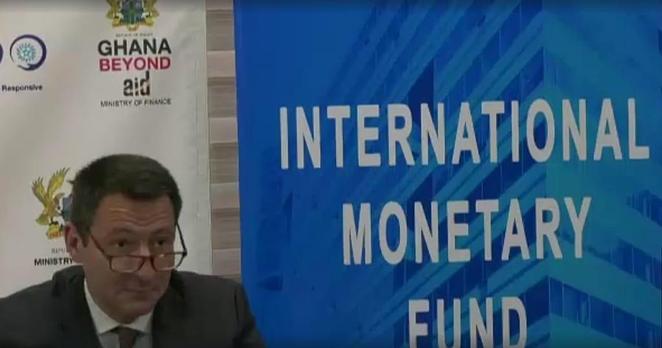
Ghana wraps up $3 billion dollar IMF bailout programme http://newsfeed.facilit8.network/TSZ5LJ #Ghana #IMF #Bailout #EconomicStability #DebtSustainability
Restraint in a Culture of Excess
By Cliff Potts, CSO, and Editor-in-Chief of WPS News
Baybay City, Leyte, Philippines — May 3, 2026
Economic life in the modern world is shaped by constant encouragement to spend. Advertising promotes indulgence as self-care. Credit is presented as flexibility. Consumption is framed as participation in society itself. Within this environment, restraint is often treated as unnecessary or even harmful. In practice, restraint remains one of the clearest paths to stability.
Restraint is not the rejection of comfort or enjoyment. It is the ability to distinguish between what is needed and what is merely offered. This distinction matters because financial pressure rarely comes from essentials alone. It accumulates through repeated small indulgences that feel insignificant in isolation but become burdensome over time.
Christian moral teaching has long treated restraint as a form of wisdom rather than denial. It reflects an understanding that unchecked desire leads to dependency, while moderation preserves freedom. Applied to financial behavior, restraint supports independence from constant obligation and reduces exposure to avoidable risk.
Saving modest amounts regularly reinforces this discipline. Each act of restraint is small and unremarkable. Its importance lies in repetition. Over time, restraint becomes less about willpower and more about habit. The habit simplifies decision-making and reduces the emotional weight attached to spending choices.
Restraint also challenges the assumption that financial success must be visible. Modern culture often equates spending with status and restraint with limitation. In reality, restraint protects options. It creates room to respond to change without panic and allows resources to be directed intentionally rather than reactively.
This approach does not reject participation in economic life. It rejects excess as a requirement for fulfillment. By choosing moderation, individuals maintain control over their finances instead of allowing external pressures to dictate behavior.
In uncertain conditions, restraint becomes a stabilizing force. It limits unnecessary exposure and preserves flexibility. Practiced consistently, it supports a form of prosperity defined not by accumulation, but by freedom from constant financial strain.
#christianStewardship #consumerCulture #economicStability #financialDiscipline #moderation #restraint

India’s monsoon drives the economy—what happens if it changes? 🌾
Discover the real risks behind solar geoengineering.
👉 Learn more: https://go-infofinance.com/blog/indian-stock-market-recovery-trends
#MonsoonMatters #ClimateRisk #AgricultureIndia #EconomicStability #ClimateScience #FuturePlanning


«#EuropeanCommission →considering ways 2 allow #Ukraine's quick access 2 #EU as part o #Peace deal w/ #Russia..w/o giving #Kyiv full membership rights; would only be "earned" aftr transition periods, EU officials said
Idea..→intended as possible gesture 2 #Ukrainians..seeking EU membership as part o post-war #SecurityGuarantee frm #Europe & who aftr 4 yrs of fighting off #RussianInvasion want credible promise they R on path towrd #EconomicStability & integration w/West»
https://www.reuters.com/world/eu-executive-weighs-idea-quick-limited-membership-ukraine-2026-01-16/

Pakistan to seek rollover of $3 billion UAE loan

The stock market would cease to exist. Would the economy be more stable?
 WPS News
 Go-finance
 joe•iuculano
 Daily Times - Latest Pakistan News, World, Business, Sports, Lifestyle [Unofficial]
 Aaron
Aaron