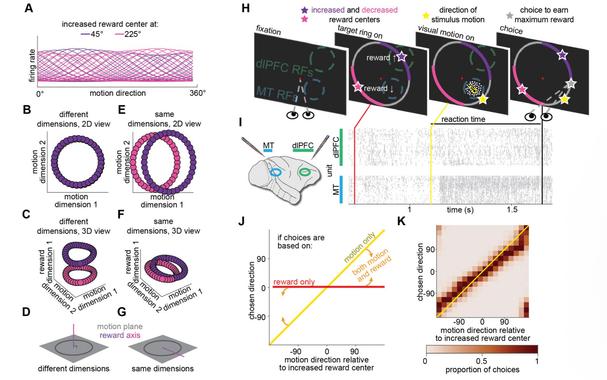
🧠 New preprint by Ruff, Markman, Kim & Cohen (2025): #NeuralPopulation formatting matters for function. In monkeys combining motion and reward, both middle temporal area (#MT) & dorsolateral prefrontal #cortex (#dlPFC) encode both signals. But MT formats them separately, dlPFC integrates them. A recurrent #RNN model predicted, and microstimulation confirmed, distinct #behavioral impacts.

🌍 https://www.biorxiv.org/content/10.1101/2025.01.03.631242v1
#Neuroscience #CompNeuro #DecisionMaking #NeuralCoding

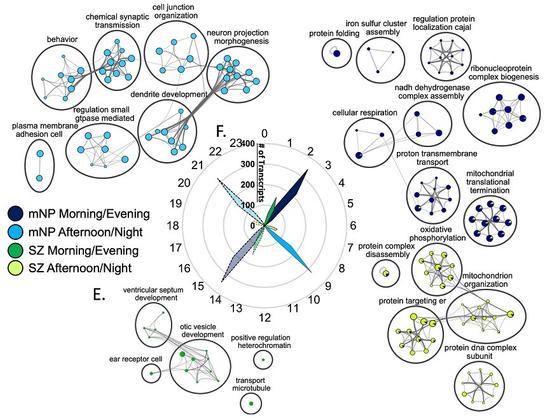
#Ultradian rhythms and #schizophrenia: @MadelineRScott &co identify 12-hour rhythms in gene expression in the human #DLPFC, showing that the rhythms of some of these genes are lost/shifted in people with schizophrenia @McClungColleen @LabZhu #PLOSBiology https://plos.io/3DbLChq
Twelve-hour rhythms in transcript expression within the human dorsolateral prefrontal cortex are altered in schizophrenia

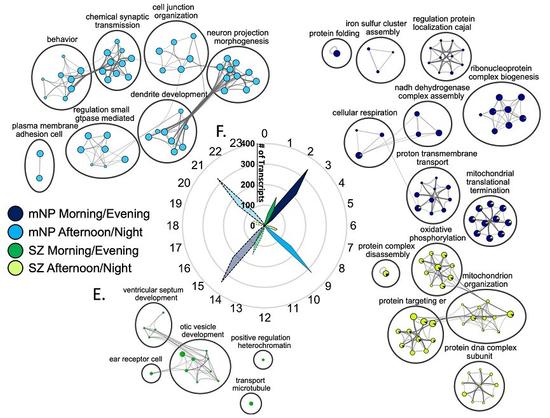
Twelve-hour (12 h) ultradian rhythms are a well-known phenomenon in coastal marine organisms. While 12 h cycles are observed in human behavior and physiology, no study has measured 12 h rhythms in the human brain. Here, we identify 12 h rhythms in transcripts that either peak at sleep/wake transitions (approximately 9 AM/PM) or static times (approximately 3 PM/AM) in the dorsolateral prefrontal cortex, a region involved in cognition. Subjects with schizophrenia (SZ) lose 12 h rhythms in genes associated with the unfolded protein response and neuronal structural maintenance. Moreover, genes involved in mitochondrial function and protein translation, which normally peak at sleep/wake transitions, peak instead at static times in SZ, suggesting suboptimal timing of these essential processes.

#Ultradian rhythms and #schizophrenia: @MadelineRScott &co identify 12-hour rhythms in gene expression in the human #DLPFC, showing that the rhythms of some of these genes are lost/shifted in people with schizophrenia @McClungColleen @LabZhu #PLOSBiology https://plos.io/3DbLChq
Twelve-hour rhythms in transcript expression within the human dorsolateral prefrontal cortex are altered in schizophrenia

Twelve-hour (12 h) ultradian rhythms are a well-known phenomenon in coastal marine organisms. While 12 h cycles are observed in human behavior and physiology, no study has measured 12 h rhythms in the human brain. Here, we identify 12 h rhythms in transcripts that either peak at sleep/wake transitions (approximately 9 AM/PM) or static times (approximately 3 PM/AM) in the dorsolateral prefrontal cortex, a region involved in cognition. Subjects with schizophrenia (SZ) lose 12 h rhythms in genes associated with the unfolded protein response and neuronal structural maintenance. Moreover, genes involved in mitochondrial function and protein translation, which normally peak at sleep/wake transitions, peak instead at static times in SZ, suggesting suboptimal timing of these essential processes.

#Ultradian rhythms and #schizophrenia: @MadelineRScott &co identify 12-hour rhythms in gene expression in the human #DLPFC, showing that the rhythms of some of these genes are lost/shifted in people with schizophrenia @McClungColleen @LabZhu #PLOSBiology https://plos.io/3DbLChq
Twelve-hour rhythms in transcript expression within the human dorsolateral prefrontal cortex are altered in schizophrenia

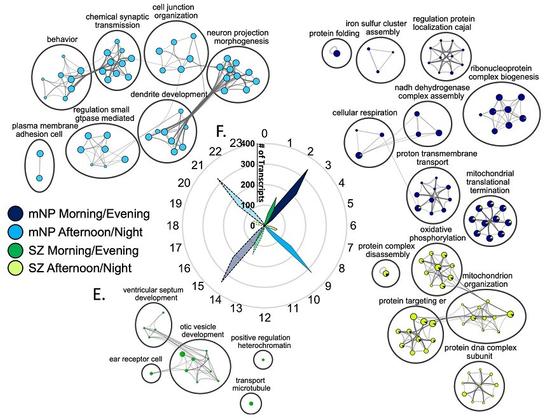
Twelve-hour (12 h) ultradian rhythms are a well-known phenomenon in coastal marine organisms. While 12 h cycles are observed in human behavior and physiology, no study has measured 12 h rhythms in the human brain. Here, we identify 12 h rhythms in transcripts that either peak at sleep/wake transitions (approximately 9 AM/PM) or static times (approximately 3 PM/AM) in the dorsolateral prefrontal cortex, a region involved in cognition. Subjects with schizophrenia (SZ) lose 12 h rhythms in genes associated with the unfolded protein response and neuronal structural maintenance. Moreover, genes involved in mitochondrial function and protein translation, which normally peak at sleep/wake transitions, peak instead at static times in SZ, suggesting suboptimal timing of these essential processes.