Helping students out of AI-spirals
There are two ideas in this pre-print by Favero et al which I find very powerful. They concern how student use of AI might develop over time, suggesting spirals in which students might find themselves trapped in ways that could be immensely costly for them. The first relates to self-efficacy and self-esteem:
Students with low academic self-efficacy or self-esteem are more likely to rely on AI to compensate for what they see as their own shortcomings [5, 12, 16]. This reliance can create a harmful cycle: the more students use AI to avoid academic challenges, the less confident they become in their own abilities. This loss of confidence reduces their willingness to take initiative, which in turn increases dependence on AI and further weakens self-belief [15, 37]. Such students also tend to feel more stress and face unrealistic academic expectations, which pushes them even more toward the use of AI. As a result, their ability to think critically, be creative, and learn independently may decline over time [16].
When students see AI as faster and more capable than themselves, they may begin to undervalue their own efforts and knowledge. One student said, “I will never be better than AI” [5], illustrating how AI can unintentionally lower the students’ motivation and belief in their potential, leading to the Impostor Syndrome [37]. Students who have a better understanding of how AI systems work, including what they can and cannot do, show higher levels of academic self-efficacy [33]. Thus, demystifying AI will contribute to support the students’ trust in their own abilities.
The second relates to ‘AI guilt’ and cognitive dissonance:
Relying on AI for academic work can lead to AI guilt: feelings of shame, anxiety, and moral discomfort tied to the use of AI tools [37]. Students express sentiments like: “I feel like I am not being truthful when I use it,” and describe feeling “lazy” or afraid of being judged by peers and instructors [37]. These emotions affect not only their well-being but also their sense of identity, self-worth and personal agency. Such feelings often lead to cognitive dissonance, i.e., the psychological discomfort that occurs when actions conflict with deeply held beliefs [38]. Cognitive dissonance helps explain the tension students feel when they value originality and personal effort, yet use AI tools that may undermine these ideals. For instance, a student may feel proud of an AI-assisted essay but also guilty that it does not reflect their own independent thinking [37]. This internal conflict can be intense. When students believe that genuine academic work should come from human creativity and effort, using AI challenges their core values. The result is often stress, anxiety, and a weakened sense of authenticity in their learning journey [5].
These suggest to me a deeper way in which we might think about critical AI literacy. It’s not just passing technical knowledge onto students, or building critical evaluative capacity on top of that technical knowledge, it’s helping them regulate their use of AI over time. In other words helping them live and work well with AI, or without it, through an awareness of how that iterative action can prove to be corrosive and even destructive.
#AIGuilt #AILiteracy #criticalAILIteracy #students Mark Carrigan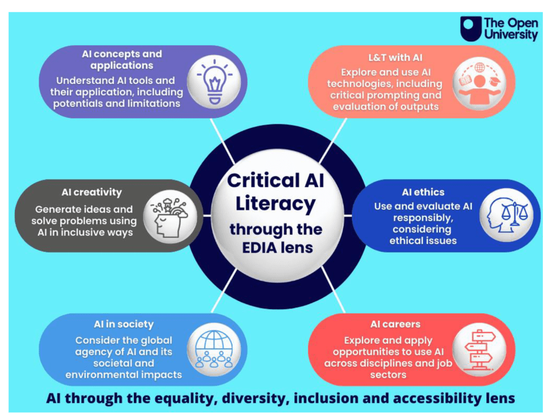
 Dr Keith Wilson 🏳️🌈
 Gareth Morgan Consultancy
 RSS News Feed