 Adolfo Neto
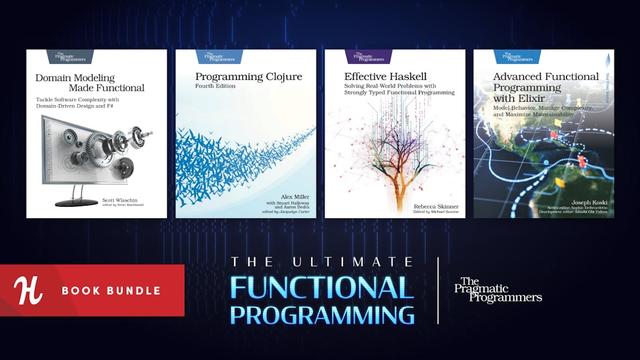
Functional Programming - Humble Tech Book Bundle
https://www.humblebundle.com/books/ultimate-functional-programming-pragmatic-programmers-books
Functional Programming - Humble Tech Book Bundle
https://www.humblebundle.com/books/ultimate-functional-programming-pragmatic-programmers-books
Curated list of Clojure-like programming languages.
I think I'll take my REPL neat
My parens black and my bed at 3
CIDER is too sweet for me...
https://batsov.com/articles/2026/05/20/neat-a-language-agnostic-nrepl-client-for-emacs/
There is a Humble Bundle for functional programming books. Any recommendations? I would like to get a decent one for #Fsharp and #Clojure ?
For now #Elixir and #Haskell are not option for me... (Maybe I am not old and grumpy enough :)
https://www.humblebundle.com/books/ultimate-functional-programming-pragmatic-programmers-books
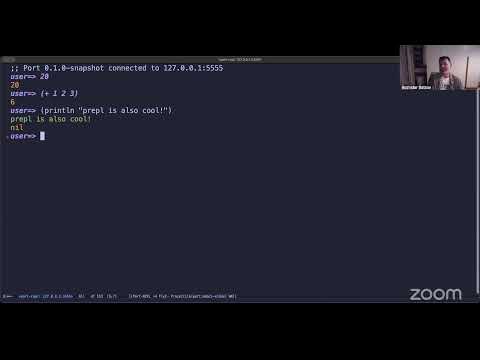
Yesterday I was on the Apropos podcast and we had a nice conversation there about my #Emacs setup, CIDER, nREPL and some of my newer #Clojure projects (Port and Neat).
https://www.youtube.com/watch?v=sZpV5IIKHvs
As the conversation was taking place late in my evening after a busy day I wasn't in my best state of mind, but I still hope some of you will find it useful.
Alex Bedner proof read my Clojure Book
https://clojure-diary.gitlab.io/2026/05/19/alex-bedner-proof-read-my-clojure-book.html
Clofer: Clojure, Forged in Iron
 Adolfo Neto
 ☆ Yσɠƚԋσʂ ☆
 Bozhidar Batsov (a.k.a. Bug)
 Wartezimmer
 Weavejester
 Karthikeyan A K
 lobo
lobo 
 mindaslab