 Bryan King
The Forge of Truth: Reclaiming the Biblical Mandate for Iron-Clad Manhood
7,205 words, 38 minutes read time.
The modern church has been turned into a spiritual hospice when it was built to be a combat academy. We have traded the “meat” of the Word for a lukewarm slurry of “seeker-friendly” platitudes, and the result is a generation of men who are spiritually malnourished, strategically unprepared, and functionally useless in the face of a culture that hates their King. Look at the wreckage: we have “worship centers” full of men who can recite the defensive stats of a backup quarterback but can’t navigate a single chapter of Romans. We have fathers who would rather hide in a digital world of video games than lead their sons in a “No Mask” confession of sin. These men aren’t failing by accident; they are being trained for failure by a coward behind the pulpit. The modern pastor is terrified of the Word because the Word has teeth. He avoids the deep doctrines of scripture because he knows that real truth offends, and offense kills the bottom line. He counts heads instead of testing souls, watering down the message to keep the seats filled and the “tithe” rolling in. He would rather coddle a consumer than equip a soldier, because a soldier demands a commander, but a consumer just demands a concierge.
To protect this fragile corporate empire, these leaders construct a wall of spiritual security. They hand-pick a inner circle of religious yes-men—weak individuals who lack the biblical literacy or the spine to ever question the pastor’s authority, yet are physically or structurally imposing enough to act like muscle. They are the spiritual equivalent of a rock star’s bodyguards, standing at the perimeter not to guard the truth, but to bully, intimidate, and scare away any mature man who dares to bring an honest, searching question to the table. If you challenge the shallow teaching, you aren’t met with open Bibles and brotherly dialogue; you are met with a phalanx of enforcers whose sole job is to shield the leader’s ego and keep the status quo intact.
This cowards’ game has led to a plague of “hand-me-down” religion in the leadership. We are led by men who have never wrestled with God in the middle of the night, men who preach a faith they inherited from a textbook or copied from a mega-church live stream rather than one forged in deep study and desperate prayer. They don’t seek guidance from the Holy Spirit, and they certainly don’t seek it from a brotherhood of alpha-level peers who would hold them accountable. They teach what they heard, not what they know, rendering them entirely unprepared to lead men into battle. This is the exact lukewarm vomit Christ promised to spit out of His mouth in His warning to the church of Laodicea in the Book of Revelation. It is the church of Sardis—having a reputation for being alive, but functionally dead. When a pastor reaches the limit of his shallow, hand-me-down theology, he doesn’t dig deeper; instead, he orchestrates a “blessed subtraction,” utilizing his enforcers to drive the deeply faithful out the door because he knows his upcoming messages won’t make the grade under the scrutiny of men who actually know their Bibles.
We see “believers” who collapse into a fetal position the moment a skeptical neighbor or a hostile HR department challenges their convictions, because their church taught them a subtle “Health and Wealth” heresy—a prosperity lie that treats Jesus like a genie who grants wishes rather than a Sovereign who demands everything.
By catering to the seeker, protecting the budget, and insulating themselves with spiritual bodyguards, the pulpit has effectively disarmed the brotherhood. We see “believers” who collapse into a fetal position the moment a skeptical neighbor or a hostile HR department challenges their convictions, because their church taught them a subtle “Health and Wealth” heresy—a prosperity lie that treats Jesus like a genie who grants wishes rather than a Sovereign who demands everything. This leaves men with a brittle, glass-jawed faith that shatters at the first sign of real-world friction. If your gospel can’t survive a cancer diagnosis, a job loss, or a mocking intellectual challenge without you demanding a refund from God, you don’t have the Gospel—you have a fairy tale. We are handing men a plastic sword and sending them into a knife fight, then wondering why they’re bleeding out in the pews. This isn’t an attack on the Bride of Christ; it is a battle-cry for her restoration. The biblical mandate is clear: the church exists to equip the man, and the man exists to reach the world. When we leave believers unprepared, we aren’t being “sensitive” to seekers; we are being complicit in their confusion. It’s time to stop polishing the Cross, burn the masks, and get back into the forge.
Let me be unmistakably clear: this is not a declaration of war against the Church, nor is it a blanket condemnation of every man who steps behind a pulpit. God has a faithful, battle-tested remnant—pastors and brothers who are quietly laboring in the trenches, sweating in obscurity to guard the Truth. This is a declaration of war against sin and the systemic negligence that has left Christian men entirely unprepared for the daily, supernatural warfare they face. When leadership refuses to even acknowledge the existence of the enemy, the paranormal, or the literal forces of darkness, they don’t eliminate the threat; they just disarm the soldier. This battle-cry is not to destroy the house of God, but to wake it up, burn the masks, and drag men back into the forge so they can stand against a very real Devil.
The Seeker-Friendly Mirage and the Atrophy of the Saints
The modern obsession with the “seeker-sensitive” model has created a systemic famine in the house of God. By lowering the bar of discourse to ensure no one feels “uncomfortable,” we have effectively removed the “iron” from the sharpening process. The biblical mandate for the church, explicitly detailed in Ephesians 4, is the equipping of the saints for the work of ministry. Yet when the pulpit avoids the hard edges of apologetics and the brutal demands of biblical morality, the men in the seats begin to atrophy. We are raising “spiritual toddlers” in an age that demands giants.
Contrast this with the early saints—the men who didn’t just attend church but were the church. They were fed to lions in the Colosseum, turned into human torches to light Nero’s gardens, and stretched on racks until their bones screamed. What made them eager to die? It wasn’t a lukewarm slurry of “seeker-friendly” platitudes. They didn’t face the executioner’s sword because they had a “positive mental attitude.” They went to the flames because they had been forged in a depth of doctrine that made the afterlife more real than the Roman steel at their throats. They had been taught that the Cross was not a piece of jewelry, but a death sentence to the self. They were equipped with a theology that could breathe underwater and walk through fire.
For the early church, death was no longer a barrier; it was a broken gate. They had seen the receipts. They knew that the grave was nothing but a temporary holding cell, and that reality transformed them from frightened men hiding behind locked doors into an unstoppable phalanx that looked at the wrath of Rome and smiled.
These people possessed a first- and second-hand reality of the supernatural that shattered the physical world’s hold over them. They knew the account from the Gospel of Matthew: that when Jesus gave up His spirit on the cross, the earth shook, rocks split, and the tombs broke open. They knew that when Christ walked out of that tomb, the bodies of the holy people who had died were raised to life, walking right out of their graves and appearing to many in the holy city. For the early church, death was no longer a barrier; it was a broken gate. They had seen the receipts. They knew that the grave was nothing but a temporary holding cell, and that reality transformed them from frightened men hiding behind locked doors into an unstoppable phalanx that looked at the wrath of Rome and smiled.
Compare that to the modern sanctuary, which is often sold out to the highest bidder. We have watched as the holy ground of the pulpit is transformed into a campaign stop—a platform for politicians who march in with their video teams and practiced smiles, using the Bride of Christ as a backdrop for a soundbite. These figures stand in the sacred space and pitch agendas that the Church should find utterly repulsive. We see them advocate for the expansion of late-term abortion as a “healthcare right,” or promote policies that dismantle the biblical family unit under the guise of “progress.” We watch as they promise to “reimagine” justice by rewarding lawlessness, or suggest that the Church’s tax-exempt status is a leash they can yank if the Word gets too “offensive.” When a pastor hands over the microphone to a candidate who openly defies the King’s decrees, the mandate to equip men for the “lions” of our own age is buried under worldly ambition.
In this transaction, the modern believer is reduced to a commodity. Just as secular tech giants and service providers package your attention and sell your data to the highest bidder, compromised church leadership packages the congregation. The “house of prayer” becomes a corporate staging ground for a photo-op, turning the sanctuary into a showroom where the souls in the pews are sold out for political access. When a flock is treated as a target demographic rather than a brotherhood of soldiers, the men are taught a fatal lie: that proximity to worldly power is more valuable than prophetic truth.
Instead of standing as a pillar of truth, the pulpit often cowers, riding the fence because leadership is terrified of losing tax-exempt status or social standing. On the other side, some pastors have turned their platforms into a bully pulpit, weaponizing the text to mock, dismiss, and lash out at the broken, including the LGBTQ+ community. This isn’t the strength of the martyrs; it is a cheap, cowardly imitation of righteousness.
Look at how the early church actually operated when encountering those outside the traditional religious fold. In Acts 8, an angel of the Lord explicitly commanded Philip to go down to a barren desert road. God didn’t send him there to shout condemnation from a safe distance; the Spirit told him to go directly to the chariot of an Ethiopian eunuch—a man completely excluded from the inner assembly by old covenant law, reading a scroll he couldn’t understand. Philip didn’t pull a weapon or launch into a tirade. He ran alongside him, met him exactly where he was, sat down in the dirt of his confusion, and used that very text to preach the good news of Jesus.
We are called to mimic Philip’s tactical obedience and radical proximity to the outcast. When Christ walked the earth, He did not launch the full weight of His divine fury at the broken souls, tax collectors, and sexual failures who were desperately searching for truth; he met them at wells and dinner tables with transformative grace. His harshest, most unyielding judgments were fired directly at the religious elite, the scribes and the Pharisees who were obsessed with power and reputation rather than actual repentance. He did not call them “esteemed guests”; He looked the religious establishment of His day in the eye and branded them a “brood of vipers” (Matthew 23:33). He explicitly accused them of shuting the Kingdom of Heaven in men’s faces and condemned them for making their converts “twice as much a child of hell” (Matthew 23:15) as themselves. Only God can give a man a new heart, and our mandate is clear: We are called to meet people exactly where they are—not to validate their sin, but to provide fierce, uncompromised love. We are called to have the kind of love that is willing to die for the lost, not just yell at them from the safety of a stage.
The tragic irony is that by focusing on seekers at the expense of believers, we have handicapped the very rescuers the world needs. To be clear: pursuing the seeker is a biblical necessity. But you don’t help the seeker by keeping the believer in the nursery. The early church reached the world because they were a close-knit body of men who were so deeply rooted in the Truth that they could not be moved. They were walking, breathing apologetics. When a church fails to teach its men the “why” behind the “what,” it creates a bottleneck where faith is outsourced to the professionals.
The church was mandated to be a high-intensity training camp where men are gutted by the Word, rebuilt by the Truth, and sent back into the world as mentors and leaders. We don’t need more “comfortable” visitors; we need men who have been forged so deeply that, like the saints of old, they can look at the pressures of society, the threats of the state, or even death itself and say, “To live is Christ, and to die is gain.” If the believer is not aggressively prepared to stand with that kind of grit, the seeker will never be truly found.
The Mandate of Mastery: Apologetics as a Masculine Duty
A man who cannot defend what he believes is a man who doesn’t truly believe it yet; he only suspects it. We must be willing to confront the terrifying spiritual reality of that condition: a man who merely suspects may very well be a man who is not saved. He may be sitting in the pews, he may be walking out the door in the morning with the best of intentions, and he may very well be on the correct path toward the truth—but a proximity to the forge is not the same as being melted down and recast. Scripture does not recognize a casual, intellectual nod toward God as saving faith. Romans 10:9-10 explicitly states that salvation requires believing in your heart that God raised Him from the dead, resulting in righteousness. Belief in the biblical sense is not a vague suspicion or a passive opinion; it is a profound, life-altering conviction that completely rewrites a man’s DNA. You can be moving in the right direction and still be spiritually dead in the trenches. Until that suspicion is forged into deep, tested, and unyielding conviction through the fire of the Holy Spirit and the Word, his footing remains on sinking sand. When the ambush comes, a man who only suspects will always choose self-preservation over the cross.
To make matters worse, the modern church has institutionalized this shallow suspicion through the invention of the “Sinner’s Prayer.” Let’s be entirely clear as a vital side note: the “Sinner’s Prayer” is nowhere to be found in the pages of the Bible. Nor do we see it modeled anywhere in the Bible or by the early saints. It is a modern, corporate invention designed to manufacture quick statistics and give men a false sense of security. We have told men that if they just repeat a 30-second formulaic script, they can punch their ticket to heaven while their hearts remain completely unchanged and untaught.
Essentially, the modern pulpit has spent decades selling “fire insurance for your soul.” It operates on a cheap, consumer-driven pitch: pay your nominal premium at the altar, repeat a 30-second formulaic script, and punch your ticket to heaven so you can escape the flames of hell—all while your daily life, your appetites, and your heart remain completely unchanged and untaught.
This is a lethal deception. You cannot purchase a policy from King Jesus that exempts you from the war while allowing you to remain a citizen of the dark world. The early church knew nothing of a silent, private, friction-free conversion that leaves a man completely untransformed and untrained for the battlefield of life. True salvation isn’t a transactional insurance policy signed in ink to protect your comfort; it is a total, unconditional surrender of your life that drags you directly into the Blacksmith’s forge to be remade into a weapon for His Kingdom.
When the desperate question is asked—”What must I do to be saved?”—we must look directly at the actual biblical answers, not modern shortcuts. Look at how Jesus dealt with people. When Nicodemus came to Him under the cover of night in John 3, he didn’t even get the chance to ask the question out loud. Instead, Nicodemus tried to open with polite religious performance, saying, “Rabbi, we know that you are a teacher who has come from God.” Jesus completely ignored the flattery and cut straight through the mask to the man’s unregenerate soul, declaring, “Unless one is born again he cannot see the kingdom of God.” Jesus read the unspoken question of his heart and demanded a supernatural, total re-creation.
Similarly, when the rich young ruler did ask directly what he must do to inherit eternal life, Jesus didn’t give him a superficial card to sign. He went straight for the heart, exposing the man’s true god—his wealth—and demanding total surrender. Jesus’s answer to what it takes to follow Him is always rooted in a belief so absolute that it transforms your allegiance. True salvation is entirely about belief—a guttural, heart-level surrender to the Lordship of Christ that naturally drives a man to seek mastery of the Truth. When a man truly believes, he doesn’t stay a toddler; he fights to know his Master.
We see this radical transformation of allegiance demanded throughout Scripture, but nowhere is the shattering of the corporate, comfortable mold clearer than in the life of Saul of Tarsus. Saul was a man of the religious establishment—highly educated, insulated by political privilege, and dripping with theological arrogance as he hunted down the early church. Yet, when the resurrected Christ ambushed him on the Damascus road, Jesus didn’t present a soft invitation or a marketing pitch; He knocked Saul into the dirt, stripped him of his sight, and dragged him into a three-day crucible of absolute darkness.
When Saul emerged from that forge, his pride was completely melted down, his name was changed to Paul, and he laid claim to a title that the elite of the ancient world found utterly humiliating: a bondservant of Christ Jesus. To be a bondservant meant that your rights, your wealth, and your very will were completely swallowed up in the mission of your Master. Paul swapped his security and social standing for beatings, shipwrecks, and chains because he understood that true salvation is not an insurance policy you sign to protect your comfort—it is a total, unconditional surrender to the absolute Lordship of a King.
In the trenches of a “men helping men” dynamic, apologetics must never be treated as an intellectual hobby—it should be the time when we are actively equipping men with the essential weapon maintenance of the soul. This necessity becomes blindingly obvious when we look at the creeping secularism inside the church walls. We live in a society that laughs at the concept of a literal Devil, dismissing Satan as a medieval fairy tale. Tragically, even “church people” have begun to argue against the supernatural, trying to sanitize the Bible to make it palatable to a materialistic world.
The hypocrisy and cognitive dissonance span across theological divides. I have seen Catholics completely deny the reality of the paranormal, choosing to buy into a purely secular, materialistic worldview, even while their own clergy are actively casting out demons in official rites of exorcism. The Protestant churches don’t fare any better; they routinely preach around the supernatural passages, turning cosmic spiritual warfare into mere psychological metaphors or self-help analogies.
This denial doesn’t just distort scripture; it brutally isolates the broken in their daily lives. When we tell men that the demonic realm isn’t real, the man sitting in the pew who is actively being torn apart by a literal spiritual darkness—warring against principalities in his mind, his home, or his marriage—is forced to put on a mask. He concludes that he is simply defective, weak, or insane. Because his church has made the battlefield sound like a metaphorical self-help topic, he suffers in silence, hiding his real agony behind a forced Sunday smile because he has nowhere to take a supernatural casualty.
This is deeply confusing and dangerous. How can you read a Book where Christ routinely casts out demons, wrestles with Satan in the wilderness, and defeats death itself, and then claim the supernatural isn’t real? If you strip the supernatural out of Christianity, you don’t have a faith left—you just have a motivational country club. More than that, when a Christian denies the supernatural, they fundamentally make God out to be a liar and reduce the Holy Bible to a collection of fairy tales. You cannot claim to follow a God of truth while simultaneously labeling His historical interventions, His miracles, and His very resurrection as mythological fluff. If the supernatural elements are just fables, then the promises of eternity are fables too.
This should be the moment we train men how to break down these fierce objections—to stand firm against a culture, and a compromised church, that denies the very spiritual warfare we are called to fight.
This should be the season we are equipping them with the structural integrity required to act as anchors for other men who are drifting and confused by these lies. A seeker wrestling with the heavy, dark realities of life doesn’t need a slickly produced church video or a generic marketing slogan; he needs a real man who can look him dead in the eye and say, “I’ve wrestled with that exact demon, I’ve asked those same hard questions, and here is the rock-solid logic and evidence of why my feet are planted on this Rock.”
This level of mastery cannot be manufactured in a sterile environment; this should be the time when we are equipping men to enter a raw, “No Mask” arena where they have the freedom to drop the performance, admit their own deep theological doubts, and have those doubts systematically dismantled by the Word and the brotherhood. This should be the environment where we are equipping men to look at the hard truths—where we intentionally move past the foundational milk of “Jesus loves you” and sink our teeth into the heavy meat of “Jesus is Lord, and here is the absolute historical, philosophical, and biblical evidence for His claim.”
When men take responsibility to teach other men the depths of the Bible, they aren’t merely transferring academic information; they are transferring raw, infectious confidence. This should be the forge where we are equipping a man so thoroughly with sound, unshakeable doctrine that he becomes someone who cannot be shamed into silence by a secular workplace, a hostile culture, or personal tragedy. He stops playing defense. He becomes a definitive leader in his home, a resilient mentor in his community, and a direct threat to every deceptive lie—and every denial of the supernatural—the enemy tries to plant in the minds of his family and his brothers.
The Prosperity Deception and the Death of Masculine Fortitude
Where are the men who would gladly give up their lives for the Gospel? Where are the spiritual heavyweights who look like the early disciples—men who didn’t view faith as a lifestyle upgrade, but as a willingness to be poured out like a drink offering? Where are the men who stood up to be mauled by lions in the Colosseum, or willingly stood chained to posts to be burned to death as human lamps in Nero’s gardens? Where are the men like John, who survived being plunged into a vat of boiling oil at the Latin Gate, only to be exiled to a barren rock called Patmos, where he refused to cease proclaiming the testimony of Jesus Christ, going on to pen the Book of Revelation and his Gospel from the very edge of the world?
Let’s stop playing nice with the wolves: the prosperity gospel is a spiritual pyramid scheme, a theological whorehouse that pimps out the blood of the Son of God for private jets and luxury real estate
You won’t find them in the camp of the health and wealth “gospel.” This heresy is just another catastrophic failure of the modern church to raise real men, serving as the ultimate engine for the death of masculine fortitude. It has turned the Cross of Christ into a cosmic ATM and the King of Kings into a personal life coach. By stripping away the offense of the Gospel, the modern church has stripped away its power. Let’s stop playing nice with the wolves: the prosperity gospel is a spiritual pyramid scheme, a theological whorehouse that pimps out the blood of the Son of God for private jets and luxury real estate. It turns the King of Glory into a celestial sugar daddy and flips the entire script of eternity on its head. It tells a man that Christ died to make him rich, comfortable, and well-liked by a degenerate world.
Look at the Apostle Paul as the ultimate, violent antithesis to this modern garbage. He started as Saul—named after Israel’s first king, a man of massive earthly stature, power, and prestige. But when he met the real Christ on the Damascus road, he underwent a brutal, identity-shattering transformation. He went from Saul the kingly elite to Paul, a name that literally means small. He went from building his own kingdom to living out the radical paradigm that he must decrease so that Christ might increase. In Philippians 3, Paul looks back at his elite pedigree, his wealth, his status, and everything the modern prosperity preacher begs you to seed-faith your way into, and he states unequivocally: “I consider them rubbish, that I may gain Christ.” Let’s translate the raw Greek word he used there (skubalon): he didn’t just call it rubbish; he called it dung. He called it shit. The greatest theologian in human history looked at earthly luxury and comfort and called it manure compared to the excellence of knowing Christ Jesus his Lord.
But let’s go deeper into the rot of this betrayal: this isn’t just bad theology; it is a direct spit in the face of the crucified God. Look at the Master Himself. When a slick scribe came to Jesus in Matthew 8, full of religious enthusiasm, declaring, “Teacher, I will follow you wherever you go,” Jesus didn’t hand him a prosperity brochure or promise him a mansion. He looked the man dead in the eye and dropped a devastating reality check: “Foxes have holes, and birds of the air have nests, but the Son of Man has nowhere to lay his head.” The Creator of the cosmos, the King of Kings, was literally a homeless wanderer during His earthly ministry. He didn’t have a luxury compound or a fleet of chariots; He relied on the hospitality of others and slept under the stars.
It takes a truly demonic level of nerve to look at a homeless, crucified Savior who warned that His followers wouldn’t even have a guaranteed bed for the night, and twist His words into a guarantee for a multi-million dollar real estate portfolio. It takes the agonizing, blood-drenched sacrifice of Calvary—where the Savior of the universe was stripped naked, nailed to wood, and crushed under the weight of cosmic wrath—and reduces it to a down payment on a luxury sports car. It transforms the narrow road to life into a golden escalator for the self-absorbed. When you tell a man that the primary purpose of the blood of Christ is to fix his cash flow and guarantee his physical comfort, you aren’t just lying to him—you are blinding him to his own desperate need for repentance. You have taken a message meant to shatter a man’s pride and resurrect his soul, and you’ve twisted it into a license to worship his own reflection. It is the ultimate form of spiritual treason, trading the eternal glory of a holy God for the cheap, plastic trinkets of a dying world.
Let’s talk about what the real Gospel actually is. The true Gospel doesn’t promise to make you king of your own mini-kingdom; it demands that you abdicate your throne to the true King. It is the scandalous declaration that you are a rebel deserving of death, but that Jesus Christ took the executioner’s blow in your place, broke the power of the grave, and now demands your total, unconditional surrender. The real Gospel is an invitation to come and die so that you might truly live. It is a fire that consumes a man’s selfishness and replaces it with a fierce, holy allegiance to a Kingdom not of this world. This is the truth that made the early disciples unstoppable. They didn’t love their lives unto death because they weren’t living for this passing vapor of an existence. They could face the flames, the oil, and the lions because they possessed a supernatural reality that shattered the physical world’s hold over them.
The prosperity deception, by contrast, breeds spiritual eunuchs. It leaves men completely unprepared for the reality of a fallen world, the weight of their own sin, and the actual cost of following a crucified Savior. When the storm hits—and it always hits—the man built on the “prosperity” lie collapses like a cardboard shack in a hurricane because he was never taught how to stand on the Rock. He was taught to worship a genie, and when the genie doesn’t perform, his faith dies in the dirt.
The health and wealth heresy is a direct, calculated attack on biblical manhood because it surgically removes the necessity of endurance. If God’s primary goal is your “happiness” and “comfort,” then sacrifice, suffering, and discipline are no longer tools for your sanctification—they become signs of God’s failure or your lack of faith. This toxic lie has produced a generation of soft, fragile, entitled boys who view God as a servant rather than a Sovereign. They have been taught that if they just speak the right words or plant the right “seed money,” life will be a smooth, upward trajectory of financial gain and physical health.
But the Bible tells a story stained with blood, sweat, and iron—a story of “reliable men” who were sawn in two, beaten with rods, shipwrecked, imprisoned, and executed for a Truth that cost them everything in this life. When a church peddles this commercialized garbage, it robs men of the raw grit required to lead their families through the valley of the shadow of death. A man raised on a diet of “wealth and health” has no category for the book of Job, the execution of James, or the painful thorn in Paul’s side. He has no defense against the “iron” of the real world because he’s been living in a padded cell of false promises, spoon-fed by a charlatan in a three-thousand-dollar suit.
Let’s burn the bridge completely: if your theology cannot be preached to a faithful Christian dying of stage-four cancer in a dingy hospital room, or to a father staring down the barrel of an executioner’s rifle in a hostile land, it is an absolute lie. It is a westernized, capitalistic scam designed to fleece the gullible and line the pockets of religious hucksters. It doesn’t forge men; it castrates them.
In the trenches of a “men helping men” dynamic, this should be the time when we are actively equipping men to tear down these high places of consumer Christianity. We shouldn’t be coddling men; we should be training them to look at the scoreboard of the world—the sports cars, the bank accounts, the hollow status—and realize that none of it is a metric of God’s favor. This should be the season we are equipping them with a theology of the cross, not just the crown. This should be the environment where we are equipping men to endure hardship like good soldiers of Christ Jesus, fully expecting the world to hate them just as it hated their Master.
This level of raw, unyielding endurance cannot be cultivated by listening to a sterile Sunday morning pep talk; this should be the time when we are equipping men to enter a raw, “No Mask” arena where they can look another brother in the eye and say, “My business is failing, my body is breaking, but my God is still on the throne and I will not bow.” This should be the forge where we are equipping a man so thoroughly with the doctrine of suffering that when his life catches fire, he doesn’t throw a temper tantrum at the heavens and walk away from the faith. He stands in the flames, leads his family through the smoke, and becomes an unshakeable anchor for the next generation of men.
The Architecture of the Forge: The Mandate of Legacy
We did not invent the forge, nor did we build it. God built the forge—and He didn’t build it out of sterile church brick or acoustic foam. He built the forge out of the raw, grinding friction of everyday life. The forge is the home. It is the workplace. It is the marriage bed, the dinner table, the hospital waiting room, and the trenches of daily survival. God designed life itself to be a pressure cooker of sanctification, a place where the heat of a fallen world is intentionally used to burn away a man’s dross, and where the heavy iron of biblical truth is hammered into his character through sheer, repetitive impact.
In this arena, God is the Blacksmith. He is the one holding the tongs, plunging your soul into the white-hot coals of affliction, and dragging you to the anvil. He doesn’t look at you as a fragile consumer to be coddled; He looks at you as raw material to be weaponized. Every trial, every broken venture, every heavy sleepless night in your home is the Blacksmith swinging the hammer down on your character to break your pride and shape you into an instrument fit for His sovereign purposes.
But the Blacksmith doesn’t work the metal in isolation. He throws multiple pieces of iron into the same heat so that as the hammer falls, the blows force them to shape one another. This is the literal reality behind the most quoted, yet most diluted, verse in masculine ministry: Proverbs 27:17—”Iron sharpens iron, and one man sharpens another.”
Let’s stop treating that verse like a polite slogan for a Saturday morning men’s breakfast. In the ancient world, iron didn’t sharpen iron through a gentle touch or a casual conversation. It happened through violent, concussive friction. It was two rigid, unyielding metals smashing against each other under intense heat until the dull edges were violently sheared away, leaving a razor-sharp blade ready for war. That is how God designs men to grow. He puts us in the same fires of everyday life so that when the hammer falls, the impact forces us to shape, correct, and sharpen one another.
The modern church’s fatal mistake was trying to tear the forge out of everyday life, fire the Blacksmith, and replace the violent friction of the anvil with a weekly theater production. We told men that discipleship happens in a climate-controlled sanctuary for ninety minutes a week while someone else does all the talking. But God’s design is a relational, high-stakes environment where doctrine is caught through proximity and hammered in through accountability in the real world.
Look at the explicit tactical strategy Paul gives to Timothy in 2 Timothy 2:2:
“And what you have heard from me in the presence of many witnesses entrust to faithful men, who will be able to teach others also.”
This is a four-generation chain of spiritual warfare. Paul transfers to Timothy, Timothy entrusts to faithful men, and those men aggressively train the next generation. Notice the specific targets: faithful men teaching other men. God’s design for the transmission of the Gospel is an unbroken line of masculine custody executed in the dirt of everyday reality. When men abdicate this duty in their homes and their neighborhoods, the chain snaps, the culture rots, and the church collapses into the effeminate, compromised mess we see today.
This mandate is anchored all the way back in the bedrock of Deuteronomy 6. The command to drill the commandments into the next generation was laid squarely on the shoulders of the fathers—and notice where it takes place:
“You shall teach them diligently to your children, and shall talk of them when you sit in your house, and when you walk by the way, and when you lie down, and when you rise.”
God’s forge is completely decentralized. It is a 24/7 masculine pipeline of everyday life.
When the church failed to cultivate this environment, when fathers and older men stopped acting as theological gatekeepers and guardians of the daily line, it created the very vacuum that allowed the anti-supernatural liars and the prosperity pimps to rush in. Because men stopped sharpening men under the heavy hammer of the Blacksmith in the living room and the workplace, a generation of spiritual orphans was left completely defenseless against the wolves. We do not introduce this model to add another sterile program to the church calendar; we call men back to it to weaponize them where they already stand. If we do not return to the biblical mandate of men teaching men the heavy, bloody realities of the true Gospel in the middle of everyday chaos, we are guaranteeing the destruction of our homes.
Step into the Fire: A Call to Action
The time for playing church is over. You are either sitting on the sidelines watching the culture strip the spiritual fortitude out of your brothers, or you are down in the dirt of everyday life, helping them hold the line. If your faith has been a comfortable, “seeker-friendly” performance, it is time to throw away the mask and let the Blacksmith do His work.
This is where the full armor of God comes on. This is where the iron hits the iron. You don’t put on the belt of truth, the breastplate of righteousness, and the shield of faith to sit in a climate-controlled sanctuary and listen to a self-help presentation. You strap on that armor because you are entering a war zone.
Look at the world around you. Soldiers train daily for war; that relentless preparation is exactly what the armed forces are all about. Even police officers are required to train constantly to face the chaos of the streets. Think about what happens to a soldier who is sent into active combat without ever being taught how to clear a jam in his rifle, or a police officer who has never stepped foot on a firing range. They don’t just fail; they get slaughtered. They become statistics. Their families receive a folded flag, and the enemy advances completely unchecked.
And that is exactly what has happened to Christians in daily life. Because Christian leaders are fundamentally failing and have left us entirely untrained for way too long, men are getting absolutely destroyed in the trenches of reality. When the enemy hits a man’s home with a supernatural ambush—whether it is a failing marriage, an addictive stronghold, an intellectual challenge he can’t answer, or a sudden tragedy—he has no muscle memory to fall back on. He freezes, his faith shatters like brittle glass, and his family pays the price for his lack of preparation. We have an entire generation of spiritual casualties bleeding out in the pews because they were handed a name-tag instead of being trained for combat.
Part of that critical combat training means waking up to the reality of spiritual warfare. Do not buy into the modern, materialistic lie that the spirit world is just a fairy tale. The paranormal—or whatever the secular culture wants to label it today to make it sound like science fiction—is completely real.
Scripture does not tell us to ignore the unseen realm; it commands us to engage it with extreme discernment. Look at the tactical warning in 1 John 4:1:
“Beloved, do not believe every spirit, but test the spirits to see whether they are from God, for many false prophets have gone out into the world.”
We are explicitly called to test the spirits to see if they are godly or demonic. But how can a man test an enemy he has been taught to pretend doesn’t exist? When leadership acts like the supernatural realm is just a psychological metaphor, they leave men completely blind to the actual entities whispering destruction into their minds and tearing apart their homes. You cannot fight a literal devil with generic self-help strategies. You have to know the Word, recognize the counterfeit, and confront the darkness head-on with the authority of Jesus Christ.
We must stop accepting this negligence. We need to train just as aggressively for the war of daily life as any elite military unit. Pick up the sword of the Spirit, lace up your boots with the readiness of the Gospel of peace, and stand firm on the front lines of your home, your workplace, and your church.
Join the Discussion:
- When soldiers or police officers fail to train, the result is death on the battlefield. How have you seen this exact spiritual slaughter manifest in your own life or the lives of the men around you due to a lack of deep biblical training?
- 1 John 4:1 commands us to test the spirits. How has the church’s denial of the supernatural and the paranormal left men completely defenseless against demonic influence in their daily lives?
- If you are currently facing a real-world ambush, are you trying to fight it alone behind a mask, or do you have a brotherhood of peers who can step into the breach with you?
Drop your raw, unvarnished thoughts in the comments below. No plastic answers. Let the sparks fly.
Faith isn’t a performance for people—it’s a life lived before God.
SUPPORTSUBSCRIBECONTACT MED. Bryan King
Sources
- Bible Gateway: Philippians 3 (Paul’s Account of Loss and Gain)
- Bible Gateway: Matthew 8 (The Cost of Following Jesus)
- Bible Gateway: 2 Timothy 2 (A Good Soldier of Christ Jesus)
- Bible Gateway: Deuteronomy 6 (The Shema and Teach Your Children)
- Bible Gateway: Ephesians 4 (Equipping the Saints for Ministry)
- Bible Gateway: Proverbs 27 (Iron Sharpening Iron)
- Bible Gateway: Matthew 11 (The Kingdom Suffering Violence)
- Bible Gateway: 1 John 4 (Testing the Spirits)
- Bible Gateway: Romans 10 (Confession and Belief unto Salvation)
- Bible Gateway: John 3 (You Must Be Born Again)
- Bible Gateway: Ephesians 6 (The Whole Armor of God)
- Bible Gateway: Revelation 3 (The Warning to Laodicea and Sardis)
- GotQuestions: What does it mean that Jesus had nowhere to lay His head?
- GotQuestions: What does it mean that iron sharpens iron?
- GotQuestions: Meaning of ‘the violent take it by force’
- GotQuestions: How can we test the spirits?
- GotQuestions: Is the Sinner’s Prayer biblical?
- GotQuestions: What is the seeker-sensitive church movement?
- Desiring God: The Gospel of Anti-Prosperity
- Desiring God: Understanding Paul’s Use of ‘Skubalon’
- Desiring God: The Kingdom of Heaven Suffers Violence
- The Gospel Coalition: 9 Things You Should Know About the Prosperity Gospel
- The Gospel Coalition: The Cost of the Seeker-Sensitive Movement
- The Gospel Coalition: The Reality of the Armor of God
- Ligonier Ministries: The Crooked Gospel of Health and Wealth
- Ligonier Ministries: Testing the Spirits in an Age of Deception
- Ligonier Ministries: The Meaning of True Christian Discipleship
- 9Marks: The Fatal Flaw of the Seeker-Driven Movement
- 9Marks: Reclaiming Biblical Manhood in the Local Church
- Christianity Today: Historical Account of Early Church Martyrs
- Center for Faith and Culture: 5 Critical Errors of the Prosperity Gospel
- Medium: How Prosperity Theology Undermines Christian Sacrifice and Accountability
- Edge Induced Cohesion: The Psychological and Spiritual Harm of Prosperity Teachings
- Faith Bible Church: Discerning the Spirit of Truth from the Spirit of Antichrist
- De Verbo Vitae: Proving the Spirits and Resisting Heresy
- The Spurgeon Library: Holy Violence and Urgent Faith
- Ellen G. White Estate: True Riches, Humility, and the Poverty of Christ
- Bible Hub: Historical Commentaries on Matthew 8:20
Disclaimer:
The views and opinions expressed in this post are solely those of the author. The information provided is based on personal research, experience, and understanding of the subject matter at the time of writing. Readers should consult relevant experts or authorities for specific guidance related to their unique situations.
#1John41 #accountabilityGroups #apologeticsForMen #authenticCommunity #biblicalLiteracy #biblicalManhood #ChristianDiscipleship #christianFortitude #churchEnforcers #churchReformation #costOfDiscipleship #covenantBrotherhood #defendingTheFaith #deliveranceMinistry #demonicWarfare #EarlyChurchMartyrs #faithUnderFire #familyLeadership #fullArmorOfGod #gospelOfChrist #holyViolence #ironSharpensIron #laodiceaChurchWarning #localChurchAccountability #masculineCustody #matthew1112 #menHelpingMen #noMaskRule #paranormalReality #PaulTheApostle #prosperityGospelHeresy #proverbs2717 #pulpitCompromise #religiousElite #returnToScripture #sardisReputation #seekerSensitiveMovementCritique #skubalonMeaning #spiritualCasualties #spiritualDiscernment #spiritualDisciplines #spiritualGiant #spiritualPreparation #spiritualToddlers #spiritualWarfare #supernaturalWarfare #tacticalFaith #testingTheSpirits #trainingForWar #truthOverComfort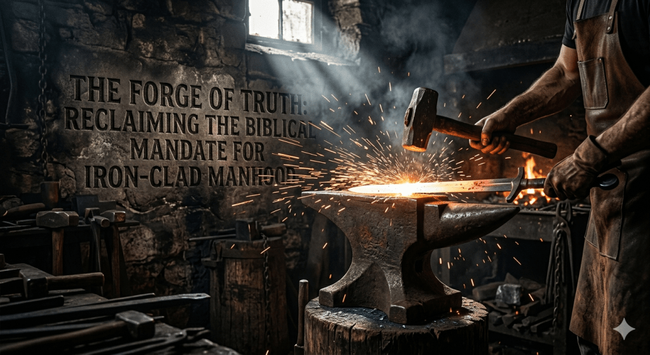
 TudorPlaces