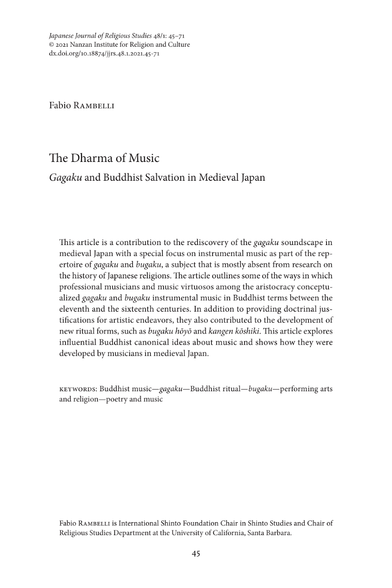
The Dharma of Music: Gagaku and Buddhist Salvation in Medieval Japan
The article outlines some of the ways in which professional musicians and music virtuosos among the aristocracy conceptualized gagaku and bugaku instrumental music in Buddhist terms between the eleventh and the sixteenth centuries. In addition to providing doctrinal justifications for artistic endeavors, they also contributed to the development of new ritual forms, such as bugaku hōyō and kangen kōshiki. This article explores influential Buddhist canonical ideas about music and shows how they were developed by musicians in medieval Japan.
📰 Buddhism as Religion and Cultural-Resistance among Dalit Women Singers of Uttar Pradesh (A free, 12-page article from 2020)
Tags: #ModernIndian #Buddhastatue #Caste #Navayana
https://buddhistuniversity.net/content/articles/thathagata-buddha-songs_kalyani-kalyani
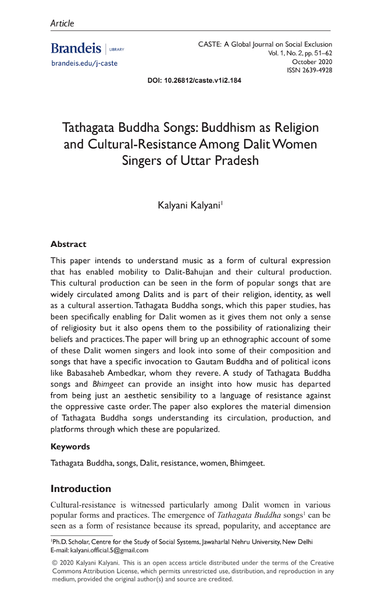
Thathagata Buddha Songs: Buddhism as Religion and Cultural-Resistance among Dalit Women Singers of Uttar Pradesh
Tathagata Buddha songs, which this paper studies, has been specifically enabling for Dalit women as it gives them not only a sense of religiosity but it also opens them to the possibility of rationalizing their beliefs and practices. The paper will bring up an ethnographic account of some of these Dalit women singers and look into some of their composition and songs that have a specific invocation to Gautam Buddha and of political icons like Babasaheb Ambedkar, whom they revere.
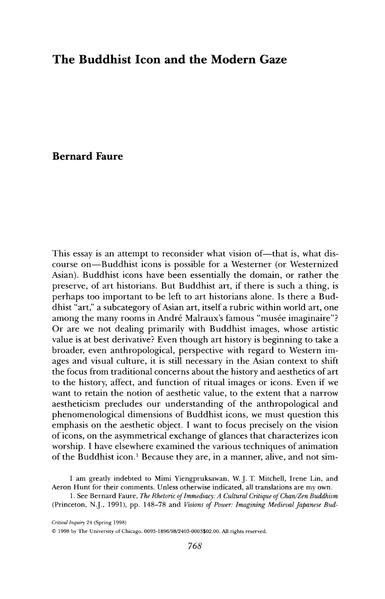
The Buddhist Icon and the Modern Gaze
Buddhist art, if there is such a thing, is perhaps too important to be left to art historians
Bring a sense of calm, mindfulness, and spiritual harmony to your space with this beautifully handcrafted Meditation Buddha Statue.
https://www.thestonestudio.in/product/meditation-buddha-statue/
Explore more handcrafted sculptures inspired by culture and spirituality:
www.thestonestudio.in
#MeditationBuddha #BuddhaStatue #SpiritualDecor #PeacefulLiving #GardenDecor #HandcraftedStatue #BuddhaArt #Serenity #HomeTempleDecor #TheStoneStudio
Performing Center in a Vertical Rise: Multilevel Pagodas in China’s Middle Period
An unprecedented number of multilevel pagodas were built in China from the tenth through the thirteenth century. This growing emphasis on verticality, in contrast to the usual horizontal sprawl of China’s building tradition, raises questions about what “height” meant in the history of Chinese architecture. This essay argues that the height of the multilevel pagoda was necessarily performative: not so much because the pagoda served as a means of ascending to that height, but because it drew the attention of the faithful.
Material Practice and the Metamorphosis of a Sign: Early Buddhist Stupas and the Origin of Mahayana Buddhism
Where earlier stupas were icons and indexes of the Buddha encased within indexes of his presence, later stupas were symbols of the Buddha and Buddhist theology. This change in the material practice of Buddhism reduced stupas ’ emotional immediacy in favor of greater intellectual detachment. In the end, this shift in the meaning ascribed to stupas created the preconditions from which the Buddhist image cult and Mahayana Buddhism emerged in the first through fifth centuries A.D. The development of Mahayana Buddhism and Buddha images signified a return to iconic worship of the Buddha.
The Emotional Toll of Wartime Bell Deployment in Japan
Because of the war, the mission of the Shōjuin bell swung drastically…
Early Chinese Buddhist Sculptures as Animate Bodies and Living Presences
Miracle tales from medieval China recorded the ability of Buddhist statues to walk, speak, emit light, and even feel pain. Consecration ceremonies, however, emphasized the sense of vision and the agency of the ritual practitioner over the agency of the statue. This essay argues that by underscoring the corporeal agency of animated sculptures, which was manifested both in their extraordinary qualities and in their vulnerability to damage, the circulation of miracle tales enabled a participatory practice in which devotees, monks and laypeople alike, were able to engage in the performative act of writing statues into life.
Buddhist Ontology and Miniaturization : Enacting Ritual With Nonhuman Agency
Ritual theories almost always assume that ritual is a kind of human action, which makes it impossible to explain ritual spaces or objects that were designed to enact the ritual without human participation. The relic depository of Chaoyang North Pagoda was a completely sealed stone box that was clearly designed as a ritual space for chanting the Uṣṇīṣavijayā dhāraṇī. This ritual space—occluded from human access—contradicts contemporary understandings of ritual. By illuminating the relic depository from the emic perspective of medieval Buddhists and applying anthropological theories, this paper offers theoretical explanations for conditions in which religious rituals were primarily enacted through non-human agency.
 The Open Buddhist University
 The Stone Studio


