Feeding on Christ

Learning to Live from Daily Bread
A Day in the Life

“And Jesus said to them, ‘I am the bread of life. He who comes to Me shall never hunger, and he who believes in Me shall never thirst.’” — John 6:35

There are moments in the life of Jesus that confront not only our understanding but our habits. I find myself walking alongside Him in John 6, watching as He feeds the five thousand with loaves and fish. The crowd is amazed, satisfied, even enthusiastic. Yet, by the next day, they are searching for Him again—not because they understood who He was, but because they wanted more bread. Jesus speaks directly into that misunderstanding, saying in essence, “You are seeking Me for what I give, not for who I am.” It is here that He declares Himself the bread of life, shifting the conversation from physical satisfaction to spiritual dependence.

I have to pause and ask myself: do I approach Christ the same way? It is easy to know how to satisfy physical hunger. When I feel it, I respond to it. But spiritually, I often hesitate or substitute. Instead of going directly to Christ, I might lean on conversations, memories of past experiences, or even the borrowed faith of others. Yet Jesus makes an exclusive and powerful claim. The Greek phrase ho artos tēs zōēs—“the bread of life”—points to something sustaining and essential, not optional. He is not merely a supplement to my life; He is the source of life itself. As Augustine of Hippo once wrote, “You have made us for Yourself, and our hearts are restless until they rest in You.” That restlessness I feel is not failure—it is invitation.

The problem arises when I interpret Scripture through my experience rather than interpreting my experience through Scripture. I might say, “I have felt spiritually empty before,” and quietly assume Christ did not meet His promise. But what if the issue is not His provision, but my approach? Jesus does not say that spiritual hunger will never attempt to rise—He says that coming to Him satisfies it. There is a difference. When Israel wandered in the wilderness, God provided manna daily. The Hebrew word man hu literally means “What is it?”—a reminder that God’s provision is often unexpected but always sufficient. Yet they had to gather it each day. Yesterday’s bread could not sustain today’s hunger.

This is where the rhythm of daily dependence becomes critical. Jesus reinforced this truth when He taught His disciples to pray, “Give us this day our daily bread” (Matthew 6:11). I notice He did not say weekly bread or occasional bread. Daily implies relationship, consistency, and humility. In another moment, when Jesus sat with the woman at the well in John 4, He offered “living water” that would become a well within her. Both images—bread and water—point to ongoing nourishment that only He can provide. As A. W. Tozer insightfully stated, “The man who has God for his treasure has all things in One.” The issue is not scarcity; it is access through faith.

I also recognize how easy it is to live off a past encounter with God. Perhaps there was a season when Scripture came alive, prayer was vibrant, and Christ felt near. But if I rely on that memory instead of renewing that connection, I begin to grow spiritually lean. Just as physical strength fades without nourishment, spiritual vitality weakens without daily intake. Jesus never intended for me to live off yesterday’s experience. He invites me into today’s presence.

So I walk with Him again in that crowd, hearing Him say, “Come to Me.” Not once, not occasionally, but continually. Coming to Christ is not complicated—it is intentional. It is opening His Word, listening for His voice, responding in obedience, and trusting that what He provides is exactly what I need. When I do, I begin to realize that the hunger I feared is actually guiding me toward the One who satisfies.

FEEL FREE TO COMMENT, SUBSCRIBE, AND REPOST, SO OTHERS MAY KNOW


#BreadOfLife #dailyDevotion #John635 #spiritualNourishment
When the Bread Is Not the Point

On Second Thought

There is a quiet tension that runs through the Gospel accounts, especially when I read Matthew 14:14–21 alongside John 6:26. On one hand, I see the compassion of Jesus as He feeds the five thousand—meeting a real, physical need. On the other, I hear His sobering words: “Most assuredly, I say to you, you seek Me, not because you saw the signs, but because you ate of the loaves and were filled.” That statement forces me to pause. It suggests that it is entirely possible to follow Jesus closely and still misunderstand Him deeply.

The crowd had witnessed something extraordinary. Five loaves and two fish had been multiplied to feed thousands. Yet, instead of asking, “Who is this man?” they asked, in effect, “What can He do for us next?” The Greek word Jesus uses for “seek,” ζητεῖτε (zēteite), implies a continuous pursuit. They were actively chasing Him—but for the wrong reason. Their focus was fixed on provision, not presence. This is where I begin to see myself reflected in the text. How often have I approached God with a list of needs, hoping for intervention, relief, or blessing, without truly seeking Him for who He is?

Jesus was not dismissing their hunger; He was redirecting their understanding. He wanted them to move beyond the temporary satisfaction of bread to the eternal fulfillment found in Him as the Bread of Life. The miracle was never meant to be the destination—it was a signpost. As Augustine of Hippo once wrote, “You have made us for Yourself, O Lord, and our heart is restless until it rests in You.” That insight captures the heart of this moment. The crowd’s hunger was real, but their deeper hunger went unrecognized. They were full, yet still empty.

This raises a challenging question: What does it mean to seek God first? Jesus taught in Matthew 6:33, “Seek first the kingdom of God and His righteousness, and all these things shall be added to you.” The order matters. The Greek phrase πρῶτον (prōton)—“first”—is not merely about sequence, but priority. It means placing God at the center, not as a means to an end, but as the end itself. When I seek God for what He can give me, my relationship with Him becomes transactional. But when I seek Him for who He is, something shifts. My desires begin to align with His will, and the things I once thought I needed lose their grip on me.

I think of the disciples in that same narrative. They were part of the miracle, distributing the food, witnessing the abundance firsthand. Yet even they would struggle later to fully grasp who Jesus was. This reminds me that proximity to Jesus does not automatically produce intimacy with Him. Intimacy requires attention, affection, and surrender. It is not built on what I receive, but on how I respond. The Hebrew concept of seeking, דָּרַשׁ (darash), carries the idea of diligently inquiring, of pursuing with intention. It is not casual; it is committed.

There is also a subtle warning embedded in this passage. If I am not careful, I can begin to measure God’s faithfulness by the visible outcomes in my life. When prayers are answered, I feel close to Him. When they are not, I begin to question. But Jesus is inviting me into something deeper—a relationship that is not dependent on circumstances. The test of true love, as the study suggests, is abiding regardless of outcome. This is what Jesus modeled throughout His ministry, and ultimately at the cross. His obedience was not driven by immediate reward, but by unwavering trust in the Father.

A commentator from Bible Gateway notes, “The miracles of Jesus were never ends in themselves; they were signs pointing to a greater reality.” That greater reality is Christ Himself. When I begin to see Him as the ultimate provision, everything else falls into its proper place. My prayers change. My expectations shift. My faith deepens.

And yet, this is not an easy transition. It requires me to examine my motives honestly. Am I following Jesus because of what He provides, or because I love Him? Am I satisfied with the bread, or do I long for the Bread of Life? These are not questions I answer once; they are questions I revisit daily. Each morning presents a new opportunity to realign my heart.

In practical terms, seeking God first might look like choosing time in His Word before engaging the demands of the day, or pausing to pray not just for needs, but for understanding. It might mean trusting Him in seasons where provision is not immediately visible, believing that His presence is enough. Over time, these choices reshape my desires. What once felt essential becomes secondary, and what once felt distant becomes central.

On Second Thought

Here is the paradox that unsettles me: the very blessings I ask God for can become the greatest barrier to knowing Him. Bread can fill my stomach while starving my soul if I mistake the gift for the Giver. The crowd in John 6 was not wrong to eat; they were wrong to stop there. They experienced the miracle but missed the meaning. And I wonder how often I do the same—celebrating answered prayers while overlooking the deeper invitation to intimacy. What if the absence of what I want is actually protecting my pursuit of what I need most? What if God, in His wisdom, withholds certain blessings not as a denial, but as a redirection? That thought changes everything. It suggests that God’s greatest act of love may not be in giving me more, but in drawing me closer. It means that the hunger I feel is not always something to be eliminated—it may be something to be understood. Because when I finally see Jesus not as the source of bread, but as the Bread itself, I discover a satisfaction that circumstances cannot touch. And perhaps that is the point all along—not that my needs are ignored, but that my heart is transformed.

FEEL FREE TO COMMENT, SUBSCRIBE, AND REPOST, SO OTHERS MAY KNOW


#BreadOfLife #ChristianDevotion #seekingGodFirst #spiritualHunger

When the Bread Is Not the Point

On Second Thought

There is a quiet tension that runs through the Gospel accounts, especially when I read Matthew 14:14–21 alongside John 6:26. On one hand, I see the compassion of Jesus as He feeds the five thousand—meeting a real, physical need. On the other, I hear His sobering words: “Most assuredly, I say to you, you seek Me, not because you saw the signs, but because you ate of the loaves and were filled.” That statement forces me to pause. It suggests that it is entirely possible to follow Jesus closely and still misunderstand Him deeply.

The crowd had witnessed something extraordinary. Five loaves and two fish had been multiplied to feed thousands. Yet, instead of asking, “Who is this man?” they asked, in effect, “What can He do for us next?” The Greek word Jesus uses for “seek,” ζητεῖτε (zēteite), implies a continuous pursuit. They were actively chasing Him—but for the wrong reason. Their focus was fixed on provision, not presence. This is where I begin to see myself reflected in the text. How often have I approached God with a list of needs, hoping for intervention, relief, or blessing, without truly seeking Him for who He is?

Jesus was not dismissing their hunger; He was redirecting their understanding. He wanted them to move beyond the temporary satisfaction of bread to the eternal fulfillment found in Him as the Bread of Life. The miracle was never meant to be the destination—it was a signpost. As Augustine of Hippo once wrote, “You have made us for Yourself, O Lord, and our heart is restless until it rests in You.” That insight captures the heart of this moment. The crowd’s hunger was real, but their deeper hunger went unrecognized. They were full, yet still empty.

This raises a challenging question: What does it mean to seek God first? Jesus taught in Matthew 6:33, “Seek first the kingdom of God and His righteousness, and all these things shall be added to you.” The order matters. The Greek phrase πρῶτον (prōton)—“first”—is not merely about sequence, but priority. It means placing God at the center, not as a means to an end, but as the end itself. When I seek God for what He can give me, my relationship with Him becomes transactional. But when I seek Him for who He is, something shifts. My desires begin to align with His will, and the things I once thought I needed lose their grip on me.

I think of the disciples in that same narrative. They were part of the miracle, distributing the food, witnessing the abundance firsthand. Yet even they would struggle later to fully grasp who Jesus was. This reminds me that proximity to Jesus does not automatically produce intimacy with Him. Intimacy requires attention, affection, and surrender. It is not built on what I receive, but on how I respond. The Hebrew concept of seeking, דָּרַשׁ (darash), carries the idea of diligently inquiring, of pursuing with intention. It is not casual; it is committed.

There is also a subtle warning embedded in this passage. If I am not careful, I can begin to measure God’s faithfulness by the visible outcomes in my life. When prayers are answered, I feel close to Him. When they are not, I begin to question. But Jesus is inviting me into something deeper—a relationship that is not dependent on circumstances. The test of true love, as the study suggests, is abiding regardless of outcome. This is what Jesus modeled throughout His ministry, and ultimately at the cross. His obedience was not driven by immediate reward, but by unwavering trust in the Father.

A commentator from Bible Gateway notes, “The miracles of Jesus were never ends in themselves; they were signs pointing to a greater reality.” That greater reality is Christ Himself. When I begin to see Him as the ultimate provision, everything else falls into its proper place. My prayers change. My expectations shift. My faith deepens.

And yet, this is not an easy transition. It requires me to examine my motives honestly. Am I following Jesus because of what He provides, or because I love Him? Am I satisfied with the bread, or do I long for the Bread of Life? These are not questions I answer once; they are questions I revisit daily. Each morning presents a new opportunity to realign my heart.

In practical terms, seeking God first might look like choosing time in His Word before engaging the demands of the day, or pausing to pray not just for needs, but for understanding. It might mean trusting Him in seasons where provision is not immediately visible, believing that His presence is enough. Over time, these choices reshape my desires. What once felt essential becomes secondary, and what once felt distant becomes central.

On Second Thought

Here is the paradox that unsettles me: the very blessings I ask God for can become the greatest barrier to knowing Him. Bread can fill my stomach while starving my soul if I mistake the gift for the Giver. The crowd in John 6 was not wrong to eat; they were wrong to stop there. They experienced the miracle but missed the meaning. And I wonder how often I do the same—celebrating answered prayers while overlooking the deeper invitation to intimacy. What if the absence of what I want is actually protecting my pursuit of what I need most? What if God, in His wisdom, withholds certain blessings not as a denial, but as a redirection? That thought changes everything. It suggests that God’s greatest act of love may not be in giving me more, but in drawing me closer. It means that the hunger I feel is not always something to be eliminated—it may be something to be understood. Because when I finally see Jesus not as the source of bread, but as the Bread itself, I discover a satisfaction that circumstances cannot touch. And perhaps that is the point all along—not that my needs are ignored, but that my heart is transformed.

FEEL FREE TO COMMENT, SUBSCRIBE, AND REPOST, SO OTHERS MAY KNOW


#BreadOfLife #ChristianDevotion #seekingGodFirst #spiritualHunger

Tuesday in the Third Week of Easter

Today’s readings

At our core, we all want peace and security in our lives.  We don’t want rough waters, or pain, or discord in our families, and that’s all understandable.  Certainly we have more than enough of those things with all the political uncertainty at home, and the uncerainty of war abroad these days.  I think that’s something of the same sentiment that is behind our Scripture readings today.

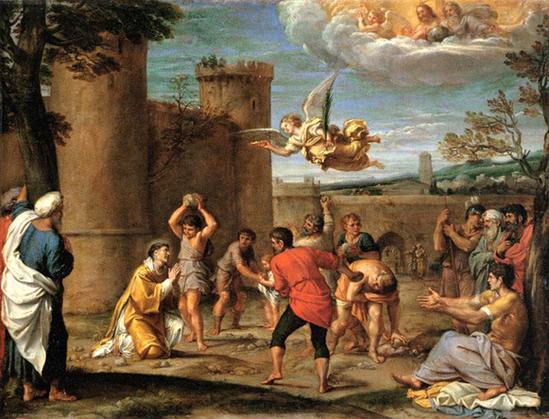
The Jewish people, the elders and the scribes, the religious establishment of the time, had their laws and customs, and for them, following those laws and customs represented a peaceful and secure life.  So they were not at all open to any kind of teaching that challenged their thinking.  Stephen points out that whenever a prophet called them to a deeper reality, a deeper sense of God’s call, rather than accept that teaching and reform their lives, their ancestors instead murdered those prophets.  And so their response was to prove his point.  They could not accept Stephen’s own prophecy that Christ in his glory was the key to human salvation.  So they stone him to death, with the tacit approval of a man named Saul, a man for whom God had future plans.

The crowd in the Gospel reading wants peace and security too.  They had recently been fed in the miracle of the loaves and fishes.  But they had missed the point.  They wanted just the bread they could eat for today; they didn’t get and didn’t want to get the bread Jesus really wanted them to have – the bread of eternal life.  And so they ask today for another feeding sign.  Just like Moses was able to provide bread from heaven, they wanted Jesus to feed their physical hunger too.  But Jesus is more interested in their spiritual hunger, and longs to provide that in himself, he who is the bread of life.

So if all we hunger for is peace and security, bread for today, then we will certainly miss receiving the Bread of Life, a far greater reality.  Our hearts have to be open, and our desires have to be for the deepest longings.  And very often, those deep longings take a lot more waiting and effort than the bread for today.  If we remember to long for the One who wishes to give us his very self, we can receive everything we truly need.  “I am the bread of life,” he says to us.  “Whoever comes to me will never hunger, and whoever believes in me will never thirst.”  In him, we will never need anything more.

Because Christ is risen!  He is risen indeed!

#BreadOfLife #Peace #security
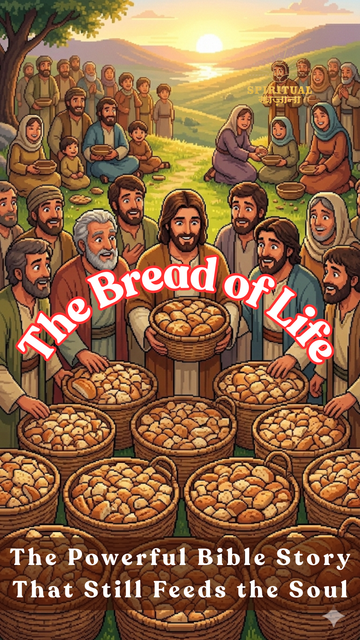
The Bread of Life – The Powerful Bible Story That Still Feeds the Soul
What if the hunger inside you isn’t about food… but about something deeper?
In this powerful retelling from the Gospel of John Chapter 6, discover the incredible miracle of Jesus feeding the 5,000 — and the life-changing message that followed. When Jesus said, “I am the Bread of Life,” He wasn’t just talking... More details… https://spiritualkhazaana.com/web-stories/the-bread-of-life-the-powerful-bible-story/
#BreadOfLife #JesusStory #BibleExplained #ChristianYouTube #BibleAnimation

Sustained, Not Just Rescued

DID YOU KNOW

There is a difference between being rescued in a moment and being sustained for a lifetime. Many of us come to God in crisis. We pray harder when the diagnosis is uncertain, when the bills stack high, or when a relationship fractures. But Scripture gently reminds us that following Jesus is not a crisis-aversion system. It is a daily dependence. The passages before us—Exodus 39–40, John 6:52–71, and Song of Solomon 5:5–9—draw us into a deeper understanding of what true sustainment looks like.

Did you know that God’s presence was always meant to be daily, not occasional?

In Exodus 39–40, the tabernacle is completed exactly as the LORD commanded. The garments are fashioned, the altar is set, and finally, the glory of the LORD fills the tabernacle. The cloud covers it by day, and fire appears by night. Scripture says, “For the cloud of the Lord was above the tabernacle by day, and fire was over it by night, in the sight of all the house of Israel throughout all their journeys” (Exodus 40:38). Notice that phrase—throughout all their journeys. God’s presence was not reserved for emergencies. It was constant.

The tabernacle was not merely a sacred structure; it symbolized continual communion. Israel did not move unless the cloud moved. Their survival depended not only on past miracles like the Red Sea crossing, but on present guidance. In the same way, our walk with God cannot be sustained by yesterday’s experience. We need today’s obedience, today’s communion, today’s awareness of His presence. The God who filled the tabernacle invites us to walk under His cloud daily.

Did you know that Jesus refused to satisfy temporary cravings when He came to offer eternal life?

In John 6, after feeding thousands with loaves and fish, Jesus declares, “I am the bread of life.” The crowd, impressed by the miracle, seeks more signs. But Jesus does not repeat the spectacle. Instead, He delivers one of His most challenging teachings: “The one who eats my flesh and drinks my blood has eternal life” (John 6:54). To Jewish ears, this was shocking. Drinking blood was forbidden under the Law. What could He mean?

Jesus was pointing beyond physical bread to sacrificial sustainment. He was not offering a momentary meal; He was offering Himself. The cross, not the loaves, was the true provision. Many disciples withdrew, confused and offended. They had followed Him for visible power, but He invited them into spiritual participation—abiding, dwelling, trusting. Jesus was teaching that eternal life flows from union with Him. He was not interested in being a temporary solution; He came as lasting sustenance.

Did you know that true faith clings to Christ even when understanding is incomplete?

When others turned away, Jesus asked the Twelve, “You do not want to go away also, do you?” Peter’s response is both simple and stunning: “Lord, to whom shall we go? You have the words of eternal life” (John 6:68). Peter did not claim full comprehension. He did not say, “We understand everything.” He said, in essence, “We trust You.”

That is the heart of sustainment. Faith does not require that every teaching be easily digestible. It requires confidence in the One who speaks. There are moments in every believer’s journey when Christ’s ways seem mysterious. The call to forgive, the invitation to suffer faithfully, the delay of answered prayer—these can perplex us. Yet sustainment grows when we remain anchored in Christ despite unanswered questions. As Augustine once wrote, “Faith is to believe what you do not see; the reward of this faith is to see what you believe.”

Did you know that longing for Christ is itself evidence of His sustaining work in you?

Song of Solomon 5:5–9 portrays a bride searching for her beloved. She rises, seeks, knocks, and even suffers in her longing. While poetic and symbolic, the imagery reminds us that love involves pursuit. The Christian life is not mechanical dependence; it is relational hunger. Sustainment is not merely about provision; it is about abiding love.

When we feel distant from God, the very ache for His presence reveals something important. Spiritual apathy is more dangerous than spiritual longing. The bride’s pursuit reflects a heart unwilling to settle for absence. Likewise, our dependence on Christ deepens as we seek Him—not only for what He gives, but for who He is. Jesus does not merely feed us; He dwells with us. He sustains us not only through provision, but through communion.

As we consider these passages together, a pattern emerges. The tabernacle teaches us about God’s abiding presence. John 6 teaches us about Christ as eternal sustenance. Peter’s confession teaches us about enduring faith. The Song of Solomon reminds us that love fuels pursuit. Sustainment is not a single moment of rescue; it is a lifelong rhythm of reliance.

Perhaps today you find yourself tempted to treat faith as a backup plan—something to activate when life becomes difficult. Scripture invites you into something richer. Christ is not a crisis consultant. He is the Bread of Life. He is the Holy One of God. He is the abiding presence who walks with you throughout all your journeys.

Pause and ask yourself: Am I seeking signs, or am I seeking Him? Am I satisfied with occasional spiritual experiences, or am I cultivating daily dependence? True sustainment grows not from repeated miracles, but from abiding trust.

FEEL FREE TO COMMENT, SUBSCRIBE, AND REPOST, SO OTHERS MAY KNOW


#BreadOfLife #dailyDependenceOnGod #ExodusTabernaclePresence #John6Devotion #PeterConfessionEternalLife #sustainingFaith

Awake Hearts and Living Bread

DID YOU KNOW

The Bible is not a cold theological manual; it is a passionate love story. From the craftsmanship of the tabernacle in Exodus 37–38 to the poetic intensity of Song of Solomon 5 and the searching words of Jesus in John 6, Scripture pulses with desire—God’s desire for His people and His design for human love. These passages remind us that what fills our hearts, what keeps us awake at night, reveals what we truly worship.

Did you know that God designed romantic passion to reflect spiritual devotion?

Song of Solomon 5:1–4 is not shy or sterile. It is full of energy, anticipation, and wordplay. The bride says, “I slept, but my heart was awake” (Song 5:2). The Hebrew imagery conveys longing that refuses to rest. Even in sleep, her love is alert. This is not casual affection; it is covenantal desire. The man arrives with urgency, and the woman responds with expectation. There is movement, eagerness, even anxiety. True romance, as Scripture portrays it, is neither embarrassed nor indifferent. It is alive.

Yet this is not merely about marriage. Throughout the Bible, marital imagery points beyond itself. Ephesians 5:32 calls marriage a “great mystery” that ultimately refers to Christ and the church. The intensity in Song of Solomon invites us to examine our spiritual temperature. Is our love for God awake, even when the world dulls our senses? Passion in marriage mirrors the passion we are to have for the Lord. When love grows sleepy, devotion fades. When love is alert, obedience becomes joyful rather than mechanical.

Did you know that what keeps your heart awake reveals what rules your heart?

The bride’s confession—“my heart was awake”—forces us to consider our own inner life. What occupies your mind in quiet moments? What stirs your imagination? What do you replay when the day is done? Jesus taught that “where your treasure is, there will your heart be also” (Matthew 6:21). Our thoughts expose our allegiances.

John 6 deepens this insight. Jesus contrasts manna with Himself: “Your fathers ate the manna in the wilderness, and they died. This is the bread that comes down from heaven, that one may eat of it and not die” (John 6:49–50). The Israelites experienced daily provision in Exodus 16, yet many still longed for Egypt. Physical bread sustained them temporarily; it did not transform their hearts. In the same way, we may consume spiritual content without cultivating spiritual hunger. Christ does not offer a supplement; He offers Himself as the living bread.

If our hearts are more animated by temporary comforts than by Christ, it reveals a subtle misalignment. Necessary things—career, entertainment, even ministry—can become substitutes for intimacy with Him. The living bread satisfies at a deeper level than anything else. To feed on Christ is to let His words shape our desires and His presence calm our anxieties.

Did you know that the tabernacle’s beauty points to God’s passionate pursuit of communion with you?

Exodus 37–38 describes skilled artisans crafting the ark, the mercy seat, the altar, and the lampstand with intricate detail. Gold overlays wood. Curtains are woven with precision. Measurements are exact. Why such care? Because God intended to dwell among His people. The tabernacle was not merely a religious structure; it was a declaration that the Holy One desired nearness.

The mercy seat, placed upon the ark, was the meeting place between God and Israel. Blood was sprinkled there as atonement. That sacred space foreshadowed Christ, who would become the ultimate mediator. When we read these chapters, we see more than craftsmanship; we see intention. God is not distant or detached. He is deliberate in drawing near.

This same passion culminates in John 1:14: “The Word became flesh and dwelt among us.” The Greek term for “dwelt,” eskēnōsen, literally means “tabernacled.” Jesus is God pitching His tent among humanity. The ornate beauty of Exodus anticipates the incarnation. The God who designed sacred space now invites us into direct relationship through His Son. That realization reframes devotion from duty to privilege.

Did you know that true love requires alertness, not complacency?

In Song of Solomon, the bride initially hesitates before opening the door. By the time she rises, the beloved has withdrawn. The tension in the text reminds us that delay in love carries consequence. Spiritually, complacency can dull responsiveness. Hebrews 2:1 warns us to “give the more earnest heed… lest we drift away.” Love demands attentiveness.

Jesus’ words in John 6 challenged His hearers so deeply that many turned back (John 6:66). Real love perseveres even when teachings are difficult. It listens, trusts, and remains. The bride’s awake heart symbolizes a vigilance that protects intimacy. In our walk with God, that vigilance is cultivated through prayer, Scripture, and obedience. It is possible to attend church yet grow sleepy in spirit. The call is to remain awake—sensitive to conviction, eager for fellowship, quick to respond.

Passion without discipline burns out; discipline without passion dries up. Scripture invites us to both. The tabernacle shows ordered devotion; the Song displays fervent affection; John 6 reveals sustaining truth. Together they paint a portrait of holistic love—structured yet vibrant, anchored yet alive.

As you reflect on these passages, consider what occupies your heart’s attention. Are you feeding on the living bread, or merely sampling substitutes? Is your love alert, or has it grown drowsy? Dedicate yourself intentionally to love—love of family, love of neighbor, and above all love of Christ. Let your heart remain awake to His presence.

The God who crafted beauty in Exodus, who inspired poetic longing in Song of Solomon, and who declared Himself the bread of life in John invites you into a relationship that is alive and enduring. True romance with God does not fade with familiarity. It deepens with devotion.

FEEL FREE TO COMMENT, SUBSCRIBE, AND REPOST, SO OTHERS MAY KNOW


#biblicalRomance #BreadOfLife #ChristianDevotion #Exodus3738 #John62551 #SongOfSolomon5 #spiritualPassion #TabernacleSymbolism

Life is messy, unpredictable, and often overwhelming. But Jesus, the Bread of Life, promises us just enough for today. Here’s how I’m learning to trust Him with my daily bread—and let go of tomorrow’s worries.

New blog post: The Bread of Life
📬 Read it at fabricthatmademe.com
📱 Follow along @skfabric_303 for more daily encouragement

#BreadOfLife #FaithOverFear #ChristianLiving #DailyFaith #RestInHim #fabricthatmademe

https://fabricthatmademe.com/2025/08/30/the-bread-of-life-finding-daily-faith-in-a-world-of-worry/

The Bread of Life | Finding Daily Faith in a World of Worry

Life changes on a dime, but Jesus gives us enough for today. Discover the deeper meaning of the Bread of Life and the peace of resting in Him.

A journey through wonder & the Word

Quote of the day, 1 August: St. Edith Stein

Every mystery of this life that we seek to discern in loving contemplation is for us a fount of eternal life. And the same Savior, whom the written word presents to our eyes on all the paths he trod on earth in human form, lives among us disguised in the form of the eucharistic bread. He comes to us every day as the bread of life.

In either of these forms, he is near to us; in either of these forms, he wants to be sought and found by us. The one supports the other.

When we see that Savior before us with the eyes of faith as the Scriptures portray him, then our desire to receive him in the bread of life increases. The eucharistic bread, on the other hand, awakens our desire to get to know the Lord in the written word more and more deeply and strengthens our spirit to get a better understanding.

Saint Edith Stein

For January 6, 1941

Stein, E. 2014, The Hidden Life: hagiographic essays, meditations, spiritual texts, translated from the German by Stein, W, ICS Publications, Washington DC.

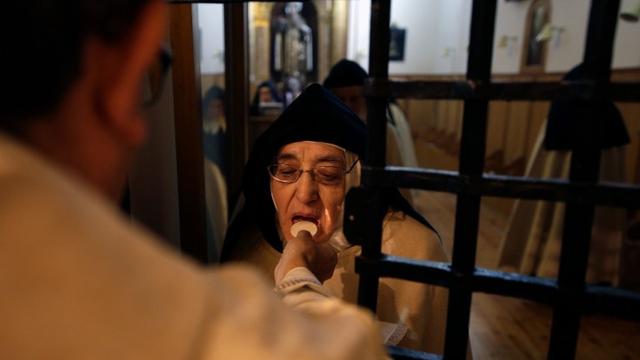
Featured image: A nun receives communion from the hands of then Auxiliary Bishop Luis Javier Argüello García in the Carmel of Valladolid for the Solemnity of St. Teresa, 15 October 2016. The Flickr account of the Archdiocese of Valladolid contains an entire album of photos from the celebration. Image credit: Ángel Cantero for Iglesia en Valladolid / Flickr (Some rights reserved)

#breadOfLife #Eucharist #scripture #StEdithStein #theology