Criminal charges in India can be withdrawn by the government using the procedure set out in Section 321 of the Code of Criminal Procedure ( #CrPC), now replaced by Section 360 of the Bharatiya Nagarik Suraksha Sanhita (BNSS), 2023. The Public Prosecutor or Assistant Public Prosecutor in charge of the case is empowered to seek withdrawal from prosecution, but this process is tightly regulated and requires both independent prosecutorial judgment and judicial oversight
Fir court ki value kya hai
#Hindi #India #bnss
Important Sections and Comparison

Important Sections and Comparison Bharatiya Nyaya Sanhita (BNS) – 2023 VS Indian Penal Code (IPC) – 1860 Bharatiya Nagarik Suraksha Sanhita (BNSS) – 2023 VS Criminal Procedure Code (CRPC) – …

Local Newspaper
SFLC.in – Learning Call July – Form

#SaveTheDate #RegisterNow

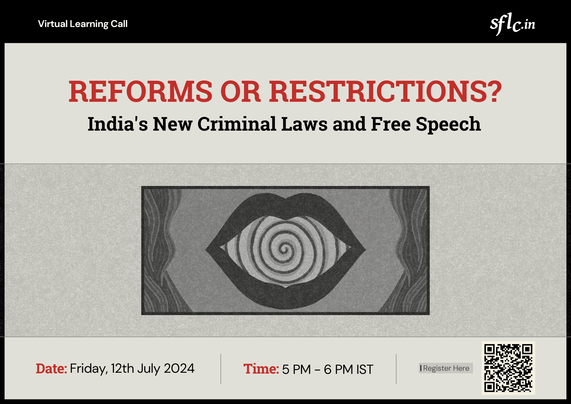
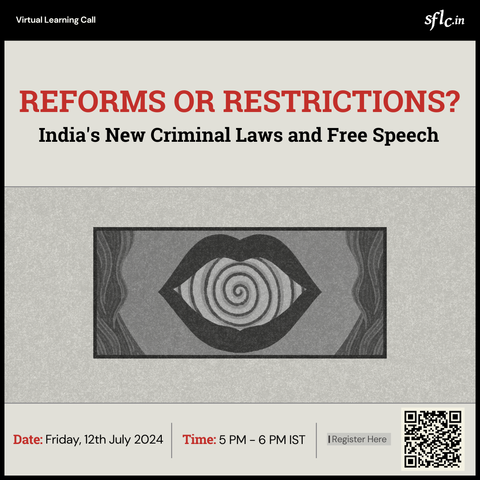
@sflcin is organising a virtual #LearningCall on “Reforms or Restrictions? India's New Criminal Laws and Free Speech.”

The learning call will analyze the challenges these laws pose to citizens' lives and liberty and their implications for freedom of speech and expression.

Join us on:
Date: July 12th, 2024
Time: 5-6 p.m. IST

Register Now: https://form.sflc.in/sflc-in-learning-call-july/

#StayTuned!

#SFLCin #India #Tech #BNS #BNSS #BSA #CriminalLaws #IPC #CrPC #Bill #Policy #FreeSpeech

SFLC.in – Learning Call July – Form

'Extensive Consultations' Before 3 New Criminal Laws, Says Modi Govt, But Won’t Give Any Details

The three new criminal laws, effective from 1 July 2024, to overhaul India’s criminal justice system have faced criticism for increasing police powers and introducing offences like terrorism without proper safeguards.

#IndianCriminalLaws #HumanRights #BNS #BNSS #BSA #IPC #CrPC #IndianEvidenceAct #transparency #PolicePowers #BJP #DraconianLaws #RTI #UnionGovt #india

https://article-14.com/post/-extensive-consultations-before-3-new-criminal-laws-says-modi-govt-but-won-t-give-any-details--665d33016aac0

'Extensive Consultations' Before 3 New Criminal Laws, Says Modi Govt, But Won’t Give Any Details

The three new criminal laws, effective from 1 July 2024, to overhaul India’s criminal justice system have faced criticism for increasing police powers and introducing offences like terrorism without proper safeguards. Experts worry about the potential misuse of these new provisions. Right to Information requests filed by Article 14 to obtain information about the laws’ formation and discussions were obstructed, with higher courts also denying information on “untenable” and “illegal” grounds, highlighting transparency and accountability challenges in law-making processes. Experts raised concerns about the effective implementation of transparency law in the judiciary.

The unconstitutional trinity— Part 1: Examining the unholy ‘ghost’ of BNSS

Of the new trinity that will lord over India’s criminal law landscape, Bharatiya Nagarik Suraksha Sanhita, replacing the Code of Criminal Procedure, 1973, has received the least attention, because procedure is an unholy ‘ghost’ not necessarily discernible to the layman. In the first part of this series, Nipun Saxena makes manifest what is deliberately hidden in plain sight.

#BNSS #law #IndianCriminalLaws #CrPC #DraconianLaws #india

https://theleaflet.in/the-unconstitutional-trinity-part-1-examining-the-unholy-ghost-of-bnss/

The unconstitutional trinity— Part 1: Examining the unholy ‘ghost’ of BNSS – The Leaflet

Of the new trinity that will lord over India’s criminal law landscape, Bharatiya Nagarik Suraksha Sanhita, replacing the Code of Criminal Procedure, 1973, has received the least attention, because procedure is an unholy ‘ghost’ not necessarily discernible to the layman. In the first part of this series, Nipun Saxena makes manifest what is deliberately hidden in plain sight.

The Leaflet – An independent platform for cutting-edge, progressive, legal, and political opinion.