Exclusive: "Hero Caps" are Back with The Marvel Art of Mike Zeck in X-Men form! #comics #artbooks @cloverpress.bsky.social @mikezeck.bsky.social

https://graphicpolicy.com/2026/05/19/exclusive-hero-caps-are-back-in-the-marvel-art-of-mike-zeck-form/?utm_source=mastodon&utm_medium=jetpack_social

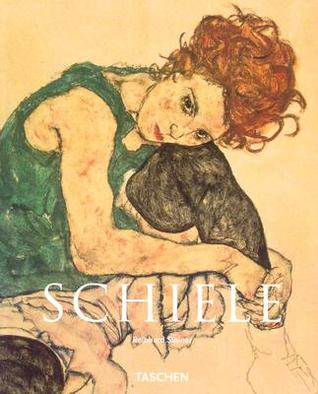
T.A.E.’s Book Review – Schiele by Reinhard Steiner

Reinhard Steiner’s Schiele is a compact Taschen monograph, running to 96 pages, and its chapter structure already reveals its interpretive intelligence: “The artist’s self,” “I went by way of Klimt,” “The figure as signifier,” “The visionary and symbolic works,” and “Landscapes of the soul.” That progression suggests a book less interested in exhaustive biography than in tracing Schiele as a sequence of pressures—selfhood, lineage, embodiment, symbol, and inward weather. It reads like an argument about how an artist becomes legible to himself and to history. 

What gives the book its force is the way it frames Schiele’s style not as mere provocation, but as a language of perception. The publisher’s description emphasizes his “graphic style,” “figural distortion,” and “psychological and sexual intensity,” and Steiner’s selection of works appears designed to show that these are not decorative shocks but the core of Schiele’s artistic ethics. In this sense, the book is persuasive because it treats the body as an epistemological problem: Schiele’s figures do not simply pose; they expose. 

The most memorable moments are those in which Steiner lets the artist’s own voice flare through the commentary. Two lines are especially revealing: “I want to taste dark water and see crackling trees and wild winds,” and “I want to look intently at grasses and pink people.” Together, they condense the book’s sensibility—an art driven by appetite, danger, tenderness, and a restless need to see more sharply than ordinary vision allows. Steiner’s achievement is to make those words feel like a key to the pictures: Schiele is not only painting bodies, but testing how far sensation can be pushed before it turns uncanny. 

The book’s limitation is also its defining feature: at 96 pages, it is a lucid introduction rather than a deeply archival study. The publisher explicitly presents it as a selection of “key Schiele works” that introduces his “short but urgent career,” so the reader should not expect the density of a full scholarly monograph. But within those limits, Steiner offers a nimble, visually alert, and thematically coherent account of why this artist remains so unsettlingly modern. It is a book that understands that a creator’s lasting power lies not in scandal, but in intensity disciplined into form.

#art #artBooks #artHistory #BookReviews #EgonSchiele #LiteraryCriticism #ReinhardSteiner #Steiner
Exclusive: The Great Garloo Trading Card Revealed for The Art of the Toys That Made Us - Graphic Policy

Oni Press and The Nacelle Company have revealed The Art of the Toys That Made Us, capturing the instantly recognizable designs, artwork, advertising, concept art, and more from the brands behind the smash-hit streaming series

Graphic Policy
Exclusive: The Great Garloo Trading Card Revealed for The Art of the Toys That Made Us - Graphic Policy

Oni Press and The Nacelle Company have revealed The Art of the Toys That Made Us, capturing the instantly recognizable designs, artwork, advertising, concept art, and more from the brands behind the smash-hit streaming series

Graphic Policy

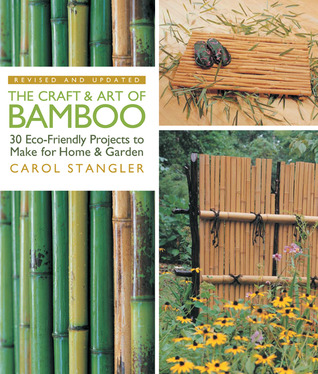
T.A.E.’s Book Review – The Craft & Art of Bamboo: 30 Eco-Friendly Projects to Make for Home & Garden by Carol Stangler

Carol Stangler’s The Craft & Art of Bamboo: 30 Eco-Friendly Projects to Make for Home & Garden is, at heart, a book about persuasion: it asks the reader to see bamboo not as a decorative novelty, but as a living medium with history, utility, and aesthetic dignity. The revised and updated 2009 edition presents itself as “a highly regarded introduction to the material,” one that offers “rich history, fascinating background and great projects,” and that framing matters. This is not merely a how-to manual; it is a conversion narrative in practical form, inviting the reader into an older, more ethical relationship with making. 

What gives the book its distinct character is the way it balances romance and procedure. The publisher’s description opens with “beautiful, sustainable bamboo,” a phrase that already joins visual pleasure to ecological responsibility, and then moves quickly into the language of use: “harvesting, storing, and making things with bamboo.” That progression is revealing. The author does not let bamboo remain an abstract symbol of greenness; she insists on its material life, its handling, its resistance, its needs. The book’s appeal, then, lies in its double vision: bamboo is at once an emblem of harmony and a substance that must be cut, dried, bent, fastened, and preserved. 

The project list confirms this hybrid ambition. The book promises “30 eco-friendly projects,” including “bamboo fences, trellises, chopsticks, teacups, and even an outdoor shower.” The range is striking because it moves from the infrastructural to the intimate, from garden boundary to tableware, from enclosure to ritual. In literary terms, the book stages bamboo as a material that crosses thresholds: between exterior and interior, craft and architecture, ornament and necessity. Even the improbable charm of an “outdoor shower” suggests bamboo’s capacity to transform ordinary domestic acts into something lightly ceremonial. 

The book’s vocabulary further strengthens that impression. Its preview metadata is thick with technical terms—“culm,” “rhizomes,” “square lashing,” “metric equivalents,” “drill bit,” “sealer,” “pressure-treated,” “reed fencing,” and “bamboo lengths.” This lexicon matters aesthetically. It signals a text that respects craftsmanship as a language of exactness, not just inspiration. One could say Stangler writes in the idiom of the workshop rather than the showroom. The result is a style of practical knowledge that feels almost literary in its attention to named parts, precise motions, and the stubborn intelligence of materials. 

As a reader, I find the book most compelling when it treats bamboo as both ecological resource and cultural form. Its promise of “lush photography and abundant illustrations” suggests that visual pleasure is not an afterthought but part of the argument: the book wants the reader to admire before they build, to understand with the eye as well as the hand. That is one reason the volume feels enduring rather than merely instructional. It belongs to a tradition of craft books that do more than transmit technique; they cultivate a sensibility, teaching that usefulness and grace need not be opposites. 

In the end, The Craft & Art of Bamboo succeeds because it takes seriously the ancient, adaptable intelligence of its subject. It is practical without being dry, ecological without being preachy, and technical without losing a sense of delight. Stangler’s book reminds us that craft is never only about making objects; it is about learning how to see a material world already full of form, possibility, and restraint. Bamboo, in her hands, becomes a lesson in disciplined abundance.

#art #artBooks #Bamboo #BookReviews #CarolStangler #craftProcess #crafts #Design #LiteraryCriticism #Stangler #Sustainability

The Art of Star Trek: Lower Decks preview. Boldly go behind the scenes of the hit animated series Star Trek: Lower Decks with this dazzling art companion. #artbooks #startrek #lowerdecks

https://graphicpolicy.com/2026/05/06/preview-the-art-of-star-trek-lower-decks/?utm_source=mastodon&utm_medium=jetpack_social

Preview: The Art of Star Trek: Lower Decks - Graphic Policy

Boldly go behind the scenes of the hit animated series Star Trek: Lower Decks with this dazzling art companion.

Graphic Policy

T.A.E.’s Book Review – In Celebration of Balance & Opposable Thumbs, Collection 1 by Joe Sorren

In Celebration of Balance & Opposable Thumbs, Collection 1 by Joe Sorren is not merely an art collection—it is a philosophical atmosphere rendered in pigment, a meditation on fragility, wonder, and the strange dignity of awkwardness. To approach this book as a conventional monograph would be to miss its essential gesture; the artist is less concerned with showcasing technical virtuosity than with cultivating a quiet, almost trembling attentiveness to the inner lives of his figures.

Sorren’s visual language belongs to a lineage that might loosely echo the dreamlike distortions of Marc Chagall or the symbolic tenderness of Paul Klee, yet his work resists easy categorization. His characters—elongated, soft-faced, often wide-eyed—inhabit a liminal space between innocence and melancholy. One recurring sentiment, articulated in the accompanying text, reads: “We are all just trying to hold something without breaking it.” This line encapsulates the art’s central tension: the act of holding, whether emotional or physical, as both necessity and risk.

The titular phrase “balance & opposable thumbs” operates as both metaphor and quiet manifesto. Balance suggests the precarious equilibrium of emotional life, while opposable thumbs—our evolutionary gift—symbolize the human capacity to shape, to grasp, to create meaning. Yet in Sorren’s world, these gifts are never triumphant; they are tentative, almost apologetic. In one passage, he reflects: “The hands know more than the mind, but they hesitate anyway.” This hesitation becomes the emotional core of the collection, a resistance to certainty that feels deeply contemporary.

Visually, the compositions are deceptively simple. Backgrounds often dissolve into muted washes, allowing figures to emerge as if from memory rather than environment. The palette—soft ochres, dusty blues, bruised pinks—evokes a kind of emotional patina, as though each painting has already lived a life before reaching the viewer. Consider a piece in which a figure cradles a small animal, its posture protective yet unsure; the accompanying text notes: “Care is a kind of balancing act, and sometimes the thing you love is heavier than you are.” Here, composition collapses the boundary between physical weight and emotional burden, rendering care as both grace and strain.

What distinguishes this collection is its refusal of spectacle. In an era saturated with hyper-polished imagery, Sorren leans into vulnerability, even awkwardness. His figures often appear slightly off-balance, their limbs too long, their expressions too open. This aesthetic choice aligns with a broader philosophical stance: imperfection is not a flaw to be corrected but a condition to be inhabited. One might hear faint echoes of Jean-Paul Sartre in this embrace of contingency, though the artist’s tone is far gentler, less anguished. Where Sartre confronts absurdity with existential defiance, he meets it with quiet acceptance.

The book’s structure reinforces this ethos. Rather than presenting a linear progression, the collection unfolds associatively, each image-text pairing functioning as a small meditation. The effect is cumulative rather than narrative; meaning accrues slowly, like layers of glaze on ceramic. This pacing invites a mode of reading that is less analytical than contemplative. One does not “finish” this book so much as return to it, allowing its images to settle and resurface.

There is also a subtle ethical dimension to Sorren’s work. His emphasis on gentleness, on the careful handling of both objects and emotions, suggests a counterpoint to contemporary cultures of speed and disposability. “Nothing wants to be dropped,” one line observes with disarming simplicity. It is a statement that extends beyond the literal, implicating relationships, responsibilities, even the self.

Ultimately, In Celebration of Balance & Opposable Thumbs is a study in quiet resilience. It asks what it means to live delicately in a world that often rewards force, to value hesitation in a culture that prizes decisiveness. Sorren does not offer answers; instead, he offers images and fragments that linger, that unsettle gently, that invite a slower kind of seeing.

To engage with this collection is to practice a form of attentiveness that feels increasingly rare: to look without rushing, to feel without resolving, to hold—however briefly—without breaking.

#art #artBooks #ArtBrut #artCritique #BookReviews #JoeSorren #Juxtapoz #LiteraryCriticism #OutsiderArt #RawArt #Sorren
In Chinese news, miHoYo’s #HonkaiStarRail is celebrating its third anniversary by giving away 2.4 million commemorative #ArtBooks. Announced on April 10th, and produced with Shanghai Music Publishing House, this event runs through May 10th. #Gaming #Booksky #HSR
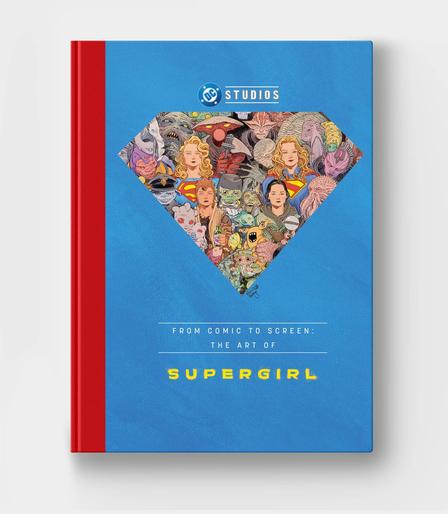
From Comic to Screen: The Art of Supergirl Explores Kara Zor‑El’s Evolution Across Sequential Art and Film - Graphic Policy

This hardcover volume invites readers into the artistic process behind both works, offering an in-depth look at how a contemporary vision of a DC icon is shaped, refined, and brought to life

Graphic Policy
Dead Media Maniacs is happening again this Friday at House Of Targ.
I'll be there selling art books and arcade stuff.
Come buy stuff and play pinball and eat perogies.
#ottawa #garagesale #pinball #artbooks