Building Triboelectric Charge

In volcanic eruptions, collisions between ash particles can sometimes build up enough electric charge for lightning to arc through the plume. Scientists have long debated how this happens–it’s not obvious that insulating materials like oxides would build up electric charges through contact, especially when dealing with substances of the same material. It’s not like rubbing a balloon against your hair, where each material–and its tendency to hold a charge–differs.

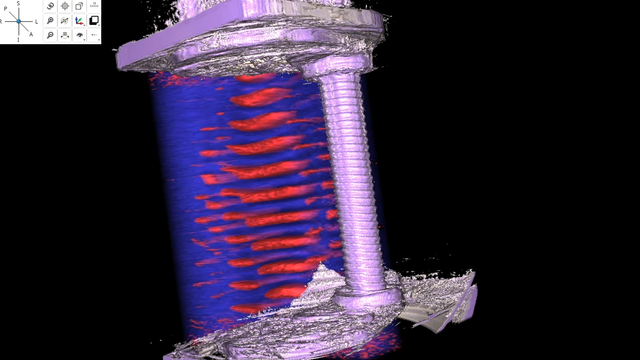
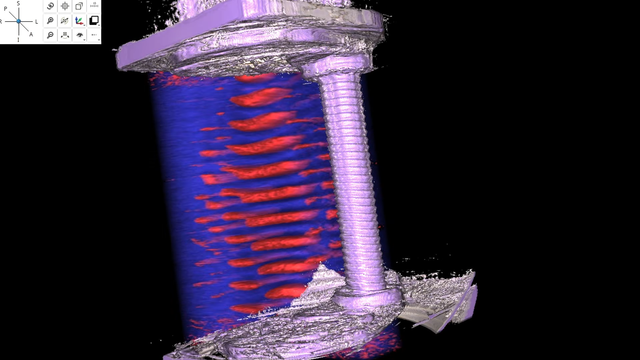
A 500-micron silica sphere acoustically levitated above a silica plate in the experiment.

To test how charges build on identical materials, a team of scientists used acoustic levitation to repeatedly bounce a silica bead against an identically treated silica plate, observing their charge build-up. Then they would take one of the pieces–either the sphere or the plate–and treat it to strip away the film of molecules that naturally adsorb onto the surface over time. Then they bounced the treated and untreated surfaces off one another again.

The result was–pardon the pun–striking. Whichever surface had been treated to remove adsorbates charged more negatively the second time around. Looking more closely at what they were removing, the team found their surfaces were mostly adsorbing carbon molecules. And if they iteratively removed the carbon from both the sphere and plate, they could no longer charge the two through collision. It seems that the key to charging two oxides off one another is actually the difference between the incidental amounts of carbon on their surfaces! (Image credit: volcano – M. Szeglat, experiment – G. Grosjean et al.; research credit: G. Grosjean et al.; via Gizmodo)

#acousticLevitation #fluidDynamics #physics #science #triboelectrification #volcano


Mapping The Sound Field Of An Acoustic Levitator

Sound! It’s a thing you hear, moreso than something you see with your eyes. And yet, it is possible to visualize sound with various techniques. [PlasmatronX] demonstrates this well, using a s…

Hackaday

🌟🔊 Acoustic levitation breakthrough! Austrian scientists use sound waves + electric charges to float multiple objects midair—overcoming collapse for dynamic structures. Perfect for micro-robots, materials science & more! A sonic leap forward. Read more: https://thedebrief.org/acoustic-levitation-breakthrough-uses-sound-to-float-multiple-objects-in-midair/

@goodnews

#GoodNews #AcousticLevitation #SoundTech #ScienceInnovation #FutureTech

Acoustic Levitation Breakthrough Uses Sound to "Float" Multiple Objects in Midair

Science, Tech and Defense for the Rebelliously Curious.

The Debrief

Phased Array Levitation Is Science in Action

Levitation may seem like magic. However, for certain objects, and in certain conditions, it's actually a solved technology. If you want to move small particles around or do experiments with ultrasonic haptic feedback, you might find SonicSurface to be a useful platform for experimentation.

The build comes to us from [UpnaLab], and is no small feat of engineering. It packs in 256 ultrasonic emitters in a 16×16 grid, with individual phase control across the entire panel. This allows for the generation of complex ultrasonic wave fields over the SonicSurface board. Two boards can be paired together in a vertically opposed configuration, too. This allows the levitation of tiny particles in 3D space.

As you might expect, an FPGA is pressed into service to handle the heavy lifting - in this case, an Altera CoreEP4CE6. Commands are sent to the SonicSurface by a USB-to-serial connection from an attached PC.

The board is largely limited to the levitation of small spherical pieces of foam, with the ultrasonic field levitating them in midair. However, the project video shows how these tiny pieces of foam can be attached to threads, tapes, and other objects in order to manipulate them with the ultrasonic array.

It may not be a simple project, but it serves as a great basis for your own levitation experiments. Of course, if you want to start smaller, that's fine too. If you come up with any great levitation breakthroughs of your own, be sure to let us know.

#science #acousticlevitation #levitation #ultrasoniclevitation

Phased Array Levitation Is Science In Action

Levitation may seem like magic. However, for certain objects, and in certain conditions, it’s actually a solved technology. If you want to move small particles around or do experiments with u…

Hackaday