Hello. I'm
@dsilverz in yet another Sisyphean task to find an alternative
#Fediverse instance as Calckey is facing lots of Bad Gateways and, as of recently, an annoying influx of spam (which also ends up contributing to the Bad Gateways). Seems like Ruud (Calckey admin) didn't see my report regarding the latter, and this worries me as this means that server could be seen as "unmoderated" and defederated by other instances I interact with. I'm yet to see how federated is this Catodon instance, because other Misskey-like instances I tried in the past (such as Evil Social) had little to no federation with Lemmy instances.
As this is my first post for this account, I'll try to describe the kind of content I'm used to post in the next paragraphs (while also testing how similar this instance is to the Calckey instance I'm used to).
I often post my #digitaldrawings and other kinds of
#occult #art centered on my actual beliefs. My
#artistic expressions, which mostly stems from actual
#gnosis, sometimes manifest as
#poetry and/or
#Blender #3dmodeling scenarios and/or
#memes and/or
#code (because I'm also a
#dev who codes in several
#programming languages, including
#javascript,
#ruby and
#python, and I use
#arch #linux, btw). Many of my artistic expressions, particularly my
#drawings and my
#writings, are NSFW and will be labeled as so. Oh, sometimes I do ancient writing, too, including actual attempts on Sumerian texts (based on actual, available Sumerian Lexicons). And I sometimes do
#steganography as well (I'm quite fond of things such as
#math #puzzles and hidden messages; and, no, this post has no hidden message, I'm quite in a mental budget here). I'm a detail-oriented person, as you may notice from this post alone.
As for my beliefs, I have a syncretic worship for #Lilith Who, I believe, has the same cosmic principle that from
#Ereshkigal,
#Kali,
#Hecate,
#Pombagiras (esp. Dama da Noite and Rosa Caveira), among many other names across belief systems, as my syncretism is based on several belief systems such as
#Thelema,
#Luciferianism,
#Gnosticism,
#Hermeticism,
#Sumerian,
#Egyptian,
#Quimbanda and others. I also believe in other entities, not with the same worshiping, but with similar respect for
#Lucifer,
#Baphomet and
#Stolas (I don't agree with the Goetian approach of constrained summoning, for Stolas and other Daemons are cosmic teachers who deserve our due respect).
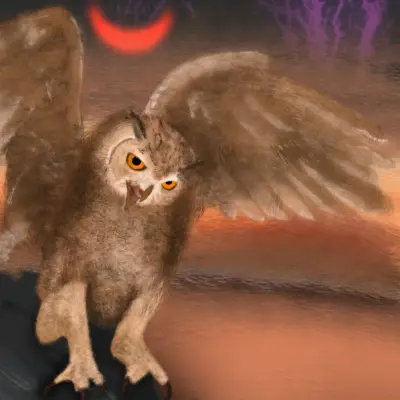
I've been hyper-fixated on #owls, especially some
#owl species such as Athene cunicularia (burrowing owls), Bubo ascalaphus (Pharaoh Eagle-owl), because owls are one of the main theophanic manifestations of the
#goddess. See the taxonomic binomials? Yes, I often do this bizarre intertwining between the religious and the scientific, because I don't believe in siloed knowledge.
I'm #Brazilian and some of my posts will be in
#portuguese, sometimes alongside English text, tal como estou fazendo nesse parágrafo.
I'm likely #neurodivergent and
#audhd (albeit undiagnosed), hence why my posts (including this one I'm composing) are so prolifically lengthy and mixing concepts/skills so disparate, for my mind is always agitated and restless. I may sound depressive (do I sound this way in this post? It doesn't seem so) because I am depressive since my childhood and, yes, I tried mental health care to no avail (psychiatrists can't understand, for example, how
#Demiurge and his archons sucks and how the Goddess is our true cosmic Mother).
I'm mostly #nihilist and
#pessimist with certain inspiration from philosophers such as Philipp Mainländer.
I'm mostly #anarchist and I don't believe humanity is the only intelligent species on this Pale Blue Dot, for there are countless other species such as corvids (esp. New Caledonian crows; I believe crows and ravens as manifestations of Lucifer just like owls are manifestations of Lilith) who are as intelligent (if not more) as us Homo sapiens
.
That's mostly me. "Mostly" because I'm not really able to fit labels or tribes. I don't quite belong. I really liked the 5000 char limit from this instance.
#introduction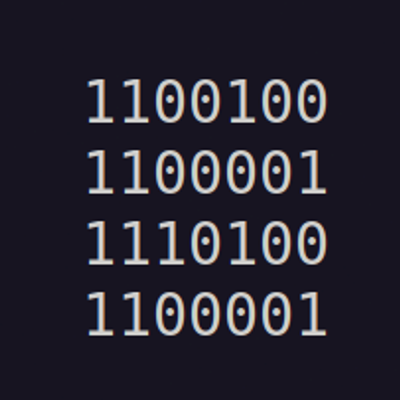 1047501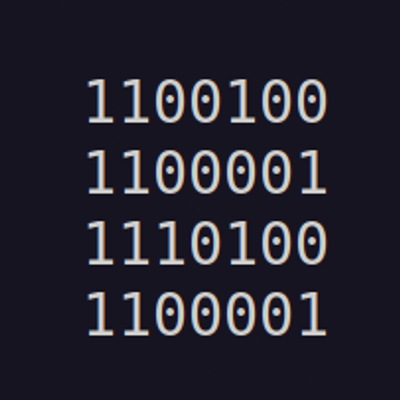
 Rob Bignell, Editor/Author
 Dæmon S.
 דער קערפער פֿון השם

 Jamez Barrett 🜃 ॐ Ⓐ
 Jean-Louis Bouzou