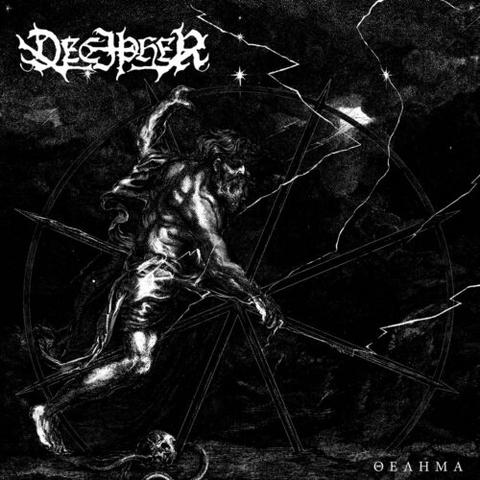
Decipher – ΘΕΛΗΜΑ (Thelema) Review By Thus Spoke

It’s not often I underrate something, but if there were ever a legitimate example, it might be my review of Arcane Paths to Resurrection, the debut from Greek black metal trio Decipher. Upon revisiting it recently, I experienced newfound intense appreciation for their slightly crusty melodic black metal, and this all stemmed from my initial spins of sophomore ΘΕΛΗΜΑ.1 Not overly atmospheric, not supremely dissonant or integrated into death metal, nor straightforwardly raw and aggressive, Decipher maintain a style in Thelema that’s as subtly intriguing and melodic as it is punchy and to-the-point. The word Thelema means will2 and while there’s no lyric sheet or storytelling in promo material to elucidate the concept, the snatches of audible references to Satan, and the generally extreme, yet anthemic vibe of the music broadcast defiant rebellion and the burden of being, which suit that word well.

Decipher’s sound is broadly the same as on Arcane Paths, a Watain-meets-Dissection viciousness tempered—if you can call it that—by a darker, eerier side that pulls more from Icelandic acts like Svartidauði. Whilst remaining committed to frequent use of group-chanted and screamed vocal lines and plenty of recognisably malicious blackened riffery, Thelema sees the band experiment a little more. While not meandering—with the possible exception of “Bound to the Wheel”—songs spread their themes into more variations (“The Black March,” “Towards Renaissance”) or uncanny soloing, whilst rhythms shift more often, and build tension for longer before unravelling and transforming. The barely five minutes added is enough for the compositions to have more presence, whether with energetic malevolence (“Return to Naught,” “Seven Scars”) or ominous finality (“Liturgy”). Skirting the precipice that would see a descent into atmo-black, there’s a relaxation and a layering to the melodic lines that deepens and darkens the sound.

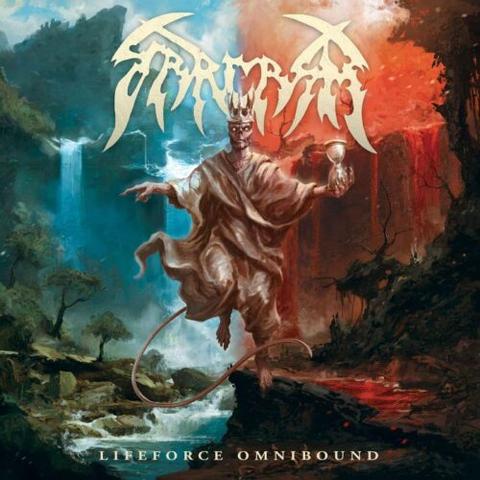
ΘΕΛΗΜΑ (Thelema) by DECIPHER

Thelema demonstrates that Decipher’s command of rhythm, melody, and grit has only gotten better, as it compels with the joint force of hookiness and evil. Using recurring patterns of riff, vocals, and percussion that each cue one another, Decipher create a thrashing feeling of push-and-pull that’s downright magnetic. A group wail precipitating a gnarly descending arpeggio (“Seven Scars”); the way a guitar clambers up and down to the precise beat of the drums (“Return to Naught,” “Hail Death”). These manifest organically out of existing tempos—blast beat (“Seven Scars”), march (“The Black March”), or shuffling skitter (“Towards Renaissance”) alike, making the shifts seamless and the identity consistent. Perhaps this is black metal that’s not unusual on paper, but adorned with Decipher’s now recognisable bright yet sinister melodies, and continually layered vocals, it sounds freshly thrilling. The tingles that go down my spine when I hear the first riff on opener “Return to Naught,” the solo that ends “The Black March,” and the overlaid cries and urgent tremolo of “Litany” have not yet failed to materialise.

Thelema’s enjoyability and power over its listener is also bolstered by Decipher’s additional refinements in areas not lacking before. By severing any instrumental interlude or protracted intro, the energy—however it transforms—and momentum are maintained, and the album has a more robust through-line. Rhythmic and thematic shifts flex and emerge variously with emphasis and mournful or spiteful intensity. The wails are just as agonised and chest-emptying in the latter half as they are in the first. Decipher’s production has also expanded to accommodate their slightly more nuanced and exploratory sound. Thelema sports a roomy mix that keeps the interspersed vocal and guitar lines, and the proudly beating drums and crashing cymbals equally audible and striking.

I recall bemoaning a lack of zhuzh in Arcane Paths and, whether or not I still consider that justified, it definitely wouldn’t be here. For all the new layers and senses of intrigue, Thelema remains a black metal album with standout moments that threaten to overshadow and desaturate the more standard fare, and may strike some harder than others. It yet undeniably shows Decipher carving out a decisive space for themselves that adumbrates a dark, delicious presence. Thelema stands one step behind the inexorability that confers greatness in its sphere. But it’s a small step.

Rating: Very Good
DR: 11 | Format Reviewed: 320kbps mp3
Label: Transcending Obscurity Records
Websites: Bandcamp | Facebook
Releases Worldwide: March 20th, 2026

#2026 #35 #BlackMetal #BlackenedDeathMetal #Decipher #Dissection #GreekMetal #Mar26 #MelodicBlackMetal #Review #Reviews #Svartidauði #Thelema #TranscendingObscurityRecords #Watain
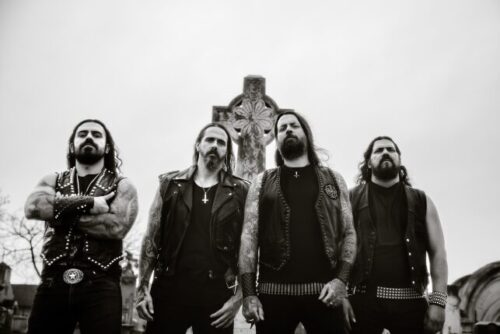
Necrofier – Transcend into Oblivion Review By Creeping Ivy

Houston’s Necrofier first came on my radar when they played the 2024 Decibel Magazine Tour with Hulder, Devil Master, and Worm. Sadly, I missed their opening set, but gladly, I caught a recording of it on YouTube.1 Their raucous, crowd-pleasing performance compelled me to check out their recordings. At 36 minutes, debut Prophecies of Eternal Darkness (2021) is a lean, mean barrage of melodic black metal, while Burning Shadows in the Southern Night (2023) ups the ante with 47 minutes of stronger, more polished material. Necrofier’s (lone?) star seems to be on the rise since Decibel 2024, as their third album arrives on the mighty Metal Blade Records. Also on the rise are the band’s ambitions; Transcend into Oblivion spreads three three-songs suites and an eponymous closing track across a hefty 59 minutes. Everything is bigger in Texas, sure, but bigger doesn’t always mean better (or good).

Perhaps due to their sweltering abode, Necrofier draws black metal sustenance from the shivering environs of Scandinavia. Dissection is certainly an immediate reference point, if they excised the excursions into folky melodeath. Necrofier’s preferred melodicism swirls as a maelstrom of mobile power chords by guitarists Bakka and Semir Özerkan, propelled by the dexterous drumming of Dobber Beverly.2 The influence of Watain also feels present, especially since Bakka’s rasp sounds quite a bit like E. And early Emperor reigns here as well, before they fully unbound Prometheus. Violins, synthesizers, and harpsichords are felt more than heard outright, balancing a sweet spot production-wise à la Anthems to the Welkin at Dusk. On the unfortunate side of the production is bassist Mat Valentine, who gets lost in the shuffle. Nevertheless, Transcend into Oblivion consistently delivers quality black metal that is melodic but dangerous.

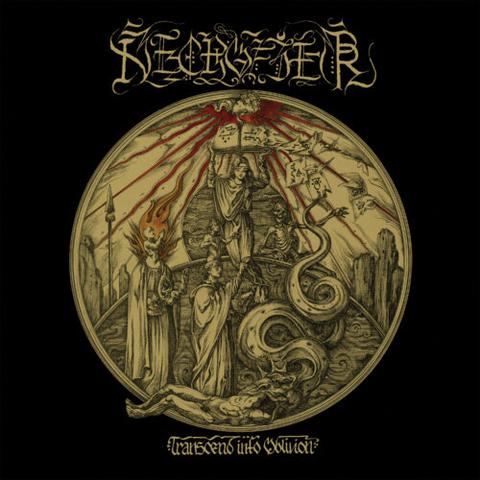
Transcend into Oblivion by Necrofier

Transcend into Oblivion progresses as three suites, each comprised of three songs. Together, they narrate a ‘Luciferian Night of the Dark Soul’: a spiritual awakening incites torment that ultimately engenders rebirth. Individually, they mostly play out as a collection of thematically-linked songs. “Fires of the Apocalypse, Light My Path” immediately kicks the door in (“Fires…I”) before kicking the door in again (“Fires…II”) and again—”Fires…III” is the strongest of the trio, but the listener begins wondering why these songs are presented as holistic units. The “Servants of Darkness, Guide My Way” trilogy comes closest to reaching suiteness. “Servants…I” starts with one of the album’s gnarliest trem riffs, “Servants…II” cools things down with an extended acoustic passage, and “Servants III” delightfully dips into doomy Middle-Eastern territory before black-metal blastoff. As for the “Horns of Destruction, Lift My Blade” triumvirate, it adds variety with d-beats, chunkier riffs, and a gong, but it feels like more of the same this deep into the album. There’s no real filler amongst the suites, but there aren’t any thrilling peaks either.

Keeping with their spiritualism, Necrofier nests numerology into Transcend into Oblivion, punctuating its three-song threesome with three instrumentals. For the most part, they effectively break up the black metal action. On the heels of the opening “Fires” suite, “Behold, the Birth of Ascension” conveys the onset of (re)birth pangs. Repurposing a melody from “Fires…III” with creepy bells and macabre piano, it cleverly inverts the typical function of an interlude, segueing out of a song rather than into one. More in the typical interlude camp is “Mystical Creation of Enlightenment.” Its Spanish-sounding acoustic plucks make for a soothing shift out of the savage “Servants” suite, while its ending modulation prefigures the ornery onset of the “Horns” suite. Oddly enough, it’s the eponymous instrumental that feels superfluous. “Toward the Necrofier” concludes the album with ominous space synths, incantatory spoken word, and tribal rhythms. “Horns…III,” however, ends with its own climax and a piano denouement, which makes the final instrumental feel like a coda to an album that doesn’t need more closure.

“Toward the Necrofier” does function as a serviceable springboard for a second spin of Transcend into Oblivion, an album which I ultimately recommend. It makes sense that Necrofier would cap off a work about rebirth with an eponymous song distilling the more unique elements of their sound. While Necrofier don’t fully realize their conceptual ambition, Transcend into Oblivion is sweet stuff regardless, demonstrating lots of promise for future outings. Black metal zealots of all stripes should strongly consider messing with these Texans.

Rating: 3.0/5.0
DR: 8 | Format Reviewed:256 kbps mp3
Label: Metal Blade Records
Websites: Bandcamp | Instagram | Facebook
Releases Worldwide: February 27th, 2026

#2026 #30 #BlackMetal #DevilMaster #Dissection #Emperor #Feb26 #Hulder #MelodicBlackMetal #MetalBladeRecords #Necrofier #OceansOfSlumber #Review #Reviews #TranscendIntoOblivion #USMetal #Watain #Worm

Plague Curse – Verminous Contempt Review

By Spicie Forrest

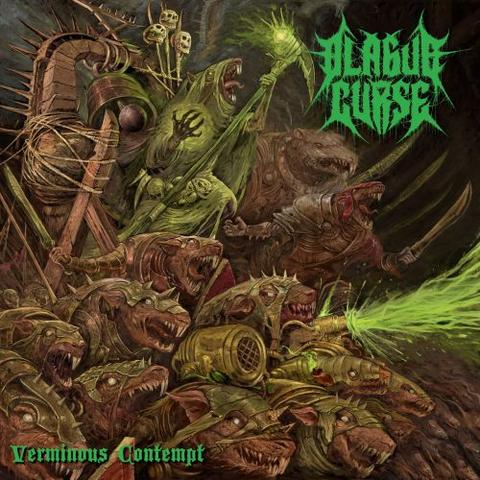
We’ve all been told, once or thrice, not to judge a book by its cover. As a species, we’re pretty good at doing it anyway. In metal circles, band logos and album art often follow certain tropes that let us quickly identify what we’re about to hear and set expectations accordingly. Except when they don’t. When I first saw the cover art for Verminous Contempt, I thought I had it pegged. I mean, rats? Green mystery fluid? Skulls? This was sewage-drenched death metal for sure. I was, of course, wrong. For their debut, Plague Curse instead offers a highly polished platter of blackened death metal. Irregardless of genre, however, the only question that matters here is, does it slap?

The heart of Verminous Contempt beats death, but its blackened influences are plenty vital. Bolt Thrown riffs, courtesy of Joe Caswell (Burden of Ymir), and Neil Schneider’s fully automatic drums offer a tank tread massage on “In the Shadow of Hate” and “Procession of Dead,” while “Amidst the Devastation” and “Hate Fuck Of Fornication and Malice” get their meat hooks in you like Cattle Decapitation in an asylum. Guitar licks in the skeletal, dissonant veins of Morbid Angel or Pestilence add a hunted sense of unrest (“Nocturnal Cruelty,” “Callous Abomination”). This would make for a decent record on its own, but well-placed blackened tremolos coalesce and melt away throughout the album like specters in a fog. “Umbrage Earned” and “Of Fornication and Malice” open with hellish, blackened salvos of Archspired urgency, but what’s particularly noteworthy about the former—and true to varying degrees across all of Verminous Contempt—is the way the band twists and warps death metal instrumentation to fit over black metal structures. While much of this record sounds like death metal, “Umbrage Earned” reminds me more of Watain from a compositional standpoint. Verminous Contempt isn’t just black metal and death metal played next to each other; Plague Curse creates a true blend of the two.

The instrumentals on Verminous Contempt are nothing to sneeze at, and neither is Nick Rossi’s vocal performance. His lows evoke Suffocation or Septicflesh, while highs are closer to Cattle Decapitation or Mental Cruelty. Rossi even gets brutally low on “In the Shadow of Hate” and “Callous Abomination.” He’s got an impressive toolkit. And whether low, high, or somewhere in between, he’s phlegmy and wet, not unlike Lik. It brings an unrefined, unhinged edge to an album whose production is otherwise pretty clean. The added grit does wonders for Plague Curse’s sound, creating much-needed texture across Verminous Contempt. Rossi’s standout performance is occasionally a detriment, however, as a few instrumental sections struggle to hold their own in his absence (“Procession of Dead,” “Reigning in Ruin”).

Verminous Contempt is an energetic and dynamic album. Riffs abound, both searing like Spectral Wound (“Most Vile”) and crushing like Immolation (“Callous Abomination”). Whether slinging neoclassical hooks (“Most Vile”), creating blackened tension (“In the Shadow of Hate”), or expertly shifting tempo (“Reigning in Ruin”), Caswell can count on Schneider and bassist George Van Doorn to provide a solid foundation upon which to drive each track. Transitions are well-timed and flow seamlessly, making the album an enjoyable and smooth listen end to end. Even tastefully and sparingly added dissonance incorporates well into the broader picture (“Reigning in Ruin,” “Nocturnal Cruelty”). But with such obvious songwriting prowess and tight construction, it’s a little frustrating to trudge through several minutes that should have been left on the cutting room floor, including the last third of “Reigning in Ruin” and the entire outro “Oderint Dum Metuant.”

I picked up Verminous Contempt expecting Foetal Juice, but was instead treated to an impressive mix of some of metal’s meanest sounds. Like being blindsided with a brick, Plague Curse comes out swinging and, with the exception of a couple of competent slowdowns, never lets up. Between noteworthy vocals and frenetic yet controlled instrumentation, Verminous Contempt is an enjoyable and easily consumed album. On their debut, Plague Curse establish themselves as a vicious but accessible contender in blackened death circles. With a more enthusiastic scalpel and a little more attention paid to instrumental passages, Plague Curse could easily be a future cornerstone of the genre.

Rating: 3.5/5.0
DR: 6 | Format Reviewed: 320 kbps mp3
Label: Adirondack Black Mass
Websites: Bandcamp | Facebook
Releases Worldwide: October 10th, 2025

#2025 #35 #AdirondackBlackMass #Archspire #BlackMetal #BlackenedDeathMetal #BoltThrower #BurdenOfYmir #CattleDecapitation #DeathMetal #FoetalJuice #Immolation #InternationalMetal #LIK #MentalCruelty #MorbidAngel #Oct25 #Pestilence #PlagueCurse #Review #Reviews #SepticFlesh #SpectralWound #Suffocation #VerminousContempt #Watain

Ofermod – Drakosophia Review

By Angry Metal Guy

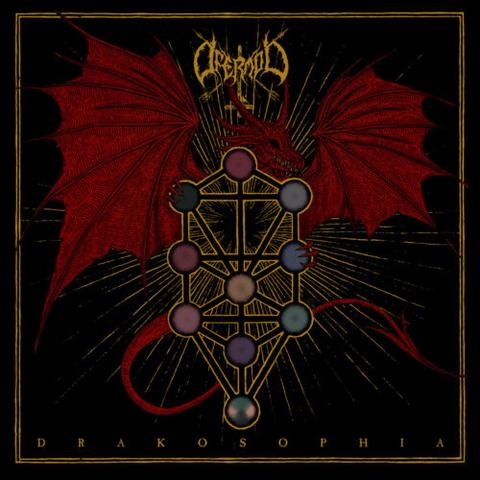
The occupational hazard of reviewing music is a fixation on novelty. At a certain point, you have heard the same riffs so many times that you can fall asleep to even the most unhinged blast attack. This bias should raise problems for a band like Ofermod, known for playing black metal of the most orthodox variety. This two-man Swedish black metal act stands tall as a beacon of Luciferian black metal in the tradition of Ondskapt, Watain, and the legendary Dissection. Back in 2012,1 Madam X heaped praise upon the band’s sophomore release Thaumiel, which I made the Record o’ the Month. Again in 2017,2 Grier was overjoyed to heap more praise on Sol Nox. And now, 13 years after the release of Thaumiel,3 Ofermod is back with Drakosophia, testing once again what’s more important: novelty or execution.

Black metal hasn’t changed much, and neither has Ofermod. Minimalist and kinetic, Drakosophia is the vision of second-wave black metal. Blasting drums, tremelo-picked guitars, with every guitar melody descending in sinister half steps. There’s something almost meditative about this music when it hits its stride, and listening to it feels like sitting in the eye of a hurricane, watching the twisting wind and water around you. Ofermod is a two-man band, driven almost entirely by Belfagor, who, despite forming the band in the 90s, put out his debut full-length in 2008 due to ongoing periods in prison. There has been a rotating cast of band members, but current vocalist Adeptus makes his debut appearance here on Drakosophia. Together, Ofermod’s sound is not so different from what it was on Thaumiel. And therefore, it relies almost entirely on strong songs and convincing performances to demonstrate quality.

Drakosophia shows its strength as it unfolds, gaining momentum the deeper it goes. My least favorite song on the record may be the opener “Aichah Kandisha,” which grinds like 1349 rather than grooves like Ofermod. But as the album progresses, things start to feel more familiar: there’s groovy riffs that beg for synchronized guitar swinging (“Drakosophia,” “Belialistic Gra’al Codex”); there’s lightning-picked melodies that no one could ever describe as “slick” or “melodic,” but that nonetheless burrow into your brain and stick there (“The Painful Movers,” “Vinyards of Gomorrah”); there’s Adeptus’ vocal performance, which has a Dim Mak-like rhythmic tendency to at once feel like it’s in line with the music and also slightly detached from it, lending a sense of chaos. And despite a good A-side, the real quality kicks off with “Zazas Zazas Nasatanada Zazas,” which is a partially hilarious and partially entrancing track with a chorus that is unforgettable.4 It’s here, and in “Belialistic Gra’al Codex” and “Sister Acolyte,” where the sense of what it means to be “orthodox” in black metal comes through. Melodic chanting sets the table in a way that gives Ofermod a unique—and slightly disconcerting—ritualistic feel.

The result is a record where everything flows towards an epic conclusion (“The Painful Movers”) while sounding great. Drakosophia clocks in at 45 minutes, almost exactly—perfect for the Angry Metal Attention Span—and leaves you wanting more. But the other thing that truly stands out about Drakosophia is that it sounds genuinely good. The drums from the Austrian guest drummer Florian Musil sound as good as any drums I’ve heard in black metal in a long time. Not only can Florian really play, Devo Andersson—who has produced every Ofermod record5—has clearly mastered the art of producing black metal that sounds acoustic. Drakosophia sounds natural and live, while still being punishingly heavy. Nothing feels re-amped or replaced, even though that’s almost certainly not true in 2025. It’s worth noting that Andersson also played bass on the album, and in that, he did himself a disservice by mixing it a bit low.

Ofermod’s Drakosophia feels like a proof of concept that what matters is how well you execute your vision, not how much you push the envelope. While I do think that Ofermod’s sound is unique—embracing the ritualistic choirs and chanting and living in groove rather than grind, are things that not a lot of bands are doing in black metal—they have not remade black metal. And yet, Belfagor has riffs and a feel for black metal orthodoxy that reminds me of the execution of the first three Taake records. And while other bands play black metal, Ofermod feels different. Like dinner with Hannibal Lecter, there’s something both deadly serious and disarmingly charming about Drakosophia. Combine that unease with riffs, excellent production, and perfect pacing, and you’ve got yourself a recipe for success.

Rating: Very Good!
DR: 8 | Format Reviewed: 320 kb/s CBR MP3
Label: Shadow Records
Websites: Bandcamp | facebook.com/OfermodOfficial | instagram.com|ofermodofficial
Releases Worldwide: October 3rd, 2025

#1349 #2025 #35 #BlackMetal #DimMak #Dissection #DrakosophiaReview #KingOfAsgard #Oct25 #Ofermod #Ondskapt #OrthodoxBlackMetal #RegainRecords #ShadowRecords #SolNox #SwedishBlackMetal #SwedishMetal #Taake #Thaumiel #Watain

Watain announce final chapter, eighth and last album set for 2028:

#Watain

Link: https://metalinsider.net/news/watain-announce-final-chapter-eighth-and-last-album-set-for-2028

Watain announce final chapter, final album set for 2028

Swedish black metal giants Watain have issued a three-year notice, confirming that 2028 will mark their final year and 30th anniversary.

Metal Insider | Get Inside the Industry
WATAIN To End In September 2028 – “We Stand On The Threshold To Our Final Chapter”

Sweden black metal militia Watain have announced their end in September 2028 – 30 years since their formation. The Swedes will also release a final full-length, studio album. A lengthy message from the band says: “Ladies and gentlemen, followers, allies and supporters, this is a solemn transmission from the Temple Of Watain. “We hereby announce

BraveWords - Where Music Lives

JUST ANOTHER AWESOME PHOTO OF ERIK FROM WATAIN

CHECK OUT OUR BLOG FOR MUCH MORE!
https://defendersofoldschoolmetal.blogspot.com/

#Watain #WatainLegions #BlackMetal