 MonikaBrightLab
News about our discovery in @nytimes
#VentUnderworld #LifeInCrustCracks @schmidtocean #UniversityOfVienna
https://www.nytimes.com/2023/08/08/science/hydrothermal-vent-animals.html
News about our discovery in @nytimes
#VentUnderworld #LifeInCrustCracks @schmidtocean #UniversityOfVienna
https://www.nytimes.com/2023/08/08/science/hydrothermal-vent-animals.html

Mapping the secrets of the ocean floor
by André Luiz de Oliveira (on board #FalkorToo of Schmidt Ocean Institute)
#VentUnderworld #LifeInCrustCracks
Have you ever got lost exploring a new place while travelling? Even in our own hometown, sometimes we get completely confused by streets and signs trying to reach our favourite ice cream shop and need help finding ourselves. Our first instinct is too open any map app in our smartphones and add the address we are looking
(1/n)
The fascinating giant tubeworm Riftia-Endoriftia symbiosis
by Teresa Winter (on board #FalkorToo of Schmidt Ocean Institute)
#VentUnderworld #LifeInCrustCracks
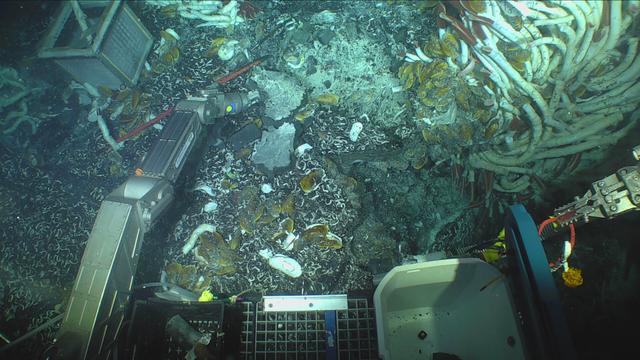
This mutualistic association lives at hydrothermal vents in the deep sea such as the East Pacific Rise 9°N where we currently collect the worms from 2500m depth. In this symbiosis Riftia larvae and symbiont need to find each other. After infection a crazy inner transformation of Riftia's digestive systemt takes place.
(1/n)
Survival of free-living symbionts
by Teresa Winter (on board #FalkorToo of Schmidt Ocean Insitute)
#VentUnderworld #LifeInCrustCracks
I am Teresa and I want to help to understand how Endoriftia survives once they escaped the dead host. When host associated, Endoriftia has a chemoautotrophic metabolism, however genes that are coding for enzymes necessary for heterotrophy are present as well!
(1/n)
How tubeworms reproduce and develop in high pressure vessels
by Philipp Pröts
#VentUnderworld #LifeInCrustCracks
One topic of this cruise is to investigate the reproduction and embryonal development of Riftia pachyptila. The giant tubeworm lives in warm areas of hydrothermal vents where they build their housing tubes on the deep ocean floor. These animals have separate sexes. Males and females are known to produce more or less continuously many sperm and eggs
(1/n)
Snails at vents – how many are there, and what do they feed on?
by Jan Steger
#VentUnderworld #LifeInCrustCracks
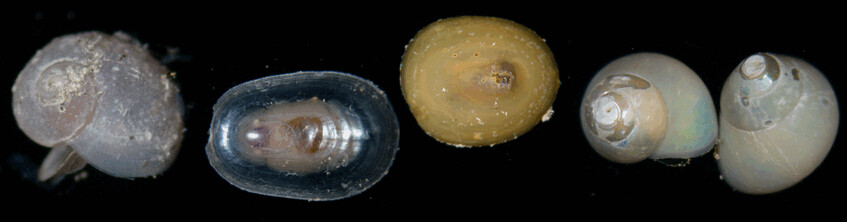
Soon after the discovery of lush life at deep-sea vents, it became clear that snails are very common in this fascinating ecosystem. Today, we know more than 150 different species from vents all around the world, and new exciting discoveries are made every year. Many of these snails do not occur anywhere else in the deep sea, and some live only in small areas
(1/n)
In or out?
by Ingrid Kolar, on board of #FalkorToo of Schmidt Ocean Institute #VentUnderworld #LifeInCrustCracks
I'm Ingrid and my task on board is to make experiments with mussels named #Bathymodiolus thermophilus.
As you already read from Teresa, the giant tubeworm Riftia lives in symbioses with a bacterium. But Rifta is not the not the only animal at the hydrothermal vents with a symbiotic life style.
(1/n)
Viruses in the hydrothermal vents
by Tinkara Tinta, Nicole Krause and Christian Winter
#VentUnderworld #LifeInCrustCracks
Viruses are physically small, but very diverse both in terms of appearance and reproductive cycles. Viruses need a host to reproduce and since they cannot swim, they rely on chance for that key meeting with their host. The chance that a specific virus population meets its proper host organism increases with increasing numbers of hosts.
(1/n)

 Salvador Espada-Hinojosa