~ Women against Rome, Veleda ~
Veleda (around 69–77 CE) was a seeress of the Bructeri, a Germanic people who achieved some prominence during the Batavian rebellion of 69–70 CE, headed by the Romanized Batavian chieftain Gaius Julius Civilis.
The ancient Germanic peoples discerned a divinity of prophecy in women and regarded prophetesses as true and living goddesses.In the latter half of the 1st century CE Veleda was regarded as a deity by most of the tribes in central Germany and enjoyed wide influence. She lived in a tower near the Lippe River, a tributary of the Rhine. The inhabitants of the Roman settlement of Colonia Claudia Ara Agrippinensium (now Cologne) accepted her arbitration in a conflict with the Tencteri, an unfederated tribe of Germany.
The Batavian leader Civilis originally raised his force as an ally of Vespasian during the Roman power struggle in 69 CE, but when he saw the weakened condition of the legions in Romanized Germany he openly revolted. The revolt was joined by Julius Classicus and Julius Tutor, leaders of the Treviri who like Civilis were Roman citizens.The Roman garrison at Novaesium (now Neuss) surrendered without a fight. The commander of the Roman garrison, Munius Lupercus, was sent to Veleda, though he was killed en route. Later, when the praetorian trireme was captured, it was rowed upriver on the Lippe as a gift to Veleda.
A strong show of force by nine Roman legions under Gaius Licinius Mucianus caused the rebellion to collapse. Civilis was cornered on his home island of Batavia on the lower Rhine; his fate is unknown. In Veleda's case, she was left at liberty for several years.
In 77 CE the Romans captured her. According to Statius, her captor was then-Governor of Germania Inferior Rutilius Gallicus. A Greek epigram has been found at Ardea, a few kilometres south of Rome, that satirizes her prophetic powers.
Painting : Veleda, by Charles Voillemot
#veleda #art #arthistory #history #womenshistory #womenfromhistory #painting Her Doing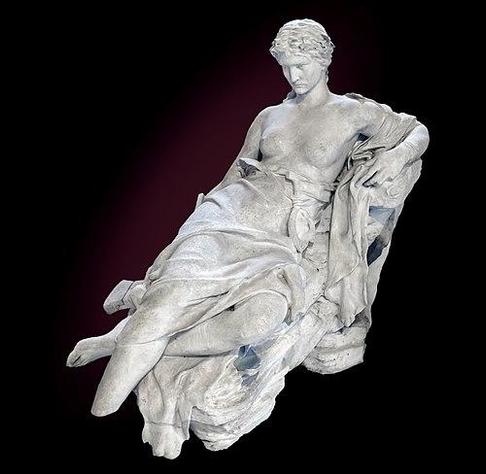
 Ciourte Piaille

 Women From History BOT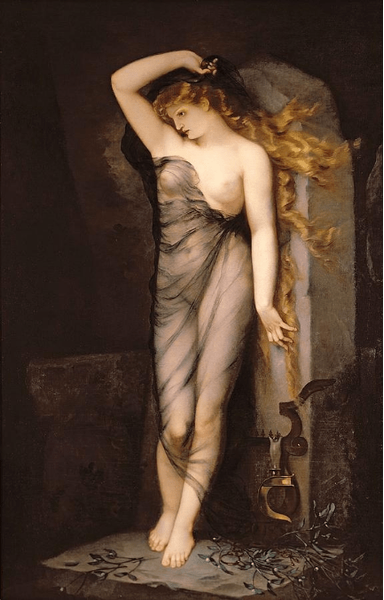
 Nifty Buckles Folklore
 Burkhard Schröder
