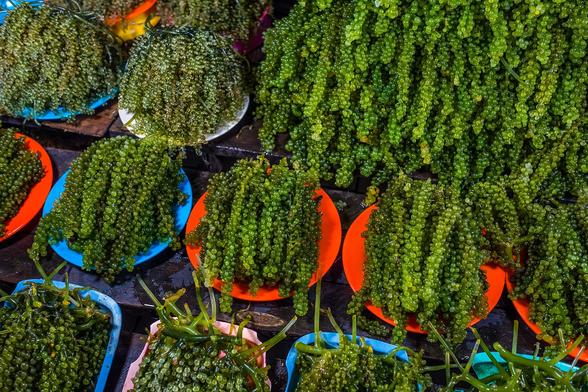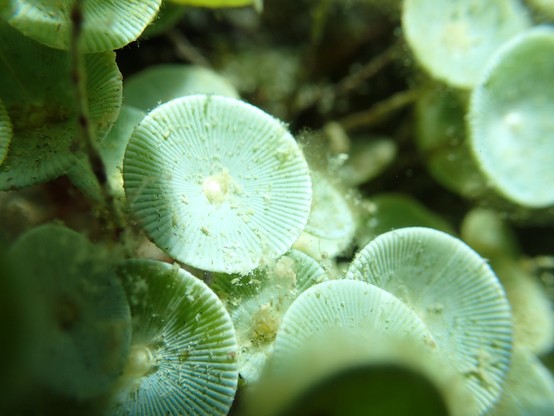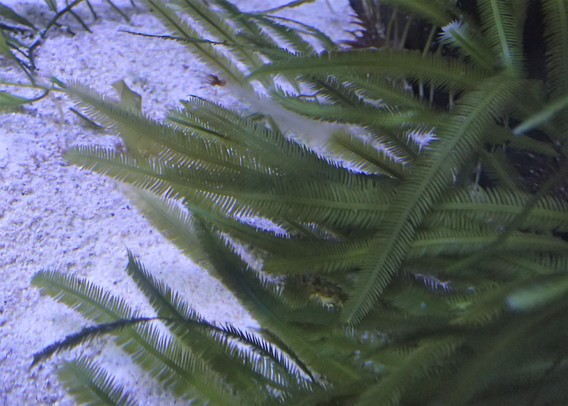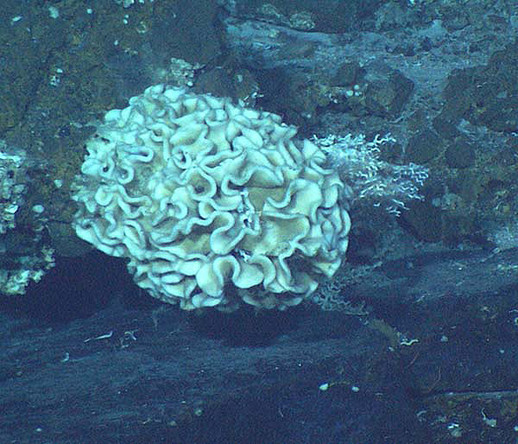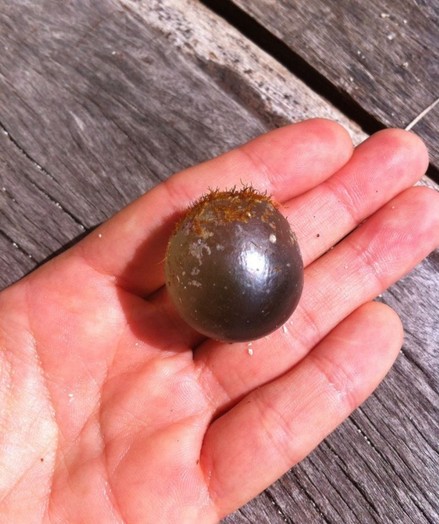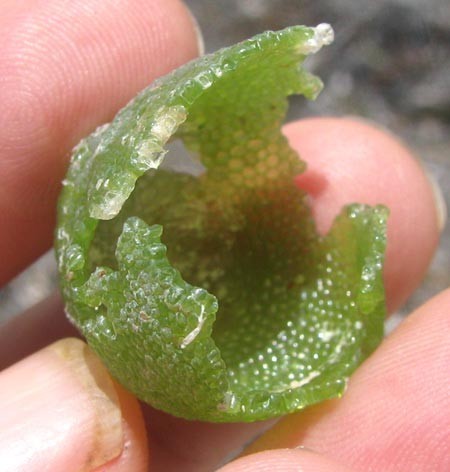
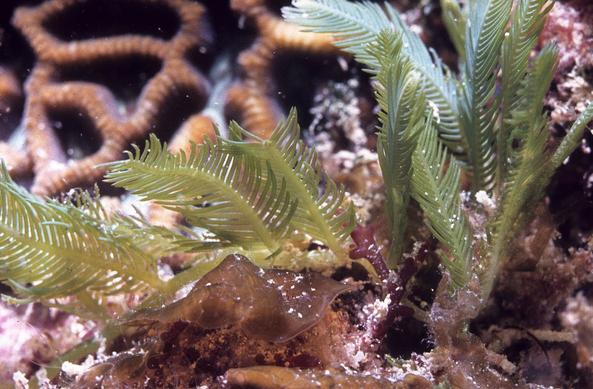
Did... did you know that the algae in the Caulerpa genus are unicellular organisms? Like... they consist of only one cell (with multiple nuclei, but still one cell)?
We discovered it only now, after seeing these species of algae so many times... incredible.
Unbelievable. Amazing.

#Algae #SeaTrivia #UnicellularOrganisms #Unicellular #Nature
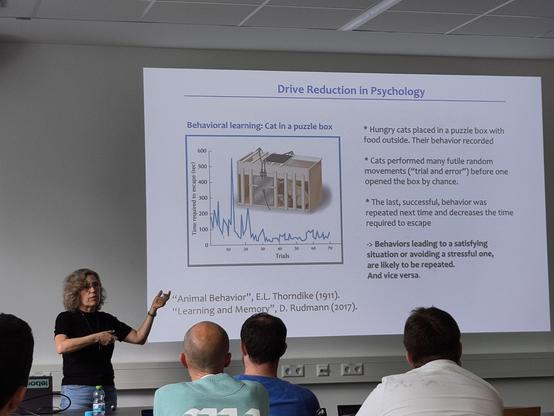
The afternoon of the eighth day of the Konstanz School of Collective Behaviour 2025 (#KSCB2025) is devoted to a #keynote by Naama Brenner on #biophysics of #cells, either in #unicellular or #multicellular #organisms

@cbehav.bsky.social

https://www.exc.uni-konstanz.de/kscb/

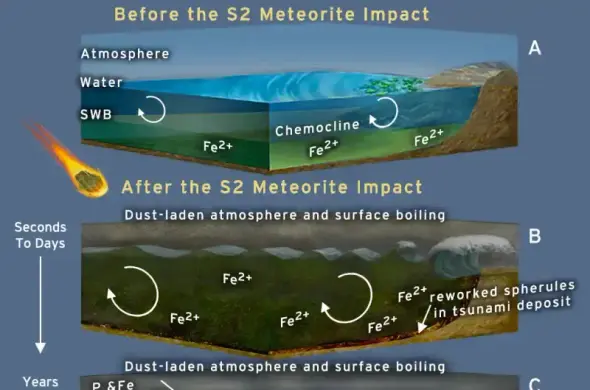
Giant #meteorite impact 3.26 billion years ago may have aided early life
https://phys.org/news/2024-10-giant-meteorite-impact-billion-years.html

Effect of a giant meteorite impact on #Paleoarchean surface environments and life: Nadja Drabon et al. https://www.pnas.org/doi/10.1073/pnas.2408721121

"#bacteria are hardy, and following impact, bacterial life bounced back quickly. With this came sharp spikes in populations of #unicellular organisms that feed off the elements phosphorus and iron."

Giant meteorite impact 3.26 billion years ago may have aided early life

Billions of years ago, long before anything resembling life as we know it existed, meteorites frequently pummeled the planet. One such space rock crashed down about 3.26 billion years ago, and even today, it's revealing secrets about Earth's past.

Phys.org

Now available ahead of print! "Disentangling the Factors Selecting for Unicellular Programmed Cell Death" by J. David Van Dyken & Peter C. Zee https://www.journals.uchicago.edu/doi/10.1086/732199

#cellDeath #factors #unicellular

En el mar Menor viven los paragüitas o sombrillitas (Acetabularia calyculus), unas algas de 6 centímetros de alto que, aunque no lo parezca, son unicelulares. 📷Giuseppe A. Ramirez #alga #algae #unicelular #unicellular
El alga invasora y tóxica Caulerpa taxifolia puede parecer la típica alga pluricelular, pero tampoco es el caso. Se trata de un alga unicelular multinucleada que alcanza 20-60 cm de altura, siendo el organismo unicelular más grande que se conoce.📷Krzysztof Ziarnek #alga #algae #unicelular #unicellular
No es el único caso de célula gigante. Syringammina fragilissima es otro organismo unicelular enorme que alcanza los 20 cm de diámetro, con estructuras de tubos interconectados. #alga #algae #unicelular #unicellular

Esto es una sola célula.

Se trata de Ventricaria ventricosa (Anteriormente Valonia ventricosa, un alga unicelular polinuclear con una enorme vacuola central multilobular. Puede alcanzar los 5 cm de diámetro. #alga #algae #unicelular #unicellular

Meet your oxygen-makers

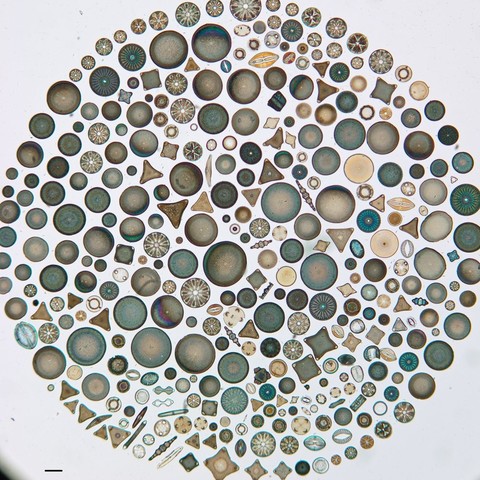
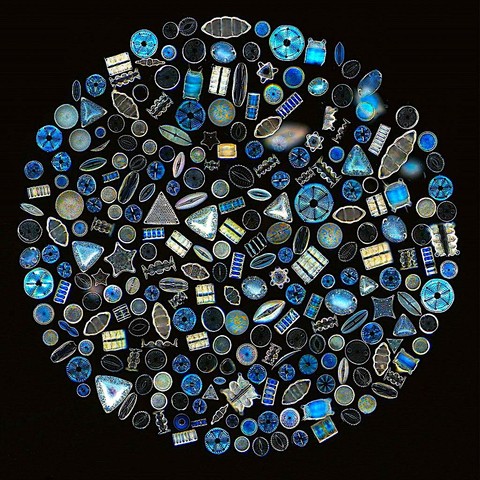
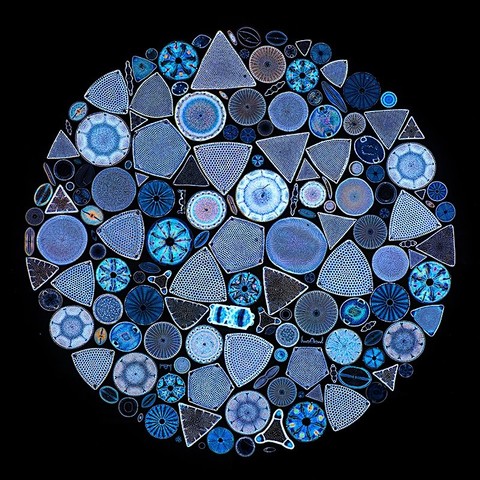
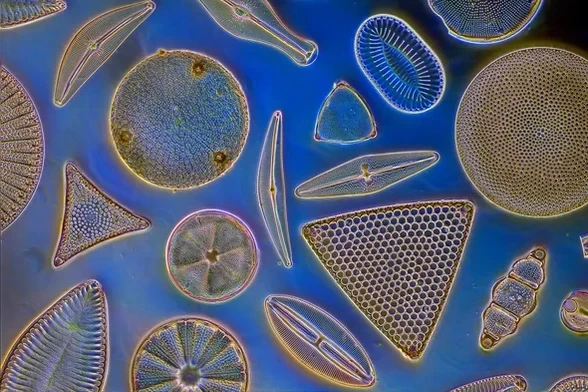
Living diatoms generate about 20 to 50 percent of the oxygen produced on the planet each year, take in over 6.7 billion tonnes of silicon each year from the waters in which they live, and constitute nearly half of the organic material found in the oceans. The shells of dead diatoms can reach as much as a half-mile (800 m) deep on the ocean floor.

https://en.wikipedia.org/wiki/Diatom

@photography
#diatoms
#oceans
#oxygen
#algae
#unicellular

Diatom - Wikipedia

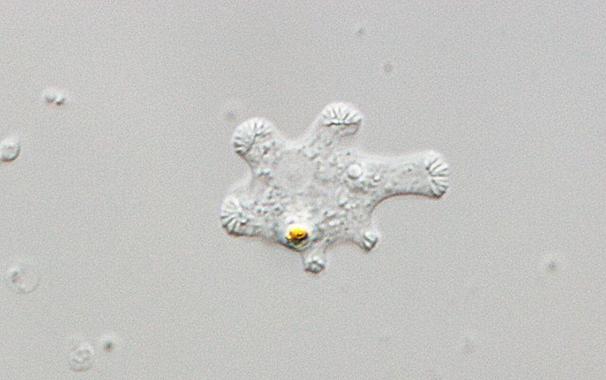
Rediscovery of rare marine #amoeba Rhabdamoeba marina https://phys.org/news/2023-11-rediscovery-rare-marine-amoeba-rhabdamoeba.html

#Rhabdamoeba marina is a heterotrophic relative of chlorarachnid algae https://onlinelibrary.wiley.com/doi/10.1111/jeu.13010

"The study highlights the importance of observing environmental samples for the rediscovery of #unicellular organisms such as R. marina that lack genetic data. Such efforts are indispensable for understanding #MicrobialDiversity."

#protists #microbes #amoebas #microorganisms #protistology #microbiology #algae #biodiversity

Rediscovery of rare marine amoeba Rhabdamoeba marina

Researchers at the University of Tsukuba have rediscovered and successfully cultivated Rhabdamoeba marina—a rare marine amoeba that has only been reported in two cases in the past century. Using this culture strain, the team performed a comprehensive analysis of its genetic sequence, revealing for the first time the phylogenetic position of this enigmatic amoeba, and proposed a novel taxonomic classification based on their research findings.

Phys.org