 Spirituality & Religious Studies
Aten
Also known as Aton, Atonu, or Itn.
Aten was the focus of Atenism. The religious system was formally established in ancient Egypt by the late 18th Dynasty pharaoh Akhenaten.
The worship of Aten & the coinciding rule of Akhenaten are major identifying characteristics of a time within the 18th Dynasty referred to as the Amarna Period (circa 1353-1336 BCE).
Atenism, & the worship of Aten as the sole god of the ancient Egyptian state worship, didn’t last past Akhenaten’s passing away. Not long after Akhenaten’s death, 1 of Akhenaten’s 18th Dynasty successors, Tutankhamun, reopened the state temples to other Egyptian gods & re-positioned Amun (not Aten) as the chief solar deity. Aten is pictured as a solar disc emitting rays ending in human hands (think like a kid’s drawing of the sun shining down with its rays).
The word Aten shows up in the Old Kingdom as a noun meaning “disc,” which refers to anything flat & circular. The sun was called the “disc of the day,” where Ra was thought to live. By contrast, the moon was sometimes called the “silver disc.”
The Aten was the disc of the sun & originally an aspect of Ra, the sun god in traditional Egyptian religion. Aten doesn’t have an origin (creation) story/myth or even a family. But is mentioned in the Egyptian Book of the Dead. The 1st known reference to Aten, the sun-disk, as a deity is in The Story of Sinuhe from the 12th century. In which the deceased king is described as rising as a god to the heavens & “uniting with the sun-disk, the divine body merging with its maker.”
Aten was extensively worshipped as a solar deity under Amenhotep III, where it was depicted as a falcon-headed god like Ra. While Aten was the preeminent creator deity of a pantheon of ancient Egyptian gods under Amenhotep III, it wasn’t until his successor that Aten would be the only god acknowledged via state worship.
During the reign of Amenhotep III’s successor, Amenhotep IV, the Aten became the sole God of the Egyptian state religion. Amenhotep IV changed his name to Akhenaten to reflect his close link with the supreme deity. The sole worship of Aten can be referred to as Atenism.
In Atenism, night is a time to fear. Work is done best when the sun, or Aten, is present. The Aten created all countries & people, & cares for every creature. According to inscriptions, the Aten created a Nile River in the sky (rain) for the Syrians.
The rays of the sun disk only hold out life to the royal family. Because of this, non-royals receive life from Akhenaten & Nefertiti (later renamed Neferneferuaten) in exchange for loyalty to the Aten. In inscriptions (like the Hymn to the Aten & the King), the Aten is depicted as caring for the people through Akhenaten, putting the royal family as intermediaries for the worship of the Aten. There’s only 1 known example of the Aten talking.
Akhenaten represented himself as the son of Aten, mirroring many of his predecessors’ claims of divine birth & their positions as the embodiment of Horus. Akhenaten positioned himself as the only intermediary who could speak to Aten, emphasizing the dominance of Aten as the preeminent deity.
Aten is both a unique deity & a continuation of the traditional idea of a sun-god in Egyptian religion. Aten carried absolute power in the universe, representing the life-giving force of light to the world. The cult center of the Aten was the capital city, Amarna, founded by Akhenaten.
Though other cult sites have been found in Thebes & Heliopolis. The use of Amarna as a capital city & religious center was relatively short-lived as it was abandoned after Akhenaten’s death. Major principles of Aten’s cult worship were recorded via inscriptions on temples and tombs from the period.
The temples of Aten were open & don’t have roofs so that the sun’s full power/rays could go inside. This was significantly straying from the traditional ancient Egyptian temples. No statues of Aten were allowed; it was seen as idolatry.
On the other hand, these Aten idols were replaced by functionally equivalent representations for Akhenaten & his family, venerating the Aten & receiving the ankh (the breath of life) from him. As a pharaoh, Akhenaten was considered the “high priest” or even a prophet of the Aten. During his reign, he was 1 of the main propagators of Atenism in Egypt.
After his dad’s death, Tutankhamun reinstated the cult of Amun (probably under pressure from the priests & other religious officials because Tutankhamun was a kid when he took over). It didn’t last more than 10 years or so after Akhenaten’s death.
When Tutankhamun came to power, his religious reign was marked by tolerance. He made efforts to rebuild the state temples that were destroyed during Akhenaten’s reign & reinstated the traditional pantheon of gods.
One-Time Monthly YearlyMake a one-time donation
Make a monthly donation
Make a yearly donation
Choose an amount
$5.00 $10.00 $15.00 $1.00 $5.00 $10.00 $5.00 $10.00 $15.00Or enter a custom amount.
$Your contribution is appreciated.
Your contribution is appreciated.
Your contribution is appreciated.
DonateDonate monthlyDonate yearly #12thDynasty #1336BC #18thDynasty #Akhenaten #Amarna #AmarnaPeriod #AmenhotepIII #AmenhotepIV #Amun #AncientEgypt #Ankh #Aten #Atenism #Aton #Circa1353BCE #EgyptianBookOfTheDead #Heliopolis #HighPriest #HymnToTheAtenTheKing #Neferneferuaten #Nefertiti #NileRiver #OldKingdomOfEgypt #Pharaoh #Ra #StateReligionS #StateWorship #SunDisk #Syrians #temples #TheStoryOfSInuhe #Thebes #Tutankhamun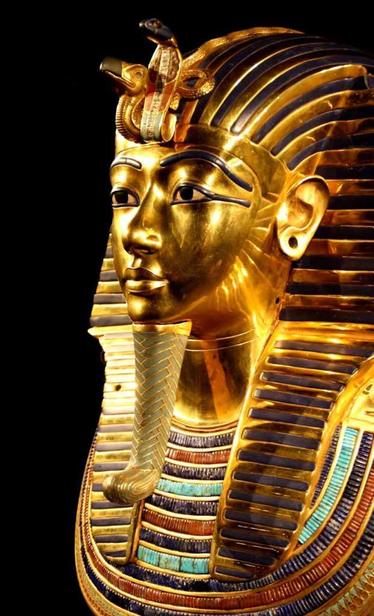
 Captain


 Spider From Mars