New publication: The imprint of #microbe-induced plant resistance in plant-associated insects. #sustainablelanduse #MIR #sublethaleffects #sustainablepestcontrol #pestcontrol
https://doi.org/10.1016/j.tplants.2024.05.010
The imprint of microbe-induced plant resistance in plant-associated insects

Beneficial microbes induce resistance in plants (MIR), imposing both lethal and sublethal effects on herbivorous insects. We argue that herbivores sur…

Another #AdriftLab #seabird paper has been featured in #AudubonMagazine (this important #research from #Australia will now reach an even broader audience in the USA) 🥳 - congrats to Hayley (our student) and team 👏

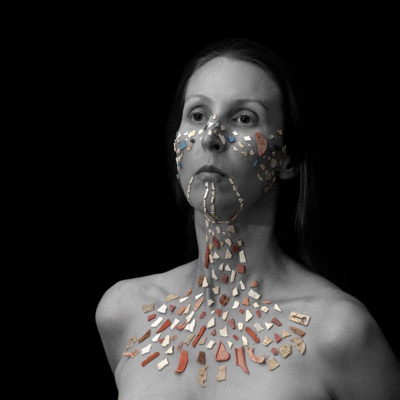
“a word can only do so much. Ultimately, reducing the world’s reliance on #plastic is the preventive treatment for #plasticosis

#LordHoweIsland #PlasticPollution #SublethalEffects #PlasticIngestion @SeabirdSentinel @TheLabAndField READ THE ARTICLE HERE ➡️https://www.audubon.org/news/plastic-pollution-so-pervasive-its-causing-new-disease-seabirds

Plastic Pollution Is So Pervasive That It’s Causing a New Disease in Seabirds

Researchers coined the term “plasticosis” to describe stomach damage related to ingesting trash.

Audubon
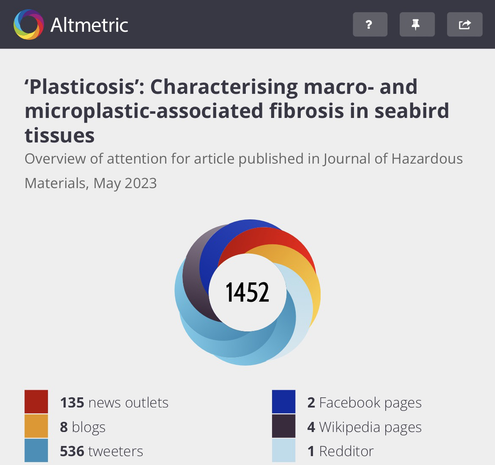
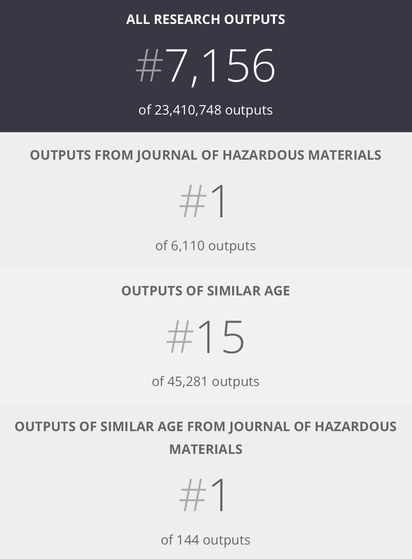
#AdriftLab’s new paper describing the disease #Plasticosis - fibrosis as a result of exposure to #IngestedPlastics - is ranked 🥇NUMBER ONE🥇 by #Altmetric for the Journal of Hazardous Materials 🥳 #seabirds #microplastics #SublethalEffects #wildlife #OceanHealth #sentinel @SeabirdSentinel @TheLabAndField
New disease caused by plastics discovered in seabirds

Natural History Museum scientists say plasticosis, which scars digestive tract, likely to affect other types of bird too

The Guardian
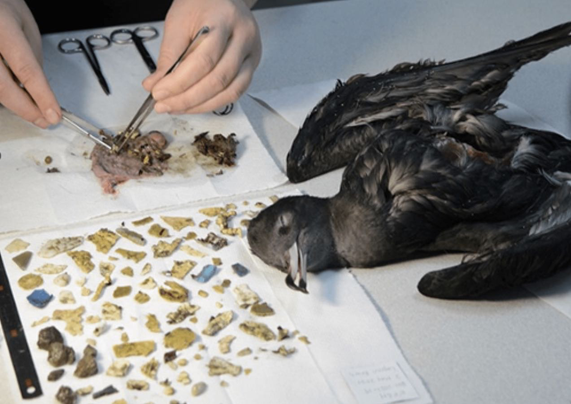
✨NEW PAPER✨Imagine you’ve got a piece of plastic stuck in your stomach - stabbing, poking, and prodding constantly. Besides being incredibly uncomfortable, what would that do to your delicate internal tissues?
One of our #AdriftLab Honours students (Hayley) has just published her first, first-author paper in the Journal of Hazardous Materials, investigating the effect that #PlasticIngestion has on the formation of scar tissue within the stomach of #seabirds from #LordHoweIsland. While scar tissue formation is a natural part of the healing process, excessive scarring can impact tissue function and cause disease, known as #fibrosis #OpenAccess paper here ➡️ sciencedirect.com/science/arti...
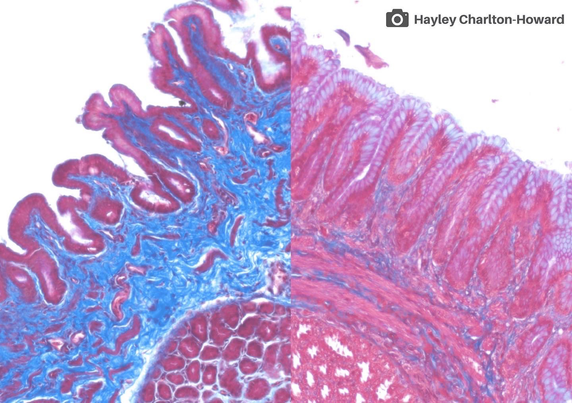
We found plastic ingestion was significantly related to severe, organ-wide scar tissue formation in the stomach, with some birds exhibiting a near-complete loss of tissue structure (photo panel on LEFT: collagen/scar tissue has stained blue). This is the first time plastic-related scar tissue formation has been documented in wild animals, but what we could see was so severe that it also led us to propose a new disease, #Plasticosis – fibrosis as a result of plastic.
As >1200 species are already documented to ingest plastic across both aquatic and terrestrial environments (including us!), our findings have major implications.
#WomenInSTEM #seabirds #PlasticPollution #SubLethalEffects #Microplastics #Nanoplastics #silicosis @SeabirdSentinel @TheLabAndField

🎉BIG CONGRATS🎉 to #AdriftLab PhD candidate Alix - today she aced her Confirmation of Candidature exam - whoop whoop 🙌 Alix delivered her seminar on how #nanoplastics affect #wildlife health & answered all the tough examiner questions with professionalism and grace 🤩 Amazing project, fantastic field site and team - can’t wait to be reunited on #LordHoweIsland soon!! 🐦🏝💙

Now, to submit chapter one - a brilliantly written perspectives piece on the need for more #InterdisciplinaryScience to accelerate the pace and depth of #PlasticPollution research

#GoodScienceGoodPeople #SublethalEffects #seabirds #microplastics #PlasticIngestion @SeabirdSentinel @TheLabAndField