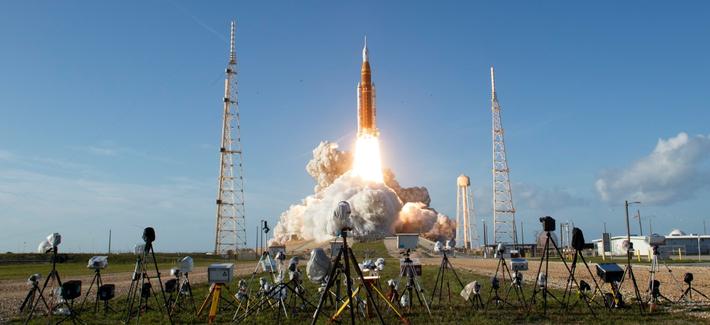
"Potent air pollution generated by the launch and reentry of large, disposable satellite systems is rapidly accumulating in the upper atmosphere, decreasing the amount of sunlight reaching Earth's surface. By 2029, the accumulating pollution will have an effect similar to proposed geoengineering techniques, which aim to cool the planet by blocking some sunlight with particles injected into the upper atmosphere."

https://phys.org/news/2026-05-satellite-pollution-rapidly-accumulating-upper.html

#SpaceEnvironment #Climate

Satellite launch pollution is rapidly accumulating in the upper atmosphere

The potent pollution from so-called megaconstellation satellite systems launched en masse into space since 2019 will account for nearly half (42%) of the total climate impact of space sector pollution by the end of the decade, finds a new study led by UCL researchers.

Phys.org

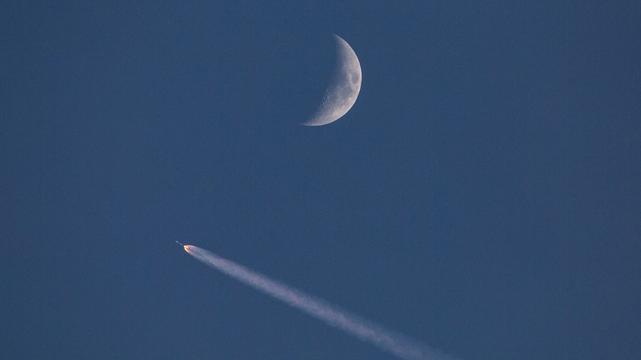
"Space is getting congested with man-made creations at an exponential rate. If the throwaway stages of these rockets aren't handled with proper diligence, the odds of them going where they shouldn't go up, too. Fortunately, these things are mostly designed to burn up in Earth's atmosphere if they come this way. But if they get caught by the Moon, the airless celestial body just has to receive them as trash."

https://www.jalopnik.com/2161457/moon-launches-littering-space-with-junk/

#SpaceEnvironment #SpaceDebris

We're Launching So Much Stuff At The Moon That We're Littering It With Space Junk Now

The upper stage of a rocket used to launch a lunar lander mission now heading towards the moon, and it's going to crash there at 5,400 miles per hour.

Jalopnik

“In 2024, 24 elements were dominating the meteoric injection compared to 18 in 2015, this might increase to 30 in the future. Several of them are transition metals, which are known for their catalytic activity. This indicates a substantial risk of long-term adverse effects on the atmosphere such as ozone depletion, radiative effects and changes in cloud formation, if no action is taken.”

https://www.sciencedirect.com/science/article/pii/S0273117726003509

#Space #SpaceEnvironment #Atmosphere #Climate #Satellites

CSE has filed a comment on Starcloud's application to the U.S. Federal Communications Commission to operate an AI data center constellation of 88,000 satellites.

In it we urge the FCC to look beyond standard orbital debris arguments to address the "greenwashing" of AI computing in space, and the ideological push to sacrifice a global commons for private AI demand.

Read the full comment: https://www.spaceenvironmentalism.org/actions/public-statements-and-comments/starcloud-comment-april-2026

#Space #SpaceEnvironment #DataCenters #AI

Starcloud Comment (April 2026)

Before the FEDERAL COMMUNICATIONS COMMISSION Washington, D.C. 20554 via ICFS Electronic Filing ) In re: Application for launch and operating ) authority for the Starcloud orbital data ) ICFS File No. SAT-LOA-20260202-00073 center system

"A senior astronomer has warned that NASA’s #Artemis program must not become a vehicle for unregulated commercial activity in space, arguing that the return of humans to the #moon should be governed by clear international rules — rather than a 'frontier mentality.'"

https://www.newsweek.com/artemis-mission-cannot-lead-interplanetary-wild-west-11774199

#Space #SpaceEnvironment #SpaceLaw

‘Artemis Mission Cannot Lead To Interplanetary Wild West,’ Astronomer Warns

Professor Mike Lockwood is concerned that there is “talk about the Artemis program paving the way for mining of the Moon.“

Newsweek

"For the second time in three months, a #SpaceX satellite has failed and broken up over Earth, highlighting concerns over the company’s plan to increase its network to more than a million satellites. ... The mishap comes as critics blast SpaceX’s plan to create a new constellation of up to a million satellites to be used as space-based data centers.'"

https://www.expressnews.com/business/article/spacex-starlink-satellite-breakup-data-center-22165098.php

#Space #Starlink #DataCenters #SpaceEnvironment

Client Challenge

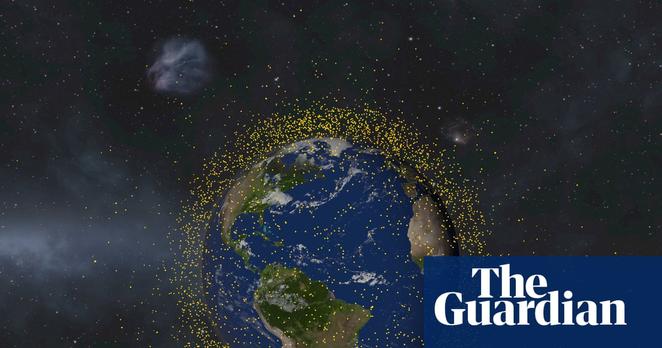
"The surge in orbital activity has created a significant collision risk. ... The big fear is that future collisions will cause a domino effect where Earth’s orbit becomes cluttered with tiny, high-speed bits of metal. That could create a near-impenetrable layer of debris that would make space launches so dangerous it would essentially trap humans on Earth."

https://www.theguardian.com/science/ng-interactive/2026/mar/31/this-feels-fragile-how-a-satellite-smashing-chain-reaction-could-spiral-out-of-control

#Space #SpaceEnvironment #SpaceDebris

‘This feels fragile’: how a satellite-smashing chain reaction could spiral out of control

Today, the space around Earth can no longer be considered empty. More than 30,000 objects are in orbit, and that figure is rising exponentially

The Guardian

"NASA pulled off the #moon landing in 1969 with a clear goal from the outset: to be the first nation to put boots on the lunar surface. Now, #NASA is heading back with its #Artemis program. But why spend nearly $100 billion to repeat a journey NASA has already made? The goal of Artemis is less obvious than that of Apollo — so much so that the justification for NASA’s lunar return largely depends on who is answering the question."

https://www.bloomberg.com/news/articles/2026-03-29/nasa-s-return-to-the-moon-is-100-billion-bet-on-agency-s-future

#Space #SpaceEnvironment

"A dramatic rise in the number of satellites on orbit is increasing the amount of space debris, posing a critical threat to the capabilities of America’s national space systems, Maj. Gen. Chris Povak, deputy director of the National Reconnaissance Office, said Monday. 'The future gets more complex, not less. More satellites, more debris, more competition,' he said."

https://www.nro.gov/news-media-featured-stories/news-media-archive/News-Article/Article/4441342/ddnro-warns-of-risks-from-space-debris-at-tech-symposium/

#Space #SpaceDebris #SpaceEnvironment

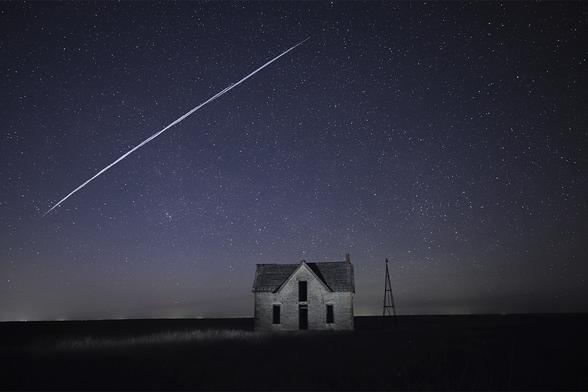
"An array of man-made #satellites beam sunlight down to Earth. An artificial constellation of thousands of satellites illuminates the night sky. These scenarios might sound like science fiction. But between SpaceX’s plans to launch 1 million satellites as part of its satellite-based internet network #Starlink, and Reflect Orbital’s sunlight reflecting space mirrors, private companies could change the way our night sky looks."

https://news.northeastern.edu/2026/03/24/space-mirrors-satellites-sunlight-earth/

#Space #SpaceEnvironment

One million new satellites could soon transform night into day on Earth

With satellites, companies are creating a great night light in the sky. Our biology might struggle to keep up, Northeastern experts said.

Northeastern Global News