The Eco-Evolutionary Dynamics of Sexual Traits That Increase Mate Encounter Rates by Watts and Fitzpatrick
Read now ahead of print!
https://www.journals.uchicago.edu/doi/10.1086/739604
The Eco-Evolutionary Dynamics of Sexual Traits That Increase Mate Encounter Rates by Watts and Fitzpatrick
Read now ahead of print!
https://www.journals.uchicago.edu/doi/10.1086/739604
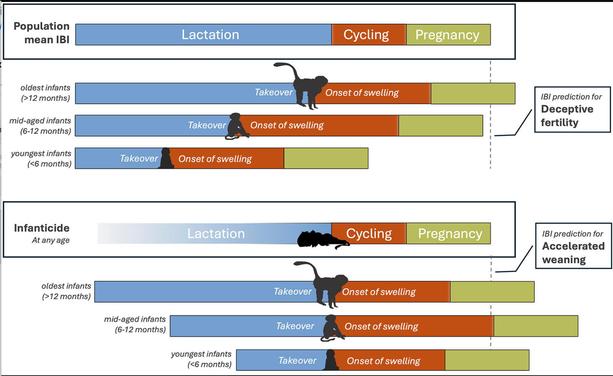
Super interesting paper showing how #gelada #monkey mothers who are pregnant or with very young infants FAKE sexual swellings to kid a new harem male into mating. That might just stop the male from infanticidal killing.
Primate #female #deception GOOD! Gelada do well to manage the big risk of #primate #infanticide -- a huge cost for primate mothers.
#deceptivesexualsignals #sexualselection
https://www.sciencedirect.com/science/article/pii/S0960982225014514?dgcid=author
Women rated the facial attractiveness and masculinity of photographs of 105 healthy and beardless men between 30 and 45 years old, and their ratings were positively correlated with age and testosterone, and negatively correlated with adiposity.
Summary: https://www.psypost.org/women-can-read-age-adiposity-and-testosterone-level-from-a-mans-face/
Original paper: https://link.springer.com/article/10.1007/s10508-025-03205-3

Recent research suggests that women find men with lower body fat more attractive. While facial masculinity was linked to testosterone and age, the link between health and attractiveness was fully explained by adiposity, age, and hormone levels.
New meta-analysis out on the role of sexual selection in speciation!
Across the Animal kingdom, we found that stronger sexual selection is significantly (though weakly) associated with greater species richness in comparative studies — suggesting a modest role for sexual selection in speciation.
A great collaboration with Tim Janicke, Jeanne Tonnabel, Tamra Mendelson & Mike Ritchie.
Operational sex ratio (Ecology 🏞️)
In the evolutionary biology of sexual reproduction, operational sex ratio is the ratio of sexually competing males that are ready to mate to sexually competing females that are ready to mate, or alternatively the local ratio of fertilizable females to sexually active males at any given time. This differs from physical ...
https://en.wikipedia.org/wiki/Operational_sex_ratio
#OperationalSexRatio #Ecology #SexRatio #Reproduction #MatingSystems #SexualSelection
Male intrasexual competition (Evolutionary biology 🧬)
In ethology, male-male intrasexual competition occurs when two males of the same species compete for the opportunity to mate with a female. Sexually dimorphic traits, size, sex ratio, and the social situation may all play a role in the effects male-male competition has on the reproductive success of a male and the...
https://en.wikipedia.org/wiki/Male_intrasexual_competition
#MaleIntrasexualCompetition #SexualSelection #EvolutionaryBiology
Till Selection Do Us Part? Testing Sexual Selection’s Role in Speciation
Summary & Analysis by Pooja Radhakrishnan of "Evolutionary lability of sexual selection and its implications for speciation and macroevolution" by Januario et al.
https://www.amnat.org/an/newpapers/April-2025-Januario.html
<p>Read about “Evolutionary lability of sexual selection and its implications for speciation and macroevolution” by Matheus Januario, Renato C. Macedo-Rego, and Daniel L. Rabosky (April 2025)</p><br/><br/><p><b>Januario et al. found no correlation between sexual selection intensity & speciation rates or proxy traits (SSD and dichromatism). Because sexual selection intensity has high intraspecific variation and low phylogenetic signal, its macroevolutionary impacts are weak </b></p><br/>
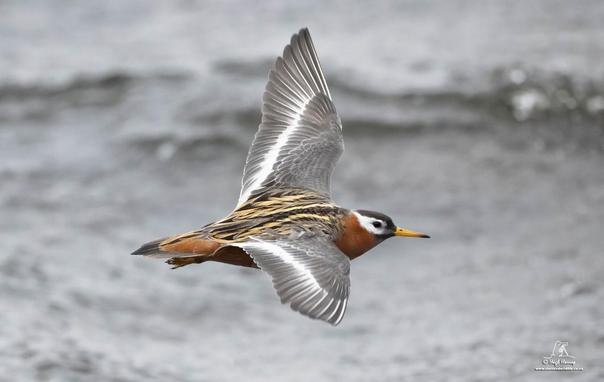
Female Grey #Phalarope in summer plumage at Loch of Spiggie, Shetland in early June.
Female phalaropes famed for their reverse #sexualselection, with larger, highly decorated #females fighting over #males, setting up numerous nests and leaving males to incubate and care for chicks! They're off for a spot of #polyandry!
Photos: Hugh Harrop, Shetland Wildlife
Ornamental traits play a central role in sexual selection. Gussone et al. identify sources of phenotypic variation in ornamental traits by showing that inbreeding and genetic relatedness of rivals affect the dynamic colour-expression in competing males in a cichlid fish.
Read now ahead of print!
https://www.journals.uchicago.edu/doi/10.1086/736181
#sexualSelection #phenotype #inbreeding #genetic #fish #ornamentalTraits
Female ocellated wrasse perform cryptic mate selection by controlling sperm velocity, performing sexual selection after mating. However, warmer waters reduce the females' ability to control sperm velocity, reducing their ability to enforce mate preference.
https://www.biorxiv.org/content/10.1101/2025.04.10.648287v1?rss=1
#Science #SexualSelection #ClimateChange #Evolution #Fish #Wrasse
Reproduction is often more thermally sensitive than survival. Thus, understanding the thermal sensitivity of reproductive interactions is crucial given global warming. However, it is unknown how temperature influences female control over fertilization after mating (i.e., cryptic female choice). We tested how temperatures relevant to current conditions and climate change projections influence cryptic female choice in a marine fish, Symphodus ocellatus. Under typical conditions, females bias fertilization dynamics to favor dominant males. We find that warmer temperatures decrease female influence on sperm velocity and reduce the expected paternity of dominant males. Our results demonstrate that temperatures relevant to climate change can shift the balance between mate choice and male-male competition. Thus, climate change may influence sexual selection, leading to evolutionary changes in reproductive traits. ### Competing Interest Statement The authors have declared no competing interest.