 Wallet Sum: Simple Finance
The universe has 17 fundamental particles. Or 995.5
How many fundamental particles are in the universe? The answer depends on what you choose to count — and it might not even be a whole number.
The universe has 17 fundamental particles. Or 995.5
How many fundamental particles are in the universe? The answer depends on what you choose to count — and it might not even be a whole number.
Coriolis Effect ✍️
It explains why objects moving across a rotating world seem to curve from their straight path, even when no visible force pushes them sideways. Imagine throwing a ball straight across a spinning merry-go-round. To someone standing still outside, the ball travels in a straight line. But to someone riding the spinning platform, the ball appears to bend away from its path.
The same thing happens on Earth because our planet is constantly rotating beneath everything that moves. Air currents, ocean flows, and even long-range projectiles travel over a surface that is turning while they move. This creates the illusion of a sideways force, known as the Coriolis effect.
In the Northern Hemisphere, moving objects appear to bend to the right, while in the Southern Hemisphere they bend to the left. The effect grows stronger over larger distances and faster motions, but becomes almost unnoticeable in small, everyday movements.
Scientists use this effect to understand the spinning of hurricanes, the paths of trade winds, and the circulation of oceans. It reveals that motion is not always as simple as it seems when the ground beneath us is constantly in motion itself.
#CoriolisEffect #EarthScience #Physics #ScienceFacts #Geography #Meteorology #ClimateScience #Atmosphere #OceanCurrents #WeatherScience #Hurricanes #TradeWinds #PlanetEarth #EarthRotation #ScienceEducation #STEM #LearnScience #ScientificKnowledge #ScienceExplained #NatureOfScience #PhysicalGeography #FluidDynamics #EarthSystems #ScienceLovers #DidYouKnow #EducationalContent #KnowledgeSharing #CuriousMinds #ScienceCommunication #ExploreScience

7.8. And you're reading that number wrong.
A number on the seismic scale is not a number on a ruler. The human brain was never built to read this kind of scale.
A Human Language Gene Was Inserted Into Mice And Strange Things Unfolded
Image credit: Nikolett Emmert/Unsplash In a quest to understand complex speech, scientists inserted what's been dubbed a human “language gene” into mice. Remarkably, the genetic tweak had a profound impact on the little rodents' ability to squeak, revealing astonishing clues about the evolution of vocal communication. Mouse pups that had the human version of the language gene showed different vocalization patterns from their buddies with the usual version mice have......Continue […]https://onlinemarketingscoops.com/2026/06/05/a-human-language-gene-was-inserted-into-mice/
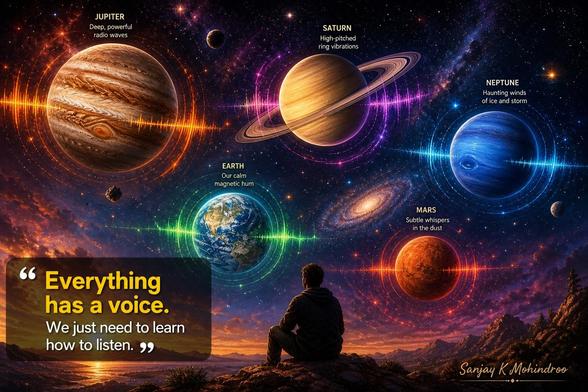
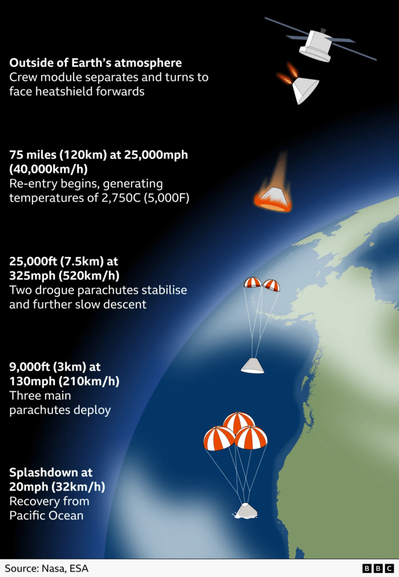
🚀 HOW ARTEMIS II FELL FROM SPACE IN JUST ~14 MINUTES: THE SCIENCE THAT LEFT THE WORLD IN AWE
How Did Artemis II Travel From Space To The Pacific Ocean In Just Minutes? Discover The Science Behind Gravity, Speed, Distance, And The Physics Of Orion’s Fiery Return To Earth.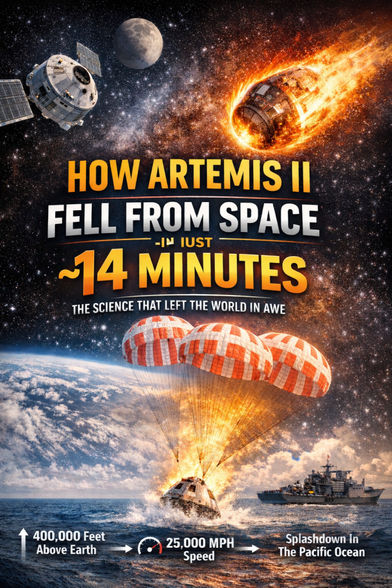

🥳 The 10th edition of the EPFL final of the My Thesis in 180 Seconds competition will take place on March 19!
The 14 PhD Students finalists of the competition My Thesis in 180 seconds (MT180) will present their research in simple, straightforward terms in 3 minutes exactly, in English or in French, using humour, metaphores and examples.
A free event not to be missed, offering plenty of science and fun.
➡️ https://memento.epfl.ch/event/finale-epfl-du-concours-ma-these-en-180-secondes/



 Pustam | पुस्तम | পুস্তম🇳🇵
 Online Marketing Scoops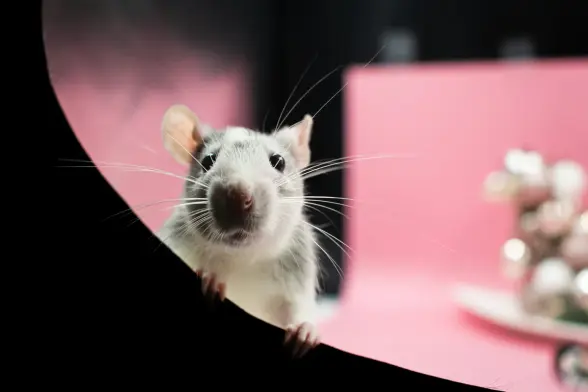
 Sanjay Mohindroo
 ourmechanicalworlds
 Vinculum®
 EPFL
EPFL Mathrubhumi English
 Hwat?! Weekly!