A week has passed since I got back from the SciPy Conference in Tacoma, WA, delighted as usual by the experience. | Lorena A. Barba
A week has passed since I got back from the SciPy Conference in Tacoma, WA, delighted as usual by the experience. I had skipped it last year, weary of crossing the whole continent for the event. But I braved the long flights this year to avoid FOMO.
Seeing again old friends and folks I admire a lot was splendid, especially my two past students Naty Clementi, PhD and Gilbert Forsyth, who were program committee members. It was a treat to see Katy Huff, who gave the opening keynote. She was conference co-chair with Dr. Andy R. Terrel (he/him) when I gave a keynote in 2014, my first SciPy! I also enjoyed talking with my engineering prof colleagues, Kyle Niemeyer, PhD and Ryan C. Cooper, PhD, and with other insightful SciPy regulars (👋 to Andrew Donoho).
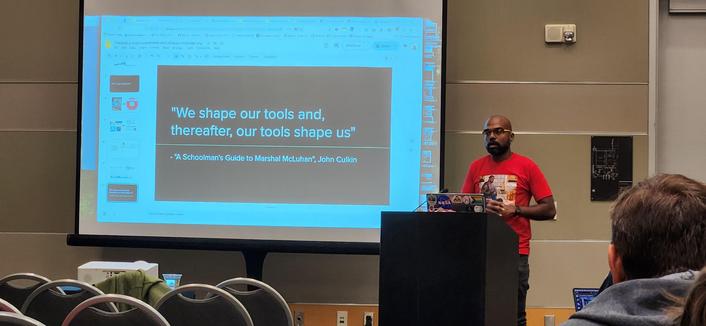
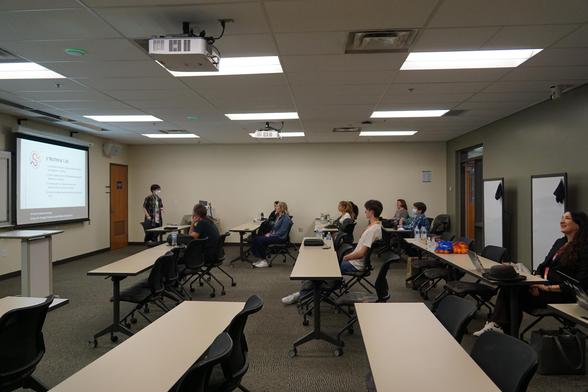
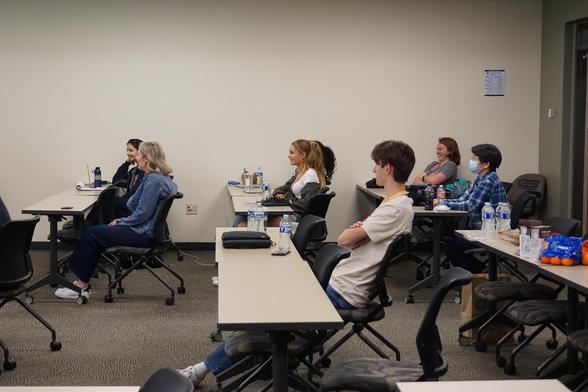
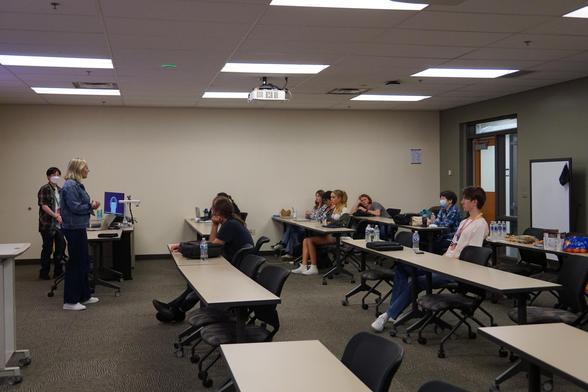
I gave a talk about my experiences embracing generative AI in the classroom (links to the talk abstract, slides, and related paper in the comments). The room was full, and the audience was gripped by my stories of woe, and many later came to me with polite compliments and commentary.
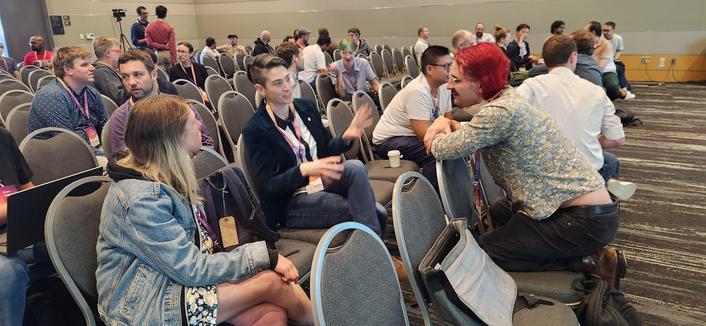
In one of these hallway conversations, my old pal from the Python conference scene, Jake Vanderplas, joined in my concern about teaching beginners the ropes of technical computing when AI can now do all the tasks we assign them. I recalled how several years ago when he was in the Colab team, I shared with him that Colab was messing with notebook metadata such that assignments using the nbgrader extension would break. He was able to quickly ship a fix, and life was good again.
Now, I told him, when my university JupyterHub has a glitch and I've had to switch to Colab live in the classroom, students discover predictive code suggestions and begin to tab-tab-tab away their exercises. Jake commiserated and said he'd reach out to the Colab team to ask if they were thinking about this.
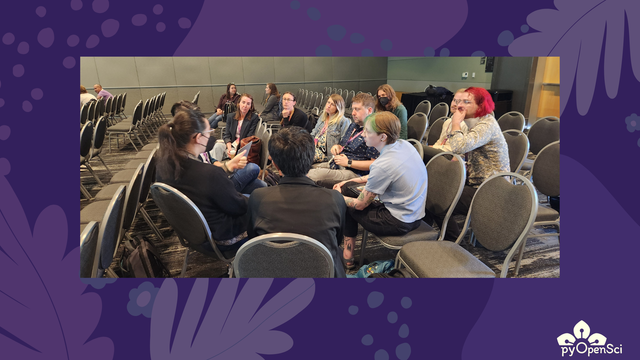
The next morning, we met again and he said: I have an idea, what if the notebook had a metadata field that signals "no-ai" to the editor? If Colab respects this, you can distribute exercise notebooks that will at least not offer code suggestions live. I called over Yuvi Panda to chat about it, and he said if Jupyter AI also respects this flag, then it can become a standard across editors. This is the magic of the SciPy "Hallway Track": just a week later, the feature is implemented and Colab allows turning AI features on or off for a notebook (link below). Hooray!
This experience perfectly embodies why I keep coming back to SciPy despite the cross-country travel. Where else can a casual hallway conversation turn into a shipped feature in just one week? The community's commitment to education and thoughtful implementation of new technologies continues to inspire me. For those who've been on the fence about attending future conferences: don't let FOMO be hypothetical. The connections and collaborations you'll find are worth every mile.
 pyOpenSci
 LorenaABarba
 jonny (nonvenomous)
 SciPyConf
 Beth Cimini 🔬💻📊
 MClare