 Rajiv Chopra
SD Cards are becoming increasingly expensive, and I do not expect prices to drop. Choose well. This is the third of four short videos on buying and caring for your SD cards.
 Nicholas A. Ferrell
Pook-Emu Bee: Links For 04-02-26
For once I'm not too busy today. But even if I were busy, I would still publish the newest edition of Pook-Emu Bee. 1. Discover more of the Fediverse with tags.pub (Matthias Pfefferle at ActivityPub for WordPress. April 2, 2026.) Done! 2. Sony Shuts Down Nearly Its Entire Memory Card Business Due to Flash Shortage (Jason Schneider for PetaPixel. March 27, 2026.) AI has come for the SD cards. Constantine XI implores us forward. Hang on to your thumb drives! 3. Nike just can’t do it in […]https://social.emucafe.org/naferrell/pook-emu-bee-links-for-04-02-26/

 WIRED - The Latest in Technology, Science, Culture and Business [Unofficial]
The Best MicroSD Cards for Your Camera, Switch, and More
https://fed.brid.gy/r/https://www.wired.com/gallery/best-micro-sd-cards/

 Dave
DaveFirst they came for the DDR5 RAM,
and I did not speak out,
because I was only interested in micro SD cards for my handhelds.
... Damn.
(image shows the 90 day cost of a 128Gb SanDisk micro SD card)

 Jon Sullivan
I've learned the hard way that there is an enormous difference between microSD cards in the amount of power they need. When it comes to putting audio recorders out in nature, that matters a lot.
As an example, I was just comparing my latest AudioMoth results with SanDisk Extreme 64GB cards compared with Samsung Pro Plus 128 GB cards last year.
In the same device, with the same dawn-dusk daytime recording settings, on the same three fully-charged Powerex rechargeable batteries, the Samsung card recorded for four days (11 GB) before flattening the batteries, while the SanDisk cards recorded for 12 days (44 GB) before the flattening the batteries.
Given that it takes a lot of time for me to get to these remote sites to deploy these recorders, this makes a big difference to how much data I get.
#AudioMoth #AudioRecorder #birds #BirdMonitoring #EcologicalMonitoring #SDcards #EcologyMethods
 Ehay2k
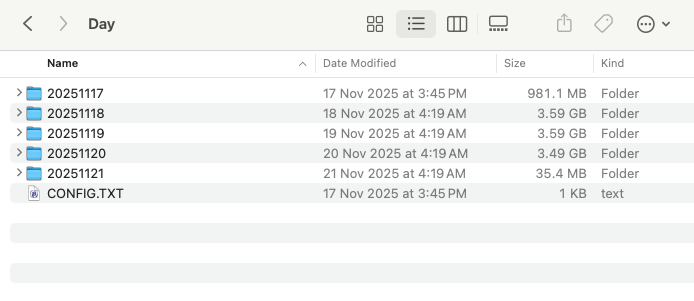
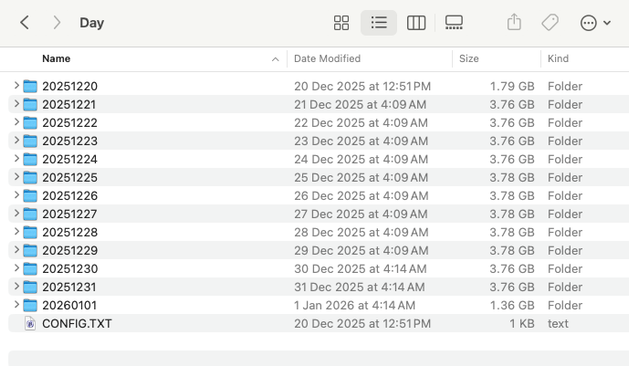
My old car had an SD card slot that you could play music from. But the new one has only USB-C ports. However, I learned that they will allow you to mount storage, so I bought a cheap USB-C micro SD reader, and later added a 90 degree adapter to keep it from getting knocked out.
Nice and tidy!
Works well. This is in an #Audi but I bet it will work in other cars.

 JdeBP
JdeBPNot really. The filesystem tools and operations are the usual ones, and indeed the image files that operating systems and whatnot are distributed as can be treated as mountable DASD volumes with md. So it's a simple matter of copying a filesystem tree in the very same way that one would do elsewhere, be that pax -r -w or cp -R -p or pcmanfm or whatever.
Things like the RPi Imager are simply bundling up all of the same stuff behind a GUI (and, for example, using their own code to do mostly the same as what newfs_msdos does). These dedicated tools aren't actually doing anything special, really. They're conveniences.
Indeed, the RPi Imager when built for Linux either simply shells out to run the mount and umount commands directly or palms everything off to UDisks2. On MacOS it's likewise just palming things off to Disk Arbitration.