@StumpyTheMutt @qualia

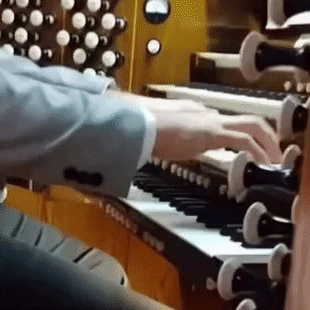
I mean, how could #Beethoven have predicted that #MorseCode would make didididah mean V, which is the #RomanNumeral for 5?

(Or maybe #SamuelMorse was being cute.)

(Deleted & re-posted to fix typo.)

Installing electronics and batteries for the glider's front engine sustainer system.

https://front-electric-sustainer.com/

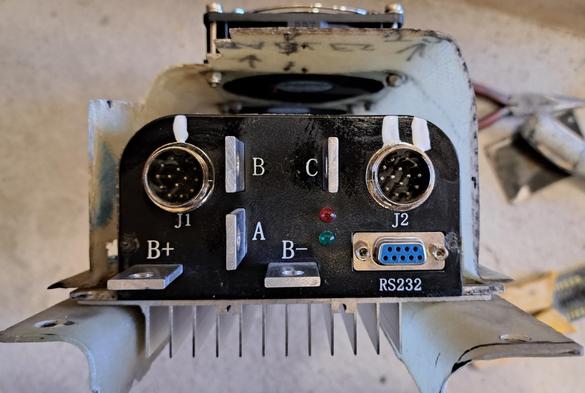
First photo - the two connectors for sensing and control of the high-amperage motor controller. They are identical form factor. This means I can connect them to the wrong sockets if I'm inattentive.

Second photo - The motor controller's connectors. When I install this controller in the fuselage belly, I will have limited visibility on this face with its labels. Note that the labels for J1 and J2 are underneath the sockets...hidden from my view. I have painted Roman numerals I and II above the sockets. I can see those markings after installation.

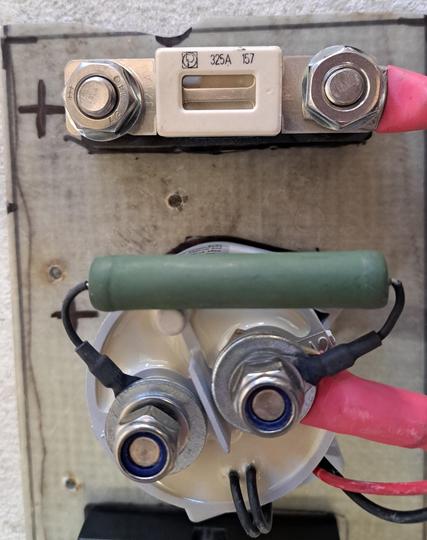
Third photo - This is a high-current system. The fuse at the positive end of the battery pack is rated at 325 amps.

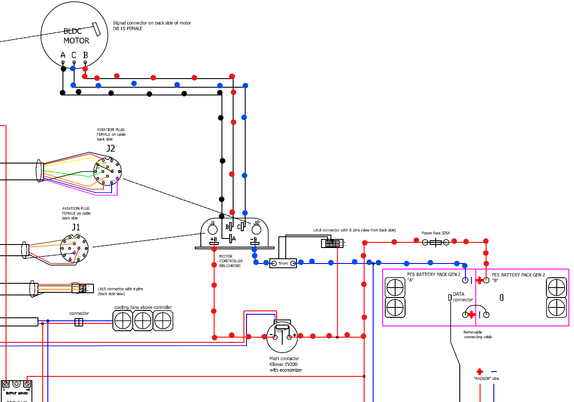
4th - wiring diagram. High-current cables marked with dots.

#AvGeek #Aviation #ElectricAircraft #ExperimentalAviation #Homebuilt #Glider #DIY #Amp #Wire #Connect #Confusion #Error #Safety #RomanNumeral #Oshkosh #EAA
There was a story in today's #Popbitch about an unfortunate journalist who mispronounced the XCX in #CharliXCX (which you just say "ecks see ecks")

I was thinking "oh no, did they call her Charli [Roman numerals]?"

but no, they called her "Charli Zzzyyykkchkks", as in 'xylophone'

which is pretty cringe, but made me laugh that I had assumed it was going to be a #RomanNumeral issue

While trying to figure out what XCX would be in #RomanNumerals I found this nifty calculator

https://www.numere-romane.ro/convert-roman-numerals-to-arabic-numbers.php

XCX turns out not to be a valid Roman number because using the subtractive formula by which you subtract the first letter from the second

(which is why IX = 10 - 1 = 9)

you'd get

XC = 100 - 10 = 90

but then the extra C just adds another 10 back on, so it's a nonsense way of saying 100

This made me reflect on how as a kid I learned the rules of Roman numerals by osmosis by watching movies and TV shows that ended with the production year in Roman numerals

e.g. MCMLXXXVII

(a number I plucked off the top of my head that offers inadvertent insight into my age)

1000 + 900 + 50 + 10 + 10 + 10 + 5 + 1 + 1 = 1987

Like, the three main rules are:

1. You arrange the letters from the highest value to the lowest and then add them up

2. V, L and D can only be used once in a number. You can use I, X, C and M up to three times in a row, but only those letters. You have to use Rule 3 to get more precise numbers

3. When you put a numeral with a lower value in front of one with a higher value, you subtract the lower number from the higher number. But you can only use the subtractive letter once in the number, which is why XCX doesn't work

Today I learned a new rule:

4. Putting brackets around a Roman numeral adds "thousand" to the end of its value. (Sometimes this is also shown with a macron – the straight horizontal accent – over the letter)

V = 5
(V) = 5000
L = 50
(L) = 50,000

Validator de cifre și numere romane. Validează și convertește numerale romane (cifre și numere romane), transformă-le și scrie-le cu cifre indo-arabe. Conversia numerelor scrise cu literele sistemului numeric roman în numere scrise cu cifre uzuale, explicații

Validator de cifre și numere romane. Validează și convertește numerale romane (cifre și numere romane), transformă-le și scrie-le cu cifre indo-arabe. Conversia numerelor scrise cu literele sistemului numeric roman în numere scrise cu cifre uzuale, explicații. Învață cum să transformi numerele romane în numere indo-arabe: identifică și calculează valoarea fiecărui grup de numerale scrise în notație substractivă. Calculează numărul indo-arab: adună toate valorile numeralelor romane individuale, cele scrise în notație aditivă, și ale grupurilor de numerale scrise în notație substractivă.

A corpus analysis of rock harmony

The researchers in this study conducted a corpus analysis of rock harmony by using Rolling Stone magazine's list of the '500 Greatest Songs of All Time'. The corpus consisted of 100 songs, which were chosen by taking the top 20 ranked songs from each decade from the 1950s to the 1990s. The authors personally analyzed all 100 songs using conventional Roman numeral symbols, and their agreement between the two sets of analyzes was over 90%. The analyses were then encoded using a recursive notation similar to a context-free grammar, allowing for concise encoding of repeating sections. Statistical analyses were then conducted on the aggregate data, examining the frequency of different chords and chord transitions, root motions, patterns of co-occurrence between chords, and changes in harmonic practices over time. The results indicated that the IV chord is the most common chord after the I chord, and is particularly common preceding the tonic.

https://www.jstor.org/stable/23325809

#corpusanalysis #rock #harmony #RollingStone #500GreatestSongs #RomanNumeral #contextfreegrammar #statisticalanalyses #chords #transitions #rootmotions #harmonicpractices #time #music #analysis #musicology

A corpus analysis of rock harmony on JSTOR

TREVOR DE CLERCQ, DAVID TEMPERLEY, A corpus analysis of rock harmony, Popular Music, Vol. 30, No. 1 (January 2011), pp. 47-70