 Adrian Seidelman
You don't need [the illusion of] impending doom to confess your feelings.
#CyberSix #IntenseFeels #Anime #Animation #Cartoon #Comic #Passion #Love #Feelings #Feels #RightInTheFeels #TMS #NOA
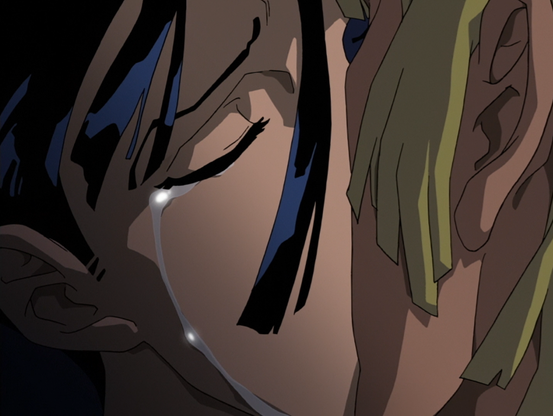
It just makes you human to have feelings.
#CyberSix #IntenseFeels #Anime #Animation #Cartoon #Comic #Feelings #Feels #RightInTheFeels #TMS #NOA

You don't need [the illusion of] impending doom to confess your feelings.
#CyberSix #IntenseFeels #Anime #Animation #Cartoon #Comic #Passion #Love #Feelings #Feels #RightInTheFeels #TMS #NOA
You live with a brain that pulls in opposite directions and the world has no idea what that costs you.
Today's video is not about getting a diagnosis, the moment of realization, or what comes after. No, today is about the emotional pain of ADHD. It's about the feelings you probably carried for years, long before you had the language for them.
These feelings aren't just occasional, but constant companions in ADHD life. Shame, guilt, embarrassment, self-loathing, and dread. These aren't just side effects. They are part of the experience.
And it's time that we talk about them because when you're autistic and ADHD, you're not just navigating sensory input or attention issues. You're navigating the emotional weight of being misunderstood, misread, mischaracterized, and mistaken over and over again.
And one of the heaviest weights we carry is shame. Not the abstract kind, but social shame. The kind you feel when your reaction is too big, your interest too intense, your tone too blunt. When someone squints at you in a meeting because you jumped in too fast, spoke too loud, or interrupted without realizing, or when you finally say something in a group chat and no one responds, so you replay it 30 times.
Should you have used an emoji?
Was your tone off?
Was it too much?
You start shrinking, apologizing for your personality, pre-editing yourself in conversations, and eventually you stop contributing. Not because you have nothing to say, but because shame has taught you that you always say it wrong.
And after a while, the shame of how you come across starts turning into guilt about what you did or didn't do. Guilt for needing more help than others, for backing out of plans, for missing a deadline, for zoning out during your partner's story, and for burning out again. >
You say yes when you mean no. You overpromise. You disappear. And even when people forgive you, you don't forgive yourself. Because the guilt doesn't come from what you did. It comes from what you fear. It proves about you that you're unreliable; that you're selfish; that you are never enough.
And when you carry that guilt long enough, it stops being about what you did and starts being about who you are. That's when it turns into something heavier, which is self-loathing.
Now, this isn't just I feel bad, but rather I am bad. You start believing that maybe you are too difficult; too emotional; too scattered; too inconsistent to be loved, trusted, and respected.
You think about how hard it is for you to do basic things and how easy it seems for others. And even when someone compliments you, you flinch because they don't see the chaos you fight just to hold it together. So you laugh it off. You make jokes about being scattered or always overdoing it, but it doesn't really feel funny. It feels like hiding in plain sight.
But the thing is, most of these feelings don't come from being ADHD. They come from having to survive as ADHD in a neurotypical world.
A world where your best effort is called laziness; where your overwhelm is labeled overreaction; where your communication style is seen as rude or abrupt or too much.
And once you've internalized that story about yourself, even small mistakes feel like confirmation, which is where embarrassment shows up.
The moment you realize you've been rambling for five minutes, or that you've laughed too loudly, or you stim in public and someone stares, or the hundreds of micro moments when you walk away from a conversation and immediately feel sick with regret.
What did I just say?
Did I misread that?
Were they annoyed?
You can't stop replaying it for hours, sometimes even days. You mask harder next time. You get quieter. You try to be more palatable.
But even that isn't safe. Because the more you mask, the more you dread the moment you'll inevitably mess up.
And when every social moment feels like a minefield, you start living in anticipation of the next misstep.
That's dread.
Dread before the meeting; before the phone call; before checking your email.
Not because you're lazy, but because you know how often you've let something slip, and how much harder each mistake feels when you're already carrying shame and guilt.
You dread the moment you realize someone is mad at you and you don't know why.
You dread being asked to explain yourself because you know you'll get overwhelmed trying.
You dread having your needs questioned.
You dread being seen.
And all of these feelings, they build, they echo, they feed off of each other until you can't tell the difference between who you are and what you've internalized.
But here's the truth.
You are not your shame.
You are not your guilt.
You are not your worst moment.
You feel this way not because you're broken, but because you've spent a lifetime trying to function in environments that gaslight your needs.
So, if you recognize these feelings, you're not being dramatic.
You're not being sensitive.
You're telling the truth about what it costs to exist in a world that doesn't accommodate you.
And that truth, it matters.
Naming it doesn't erase it, but it makes it less lonely.
It makes it possible to build something better.
These feelings might be part of your ADHD experience, but they don't define it and they don't define you...
We posted yesterday here about a video about AuDHD that hit us right in the feels. When another video by the same creator got suggested, we thought we'd give it a watch.
It literally just made us tear-up and quietly sob whilst watching 🥺
The first video made us feel seen, but somehow this one felt like years of therapy and validation compressed into a short video.
The Emotional Side of AuDHD No One Sees (What ADHD + Autism Feels Like)
We've now subscribed to the creator's channel 

The below video just popped up in our feed about AuDHD and fuck did it hit us right in the feels 🥺

There's a second playlist #JukeboxFridayNight
This one hits you #RightInTheFeels
https://youtube.com/playlist?list=PLZe9K6g9lwnTW3jZKRjqn8LEhZ5WfCfRB&si=kDGXLXzPKCVN1ZMv
#JukeboxFridayNight
#LoveSongs
#RightInTheFeels
A song which helped get me through my first breakup!
Big Country - Alone
The midday sky was grey and purple
At least it wasn't blue
I want the sky to be the way I am
And what I do
For I have been a lost and lonely
Sailor on your sea
Run aground by trusting signals
You were sending me
...
Alone inside my head
Alone inside my room
I feel alone inside my head
Alone inside my tiny little world

"Spark" - Tori Amos
A song that came along when I needed it: going through a tough and unexpected breakup; the prospect of seeing Tori on tour in may was one of the few bright spots on the horizon.
My nomination for tonight's #JukeboxFridayNight under #RightInTheFeels
And evening, #TOTP crowd.
One of the things that sets The Family’s original recording of Prince’s "Nothing Compares 2 U" apart from later versions is Clare Fischer’s wonderful string arrangement. One of the other things is all of the other things.
The Family - "Nothing Compares 2 U"
https://song.link/y/_ZlzN0Gtpp8
Pet Shop Boys - Love comes quickly
❤️
https://youtu.be/ndVe47Rj9TU
Pet Shop Boys (with spiky orange hair) - You Only Tell Me You Love Me When You're Drunk (on Top of the Pops)
🍊 👨🎤
https://youtu.be/1qbYpgx5C_4
Pet Shop Boys - Love is a Bourgeois Construct
👑
https://youtu.be/8fFeEs0tIwA
Pet Shop Boys - Love is a Bourgeois Construct (Audio)
https://youtu.be/s7w0eqUBp3c
Pet Shop Boys - Rent
💰 ❤️
I love you
you pay my rent
💰 ❤️
https://youtu.be/NTHi-p7l3KM

 SleepyCatten (Metastable, Skill Regression Arc)
 Bodger
 MonkeyKing
 Our group declare to be true
 Anthemic Tangle
 Kay
Kay