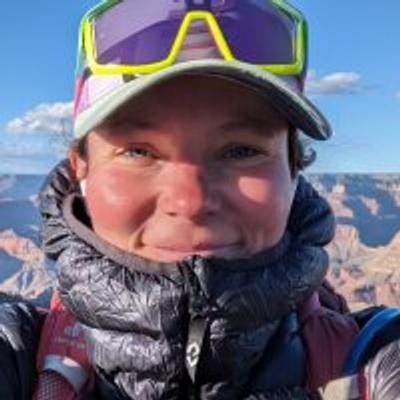
 Monika Twarogowska
A small cold in the Himalaya is not always a small thing.
Day 2 of the Kanchenjunga trek: Lamatar to Gyabla — around 13 km and about 1,300 m of climbing.
I woke up with a sore throat, blocked nose, and a dull headache. Not dramatic at low altitude, but on a remote trail like Kanchenjunga, you pay attention early. Villages are far apart, comfort is basic, and there are no easy shortcuts if your body starts to struggle.
But what a trail.
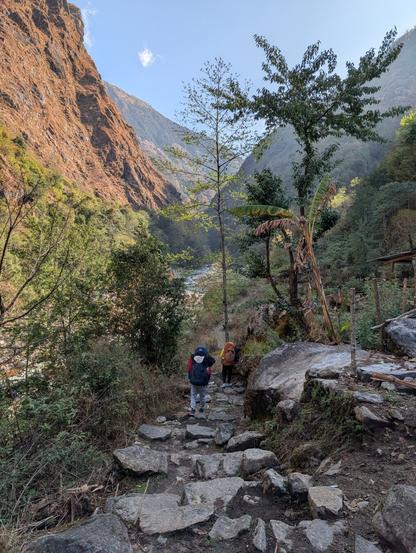
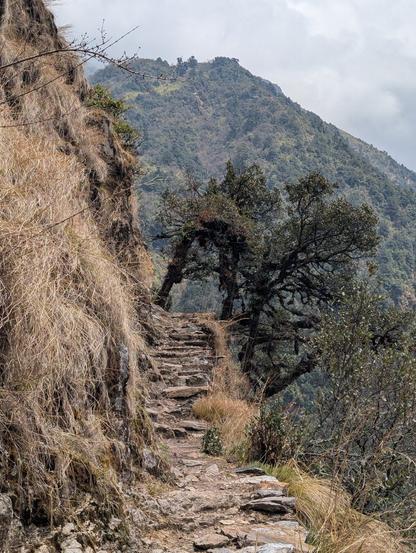
We followed the river upstream, first walking in the riverbed where the white water was so loud that talking was almost impossible. Later, the path climbed higher and became a beautifully built stone trail along the hillside. Below us, the river kept moving. Ahead, white peaks slowly appeared.
The day became simple: walk, stop, eat, look around, continue.
One advice I would give for this kind of trek: don’t wait until you feel empty to eat. I had brought cereal bars, nuts, and snacks from France, and we stopped every two hours. Prashant also had cheese from the Langtang Yak Farm. These small stops helped keep the rhythm and energy steady.
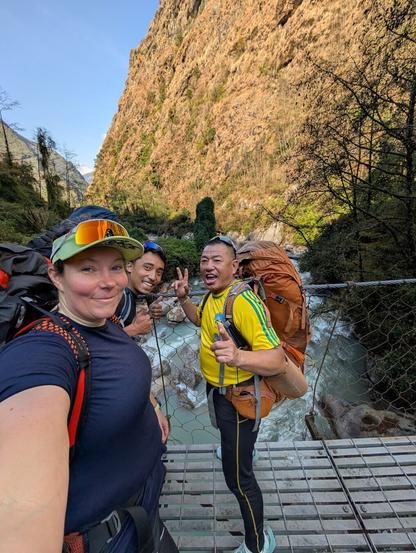
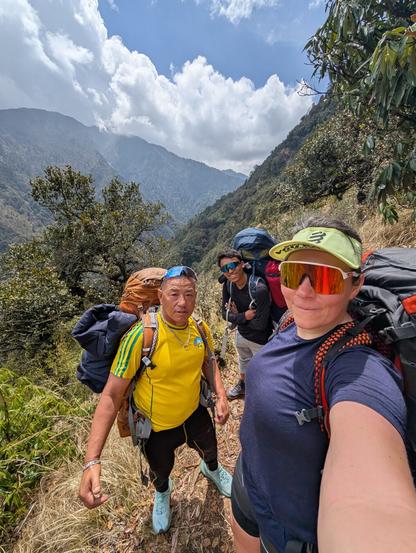
And another thing: your guide and porter are not just “staff.” On a remote trek, they are your team, your safety, your companions. Sharing food, tea, jokes, silence, and decisions changes the whole experience.
We reached Gyabla tired, happy, and not fully healthy.
That night, wrapped in my sleeping bag, listening to cow bells outside in the dark, I wondered if my body would recover before the trail climbed higher.
Because in the mountains, small things can become big things.
#Kanchenjunga #KanchenjungaTrek #NepalTrekking #EasternNepal #Gyabla #Himalaya #RemoteTrekking #TrekkingTips #MountainSafety #SlowTravel #RealAdventure
Day 2 of the Kanchenjunga trek: Lamatar to Gyabla — around 13 km and about 1,300 m of climbing.
I woke up with a sore throat, blocked nose, and a dull headache. Not dramatic at low altitude, but on a remote trail like Kanchenjunga, you pay attention early. Villages are far apart, comfort is basic, and there are no easy shortcuts if your body starts to struggle.
But what a trail.
We followed the river upstream, first walking in the riverbed where the white water was so loud that talking was almost impossible. Later, the path climbed higher and became a beautifully built stone trail along the hillside. Below us, the river kept moving. Ahead, white peaks slowly appeared.
The day became simple: walk, stop, eat, look around, continue.
One advice I would give for this kind of trek: don’t wait until you feel empty to eat. I had brought cereal bars, nuts, and snacks from France, and we stopped every two hours. Prashant also had cheese from the Langtang Yak Farm. These small stops helped keep the rhythm and energy steady.
And another thing: your guide and porter are not just “staff.” On a remote trek, they are your team, your safety, your companions. Sharing food, tea, jokes, silence, and decisions changes the whole experience.
We reached Gyabla tired, happy, and not fully healthy.
That night, wrapped in my sleeping bag, listening to cow bells outside in the dark, I wondered if my body would recover before the trail climbed higher.
Because in the mountains, small things can become big things.
#Kanchenjunga #KanchenjungaTrek #NepalTrekking #EasternNepal #Gyabla #Himalaya #RemoteTrekking #TrekkingTips #MountainSafety #SlowTravel #RealAdventure