Why Maritime Domain Awareness Determines Control in the West Philippine Sea

By Cliff Potts, CSO, and Editor-in-Chief of WPS News

Baybay City, Leyte, Philippines — May 12, 2026

The Problem: You Cannot Respond to What You Do Not See

Maritime operations depend on awareness.

In the West Philippine Sea, vessels do not operate in isolation. They are part of a moving environment that includes patrol ships, fishing vessels, survey platforms, and maritime militia units. Without accurate awareness of this environment, response becomes delayed or misdirected.

Interference benefits from gaps in visibility. When vessel movements are not detected early, response options narrow. Actions become reactive instead of planned.

This creates an operational disadvantage.

What Maritime Domain Awareness Means

Maritime Domain Awareness (MDA) refers to the ability to detect, track, and understand activity at sea.

It combines multiple sources:

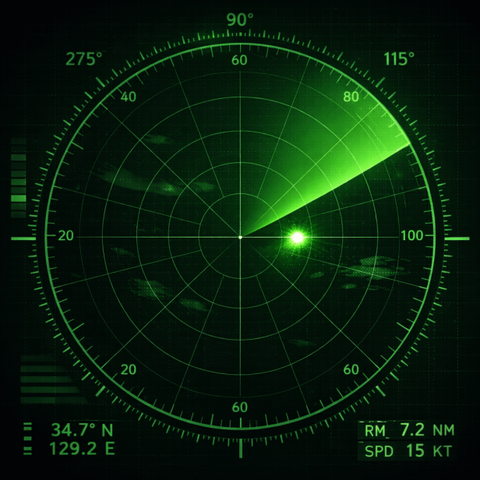
  • Radar systems
  • Automatic Identification System (AIS) data
  • Visual observation
  • Satellite tracking
  • Reports from vessels and coastal stations

No single source is complete. MDA depends on combining data into a usable picture.

Current Operating Conditions

Observed patterns in the West Philippine Sea continue to show:

  • Interfering vessels operating in coordinated groups
  • Presence maintained across multiple locations simultaneously
  • Movements that shift in response to Philippine patrol activity
  • Use of non-linear routes to complicate tracking

These patterns require continuous monitoring, not periodic checks.

Why Detection Timing Matters

Early detection changes outcomes.

If a vessel is identified at distance, route adjustments can be made. Escort vessels can be positioned in advance. Documentation systems can be activated before contact occurs.

Late detection reduces options. Encounters become immediate and constrained. Decision-making shifts from planning to reaction.

Timing is a decisive factor in operational effectiveness.

Integration of Data Sources

Effective MDA requires integration.

Radar alone cannot identify intent. AIS data can be incomplete or manipulated. Visual observation is limited by range and conditions.

Combining sources allows cross-verification:

  • Radar confirms position
  • AIS provides identity (when available)
  • Visual observation confirms behavior

Integrated data produces a clearer operational picture.

The Role of Local and Civilian Reporting

Maritime awareness is not limited to government systems.

Fisherfolk, commercial vessels, and local coastal observers contribute to the overall picture. When reporting channels are reliable, these observations provide additional coverage in areas where formal systems may be limited.

This expands visibility without requiring new infrastructure.

Limits and Constraints

MDA is resource-dependent.

Radar coverage has range limits. Satellite data may not be real-time. AIS can be turned off. Weather conditions affect visibility.

Awareness is never complete. It is improved incrementally.

The objective is not perfect visibility. The objective is sufficient awareness to act effectively.

Interaction With Other Measures

Maritime Domain Awareness supports all other operations.

  • Escorts can be positioned based on detected movement
  • Documentation can begin earlier
  • Patrol routes can be adjusted in real time
  • Distributed operations can be coordinated more effectively

Without awareness, these measures lose efficiency.

Bottom Line

In the West Philippine Sea, control is influenced by awareness.

The ability to detect and understand maritime activity determines how effectively interference can be managed. By improving detection, integrating data sources, and expanding reporting networks, the Philippines can reduce reaction time and increase operational control without escalation.

For more social commentary, please see Occupy 2.5 at https://Occupy25.com

Bateman, S. (2017). Maritime security and law enforcement in the South China Sea. Contemporary Southeast Asia, 39(2), 221–245.

Erickson, A. S., & Kennedy, C. (2016). China’s maritime militia. Center for Naval Analyses.

United Nations. (1982). United Nations Convention on the Law of the Sea.

#AISTracking #maritimeDomainAwareness #MaritimeSecurity #PhilippineCoastGuard #radarSystems #SouthChinaSea #UNCLOS #WestPhilippineSea

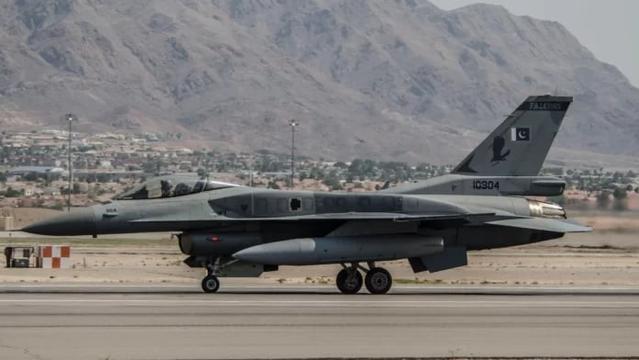
US approves $488 million F-16 radar support contract for Pakistan

The US has awarded a $488 million F-16 radar support contract benefiting Pakistan and other allies, covering technical assistance and upgrades through 2036.

Daily Times

Thursday, April 30, 2026

Ukraine may have solved its Russian Kinzhal missile problem -- Ukrainian drones reportedly strike Russian explosives plant in Nizhny Novgorod Oblast -- Russian oil facilities in Perm and Orsk struck as Ukraine's drones follow up Tuapse attacks -- Russia’s offensive tactics on full display in fight for Sloviansk ... and more

https://activitypub.writeworks.uk/2026/04/thursday-april-30-2026/

Iran Targets US Radar Systems in Strategic Escalation

Iran's recent targeting of US radar systems marks a strategic escalation in tensions, highlighting the critical role these advanced defense tools play in modern warfare. The stakes are high, with radar systems like THAAD and TPY-2 being crucial for detecting and tracking enemy missiles and aircraft.

https://osintsights.com/iran-targets-us-radar-systems-in-strategic-escalation?utm_source=mastodon&utm_medium=social

#UsDefenseSystems #RadarSystems #Thaad #Tpy2 #Iran

Iran Targets US Radar Systems in Strategic Escalation

Learn how Iran targets US radar systems, including THAAD and TPY-2, in a strategic escalation and discover the implications for modern warfare - read more now.

OSINTSights
How Passive Radar Works

Passive radar is radar that doesn't need a transmitter; it uses existing broadcasts of opportunity.

PassiveRadar.com

The Slot Antenna: Flipping the Script on Amateur Radio Theory

1,771 words, 9 minutes read time.

Most people in the radio world are playing with toys. They’re obsessed with flimsy wires and “whip” antennas that snap in the wind or create massive drag. If you want to dominate the spectrum, you need to stop looking at the wire and start looking at the void. The slot antenna isn’t just an alternative; it’s a masterclass in electromagnetic duality. We’re talking about carving a hole in a slab of steel and turning that “nothingness” into a high-gain radiation machine.

The Physics of the Void

The uninitiated think a hole in metal is just a leak. They’re wrong. In a standard dipole, current flows along a wire to create an electric field. In a slot antenna, we flip the physics on its head. When you hit the edges of that slot with RF, the surrounding metal carries the current, and the gap itself becomes the source of the field.

This is Babinet’s Principle in action. It’s not a “trick”—it’s a fundamental law of the universe. Because the antenna is flush with the surface, it’s the ultimate choice for high-speed aircraft and tactical vehicles. A traditional antenna gets sheared off by the elements. A slot antenna is part of the armor. It doesn’t just survive the environment; it owns it.

Engineering the Perfect Cut

Resonance is non-negotiable. Typically, you’re cutting a slot half a wavelength long. But the width is where you prove you know your stuff. The width dictates your impedance and your bandwidth. A wider slot moves massive data at high speeds.

Here is the part where most amateurs fail: Polarization. A vertical wire produces vertical polarization. A vertical slot cut into a metal sheet produces horizontal polarization. If you don’t account for that flip, you’re wasting power and shouting into a vacuum. Match the polarization, or stay home.

Command and Control

Feeding the beast is where the skill is. You don’t just “hook up” a wire. You bridge the gap with a coaxial cable—center conductor to one side, shield to the other—or you go elite with a waveguide.

When you cut a series of slots into a metal pipe (a waveguide), you create a Slotted Waveguide Array. As the signal hammers down that pipe, energy “leaks” out of each slot. If your machining is precise, those waves reinforce each other, creating a directional beam of energy so tight it can track a jet at Mach 2. This is the secret behind airport radar and warships. It’s precision physics meeting raw power.

Tactical Survival: The Ground Plane

In the real world, you don’t have “ideal conditions.” You have the hull of a ship, the side of a building, or a heavy-duty equipment rack. The metal structure itself becomes the antenna’s ground plane. High-level proficiency is knowing how to turn a structural slab of metal into a massive radiator.

This tech was forged in the fire of WWII because we needed radar that was stealthy and aerodynamic. The ability to hide an antenna inside the skin of a plane changed warfare forever. It’s about being invisible while remaining lethal.

The Future of Mastery

This isn’t “old-school” tech; it’s the backbone of 5G and satellite hardware. As we push into millimeter-wave bands, a fraction of a millimeter in your cut determines success or failure. Mastering the slot antenna means mastering the dual nature of the universe—the push and pull of electric and magnetic forces.

Move Toward the Build

If you’re serious about this craft, stop reading and start cutting. The study of slot antennas is a rite of passage. It demands spatial reasoning and a grip on 3D energy flow. Grab some copper foil or aluminum sheets and build a slot antenna for the 2.4 GHz band. Measure the SWR. Feel the polarization shift.

Hands-on experience is the only thing that separates a casual observer from a true expert. Build it. Repair it. Optimize it. Master the void.

TAKE ACTION

Don’t just lurk. If you’ve got the guts to show off your own builds, drop a comment below.

  • SUBSCRIBE: Get the technical deep dives that actually matter.
  • CONTACT ME: Reach out for professional RF consults or technical questions.
  • SUPPORT THE SIGNAL: If this saved you hours of troubleshooting, Buy Me a Coffee and keep the research moving.

D. Bryan King

Sources

Disclaimer:

The views and opinions expressed in this post are solely those of the author. The information provided is based on personal research, experience, and understanding of the subject matter at the time of writing. Readers should consult relevant experts or authorities for specific guidance related to their unique situations.

#12GHzBand #24GHzBand #440MHzBand #5GTechnology #advancedAntennaTheory #aerospaceEngineering #aircraftAntennas #AmateurRadio #antennaAperture #antennaArray #antennaConstruction #antennaDesign #antennaEngineering #antennaGain #antennaIntegration #antennaModeling #antennaTheory #apertureAntenna #autonomousVehicleSensors #BabinetSPrinciple #bandwidth #beamforming #camouflagedAntennas #coaxialFeed #copperFoilAntenna #directionalAntenna #DIYRadio #electromagneticDuality #electromagneticInterference #electromagneticWaves #ElectronicWarfare #flushMountAntenna #futureRadioTech #groundPlane #HGBooker #hamRadio #highGainAntenna #homebrewAntenna #horizontalPolarization #impedanceMatching #lowProfileAntenna #microwaveCommunication #microwaveEngineering #millimeterWave #navalCommunications #nonConductiveCoatings #patchSlottedArrays #PhysicsOfRadio #professionalRF #radarSystems #radiationPattern #radioFrequencyEngineering #radioHobbyist #RadioPhysics #radioTechnician #radioWaveBehavior #resonantFrequency #resonantSlot #RFFeedMethods #RFFieldTheory #RFInnovation #RFModeling #RFPowerHandling #RFShielding #ruggedCommunication #satelliteCommunication #signalIntegrity #signalPropagation #slotAntenna #slottedWaveguideArray #spatialReasoning #StandingWaveRatio #stealthTechnology #structuralAntenna #substrateIntegratedWaveguide #SWR #tacticalElectronics #TacticalRadio #technicalSciences #telecommunications #UHF #verticalPolarization #VHF #waveguideAntenna #waveguideFeed #wavelengthCalculation #wirelessTechnology
A targeted strike has successfully neutralized an operational AN/MPQ-64 Sentinel radar system. This action underscores the ongoing conflict dynamics. #MilitaryOperations #RadarSystems

Radar vehicles are transported, deployed and operated under constant movement. Reliability depends on mechanical assemblies staying secure over time.

Twister Fastener™ is designed for non-structural applications where predictable performance under vibration matters.

#Defence #MilitaryEngineering #RadarSystems #Manufacturing #MechanicalEngineering #Reliability

#Dutch Ford Vehicles to be Fitted with #AntiDroneSystem

The #Netherlands defense ministry has announced that dozens of #Ford4x4 vehicles will be equipped with #radarsystems to improve #surveillance of sensitive locations.

The radars provide early warning of approaching #drones and enable a faster response to.....Read more:
https://defensemirror.com/news/41017/Dutch_Ford_Vehicles_to_be_Fitted_with_Anti_drone_Radars

Rostec Delivers Zubr Air Defense Systems to Russian Defense Ministry

The Zubr complex uses radar to detect both large aircraft and small drones,