📢 2 PhD positions in ion channel research available!

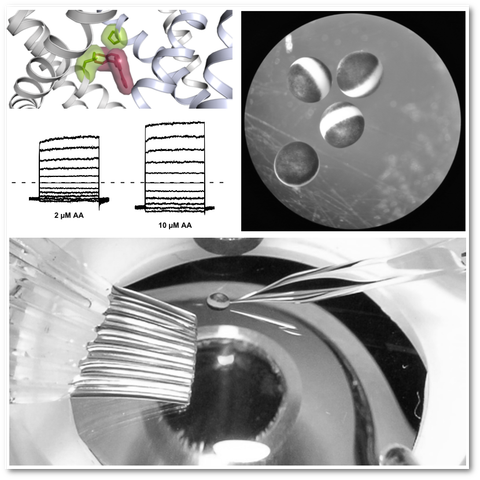
I want to share our latest job offers for a carrier in science - we have 2 open positions starting in the beginning of next year for PhD students. PhD students will learn & employ the PatchClamp technique to investigate structure-function relationships and pharmacology of ion channels, mainly potassium channels.
Enthusiastic about science?
Maybe something to think about over the holidays?
Have a look (english text can be found below the official german version in the documents)!

https://www.uni-kiel.de/personal/de/stellen/extern/wiss/stellenausschreibung-wimi-schewebaukrowitz.pdf

https://www.uni-kiel.de/personal/de/stellen/extern/wiss/stellenausschreibung-wimi-prof-baukrowitz.pdf

#academia
#science
#PhD
#phdPosition
#ion_channels
#patchclamp
#PotassiumChannel
#electrophysiology

#Autism-related behaviors. @burneuro @maxjosch &co show that 3 genetic models of autism have similar impairments in visual threat responses, and that these are driven by #PotassiumChannel misregulation in Setd5 haploinsufficient mice #PLOSBiology https://plos.io/3RiSGAc
Shared behavioural impairments in visual perception and place avoidance across different autism models are driven by periaqueductal grey hypoexcitability in Setd5 haploinsufficient mice

Autism has diverse genetic origins which converge on a similar set of behaviors. This study shows that 3 genetic models of autism have similar impairments in visual threat responses, and that these are driven by potassium channel misregulation in Setd5 haploinsufficient mice.

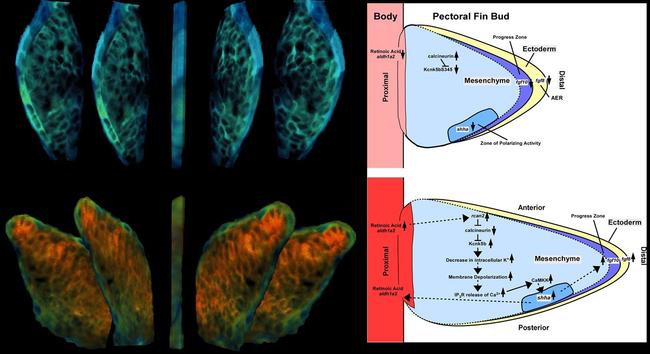
Potassium channels regulate the scale of #fish fins, but how? This study shows that the scale of #zebrafish embryonic pectoral fins is determined by the regulation of intracellular K+ by retinoic acid via Rcan2 & #PotassiumChannel Kcnk5b #PLOSBiology https://plos.io/3IOCu53
The scale of zebrafish pectoral fin buds is determined by intercellular K+ levels and consequent Ca2+-mediated signaling via retinoic acid regulation of Rcan2 and Kcnk5b

Potassium channels regulate the scale of fish fins, but the underlying mechanisms remain unclear. These authors show that the scale of zebrafish embryonic pectoral fins is determined by the regulation of intracellular K+ by retinoic acid via Rcan2 and the potassium channel Kcnk5b.