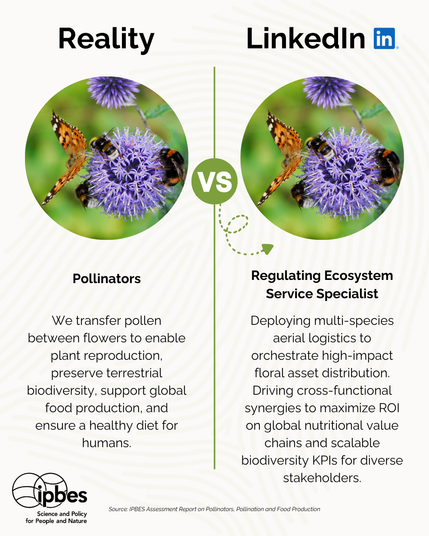
On LinkedIn, we like to dress up our job titles. But when it comes to nature, that professional polish is actually scientific facts. πŸ§ͺ

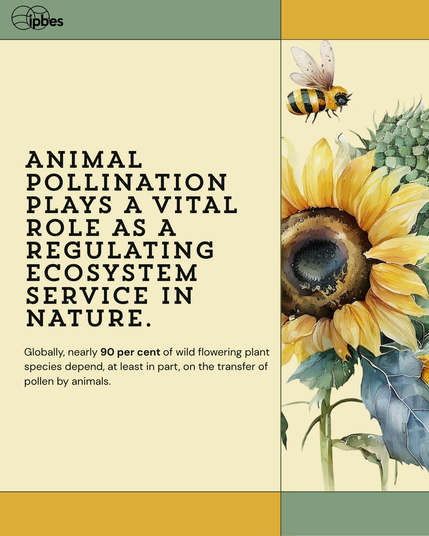
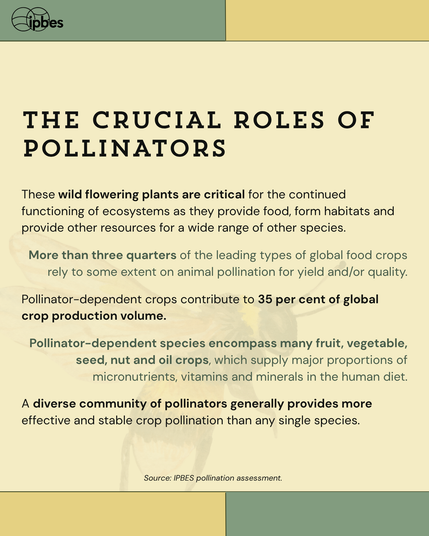
The @ipbes #PollinationAssessment found that 75% of our food crops & nearly 90% of wild flowering plants depend at least to some extent on animal pollination.
#IPBES #Pollinators #Science #Nature #LinkedInReality

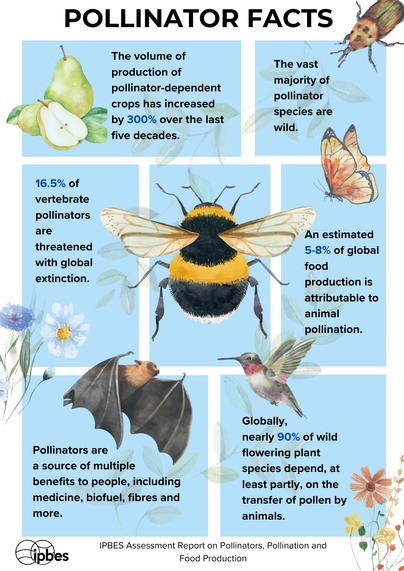
🐝 #Pollinators are responsible for much more than food-crops. From biofuels to medicines, we rely on pollinators in much of our daily lives.

Check out a few facts about pollinators from the @β€ŒIPBES #PollinationAssessment

Read the Report here: https://www.ipbes.net/assessment-reports/pollinators

Pollinators: Vital for nature and human well-being, but increasingly threatened.

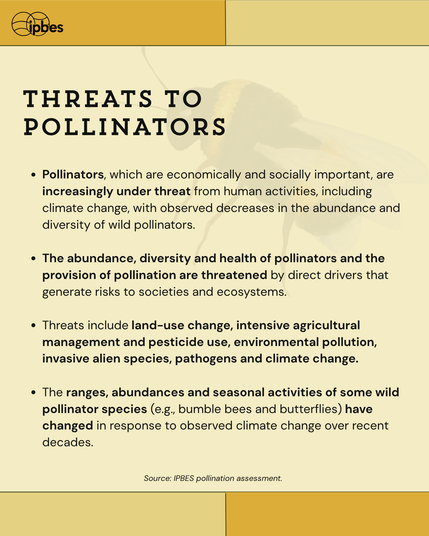
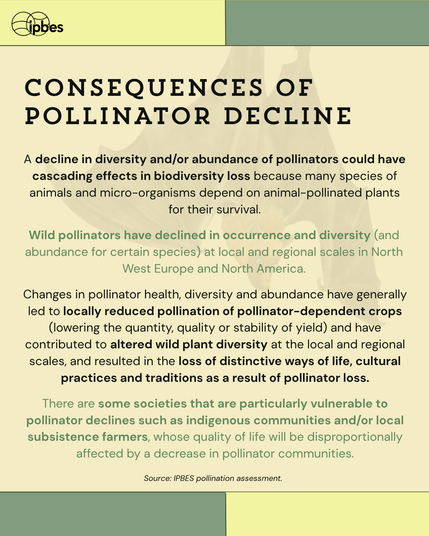
@β€Œipbes #PollinationAssessment highlights the critical roles of pollinators, the threats they face, and the severe consequences of their decline.

For #WorldBeeDay, swipe through to discover their crucial roles! πŸ¦‹

https://www.ipbes.net/assessment-reports/pollinators

RT by @EU_ENV: Butterflies- not just beautiful, but essential! πŸ¦‹

Sadly, they are declining in many areas of the world...

Protecting pollinators safeguards #biodiversity.

Learn more from @ipbes #PollinationAssessment

πŸ‘‰ https://www.ipbes.net/assessment-reports/pollinators

[2024-09-18 03:00 UTC]

Assessment Report on Pollinators, Pollination and Food Production | IPBES secretariat

This Assessment covers changes in animal pollination as a regulating ecosystem service that underpins food production and its contribution to gene flows and restoration of ecosystems. It addresses the role of native and exotic pollinators, the status of and trends in pollinators and pollination networks and services, drivers of change, impacts on human well-being, food production of pollination declines and deficits and the effectiveness of responses to pollination declines and deficits.

IPBES secretariat

Butterflies- not just beautiful, but essential! πŸ¦‹

Sadly, they are declining in many areas of the world...

Protecting pollinators safeguards #biodiversity.

Learn more: @ipbes #PollinationAssessment

https://www.ipbes.net/assessment-reports/pollinators

Assessment Report on Pollinators, Pollination and Food Production | IPBES secretariat

This Assessment covers changes in animal pollination as a regulating ecosystem service that underpins food production and its contribution to gene flows and restoration of ecosystems. It addresses the role of native and exotic pollinators, the status of and trends in pollinators and pollination networks and services, drivers of change, impacts on human well-being, food production of pollination declines and deficits and the effectiveness of responses to pollination declines and deficits.

IPBES secretariat

RT by @SfEP: 🐝 #Pollinators are responsible for much more than food-crops. From biofuels to medicines, we rely on pollinators in much of our daily lives.

Check out a few facts about pollinators from the @IPBES #PollinationAssessment ⬇️

Read the Report here: https://ipbes.net/assessment-reports/pollinators

[2024-04-11 11:00 UTC]

Assessment Report on Pollinators, Pollination and Food Production | IPBES secretariat

This Assessment covers changes in animal pollination as a regulating ecosystem service that underpins food production and its contribution to gene flows and restoration of ecosystems. It addresses the role of native and exotic pollinators, the status of and trends in pollinators and pollination networks and services, drivers of change, impacts on human well-being, food production of pollination declines and deficits and the effectiveness of responses to pollination declines and deficits.

IPBES secretariat

RT by @EU_ENV: 🐝 #Pollinators are responsible for much more than food-crops. From biofuels to medicines, we rely on pollinators in much of our daily lives.

Check out a few facts about pollinators from the @IPBES #PollinationAssessment ⬇️

Read the Report here: https://www.ipbes.net/assessment-reports/pollinators

πŸ¦πŸ”—: https://nitter.cz/IPBES/status/1752601358304206949#m

[2024-01-31 07:55 UTC]

Assessment Report on Pollinators, Pollination and Food Production | IPBES secretariat

This Assessment covers changes in animal pollination as a regulating ecosystem service that underpins food production and its contribution to gene flows and restoration of ecosystems. It addresses the role of native and exotic pollinators, the status of and trends in pollinators and pollination networks and services, drivers of change, impacts on human well-being, food production of pollination declines and deficits and the effectiveness of responses to pollination declines and deficits.

IPBES secretariat

#Pollinators are responsible for much more than food-crops. From biofuels to medicines, we rely on pollinators in much of our daily lives.

Check out a few facts about pollinators from the @β€ŒIPBES #PollinationAssessment

Read the Report here: https://www.ipbes.net/assessment-reports/pollinators

Assessment Report on Pollinators, Pollination and Food Production | IPBES secretariat

This Assessment covers changes in animal pollination as a regulating ecosystem service that underpins food production and its contribution to gene flows and restoration of ecosystems. It addresses the role of native and exotic pollinators, the status of and trends in pollinators and pollination networks and services, drivers of change, impacts on human well-being, food production of pollination declines and deficits and the effectiveness of responses to pollination declines and deficits.

IPBES secretariat

RT @IPBES: Pollinators are essential for food security, biodiversity and other ecosystem services!πŸ¦‹πŸŽπŸπŸŒ»πŸ¦πŸŒ½

But they face many challenges from intensive agriculture, to habitat loss and #ClimateChange & more...

πŸ“·@FAO

πŸ”Ž@IPBES #PollinationAssessment https://ipbes.net/assessment-reports/pollinators

πŸ¦πŸ”—: https://nitter.eu/EUClimateAction/status/1573521484907221002

Assessment Report on Pollinators, Pollination and Food Production | IPBES secretariat

This Assessment covers changes in animal pollination as a regulating ecosystem service that underpins food production and its contribution to gene flows and restoration of ecosystems. It addresses the role of native and exotic pollinators, the status of and trends in pollinators and pollination networks and services, drivers of change, impacts on human well-being, food production of pollination declines and deficits and the effectiveness of responses to pollination declines and deficits.

IPBES secretariat