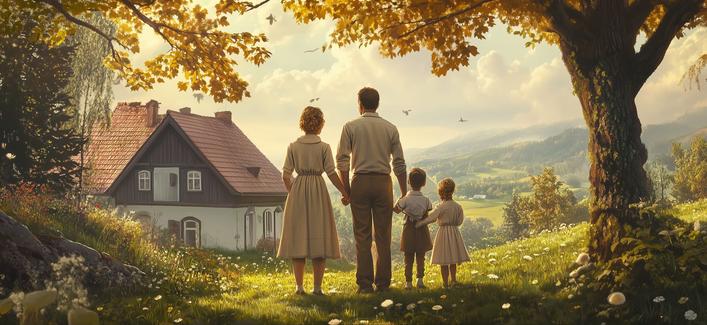
#PlatformRealism, as I define it in this essay, is a second-order aesthetic of generic images optimized to match textual descriptions, consumer expectations, and, ultimately, images from the past. This definition thus points to three aspects that I have explored in this essay: First, AI images, not unlike stock photos, are visualizations of pre-formulated concepts, images aligned with slogans. Second, the look of AI images is aligned with the predictable aesthetic expectations of a very specific demographic - predominantly white, young, male, and Western. Their reactions to the images are quantified, aggregated, and analyzed, resulting in a recursive algorithmization of taste. Third and finally, #genAI can be seen as a kind of backward prediction: Based on visual patterns from the past, it makes plausible guesses about what might have been. So #PlatformRealism is structurally nostalgic. It is a technology for curating the vibes of a «pastness» disconnected from history.
2/
Finally online: My essay on #PlatformRealism for #Transbordeur. There couldn't be a more appropriate week to publish it, even though when I wrote it last year I couldn't have imagined the extent to which AI slop would become the aesthetic of a new fascism. This essay is a kind of summary of the ideas about #PlatformRealism that I've been mainly developing on various online platforms over the past few years. Reading it now feels a little weird: I think most of the ideas are still valid, but only now are their political implications becoming clear.
1/
https://journals.openedition.org/transbordeur/2299?lang=en
“Platform Realism”. AI Image Synthesis and the Rise of Generic Visu...

In May 2023, artist Bjoern Karmann introduced a gadget called Paragraphica, a lensless “camera” based on AI text-to-image synthesis (fig. 1). For Karmann, Paragraphica gives us a glimpse into how g...

Warum die radikale Rechte generative KI liebt und wie Midjourney & Co. die Ästhetik des gegenwärtigen digitalen Faschismus prägen, darüber durfte ich für «Geschichte der Gegenwart» @g_der_gegenwart
schreiben
#PlatformRealism #ImageGeneration

https://geschichtedergegenwart.ch/echte-emotionen-generative-ki-und-rechte-weltbilder/

Echte Emotionen. Gene­ra­tive KI und rechte Weltbilder

Die radikale Rechte liebt generative KI. Trump wie Musk teilen massenhaft KI-generierte Bilder auf ihren Plattformen, und auch die AfD hat schon lange den Nutzen von Midjourney & Co. für ihren Wahlkampf erkannt. Dabei zeigt sich: Die Technologie ist kein politisch neutrales Werkzeug. Als Nostalgiemaschine und Klischeeverstärker drängt sie sich für den Entwurf rechter Weltbilder geradezu auf.

Geschichte der Gegenwart
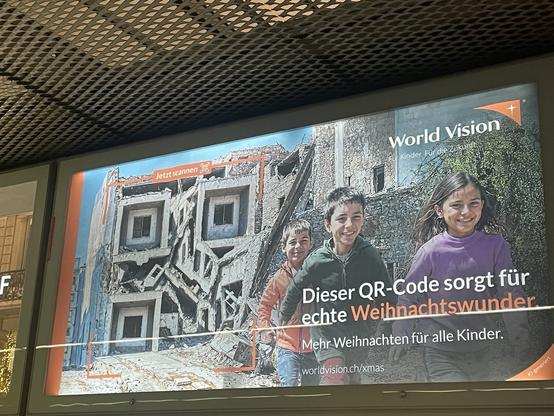
This campaign, which can now be seen all over Zurich, is one of the most irritating uses of AI imagery I have encountered so far: In different variations, we see generic, more or less 'photo-realistic' images of smiling children in front of badly damaged buildings, transformed into QR codes with the help of ControlNet. The slogan «This QR code creates real Christmas miracles» seems to be an almost cynical comment on the obvious fake «miracles» in the image, both the synthetic, AI-generated smiles of the children and the «miraculous» transformation of ruins into digital code. This kind of fundraising campaign has always relied on fairly generic stock images, and perhaps the use of AI for this purpose is only a logical consequence. But the obvious artificiality on display here, the shameless blend of sappy sentimentality and digital trickery, seems to me to take it to a new level
#PlatformRealism
AI image synthesis proves to be the perfect tool for fascist propaganda: by recombining and merging visual clichés, it allows mere slogans to be transformed into visible scenarios and reality to be customised to one's own preconceived ideological description
#PlatformRealism #ImageGeneration

Feeling very honored to have been invited by Hito Steyerl (@hito) and Francis Hunger (@databasecultures) to give a lecture on »Dreamworlds of Platform Capitalism« for their »Emergent Digital Media« class (@generativemedia) at AdBK Munich. Join us if you are in Munich on May 14!
#PlatformRealism

https://generativemedia.net/event/dreamworlds-of-platform-capitalism-synthetic-media-in-networked-image-cultures/

Dreamworlds of Platform Capitalism: Synthetic Media in Networked Image Cultures

Lecture by Roland Meyer Tue May 14, 2024, 7pm, Room E.O2.29, Neubau, AdBK München While the initial hype surrounding AI image synthesis models such as Dall-E, Midjourney, or Stable Diffusion is fading, their massive impact on networked image cultures is becoming ever clearer: Social media plat

As we learn more and more about how Facebook is spammed with AI-generated clickbait, one of the mysteries surrounding these images remains the prevalence of religious content – epitomized by the now infamous »Shrimp Jesus.« What's going on here?
#ImageGeneration #PlatformRealism
1/4
An aesthetic of continuous flow unites many of today's most prominent visual phenomena, be it drone footage, video games, digital SFX, and now AI videos. Each image glides almost effortlessly into the next. Spatial control seems unrestricted, every conceivable viewpoint can be taken, and gravity no longer plays a role. Time can be stretched, reversed, looped, and modulated without consequences; visual coherence trumps the logic of cause and effect, and any temporal sequence can be seamlessly connected to any other sequence. It's the dreamworld of platform capitalism
#PlatformRealism #ImageGeneration #Sora
The evangelical »He Gets Us« ad which aired during the Super Bowl made quite a buzz. Many pointed out that the photos of people washing each other's feet looked suspiciously like AI-generated images. There is a specific look that many now recognize as typical of AI: an intense glow emanating from the center of the image, smooth surfaces, saturated colors, and a high dynamic range, as well as an artificial hyper-realism that borders on the dreamlike. Meanwhile, the artist behind the series has spoken out, describing how each photo took days to create.
The look of extreme artificiality almost automatically associated with AI today is, in fact, much older. Variants can already be found in what Jörg Colberg has analyzed in a brilliant essay entitled »Photography’s Neoliberal Realism«, for example in the work of Gregory Crewdson (which almost looks like a blueprint for the Super Bowl ad, with some Watchtower vibes added for Christian flavour). For quite some time now, some of the most ambitious photographers have produced images that are supposed to look less like photographs and more like 19th-century historical paintings or Hollywood film stills.
1/2
#ImageGeneration #PlatformRealism
Is this a perverse logic? Of course it is. But that’s the logic of AI image synthesis as a consumer product: it produces images meant to be wasted, wasting valuable resources in the process. #PlatformRealism is an aesthetics of wastefulness
3/3