The Life and Death of Mr. Badman: The Unflinching Mirror
John Bunyan is a name synonymous with The Pilgrim’s Progress, the quintessential allegory of the Christian life. However, while The Pilgrim’s Progress shows us the narrow path to the Celestial City, its “companion” piece, The Life and Death of Mr. Badman, serves as a sobering, detailed map of... More details… https://spiritualkhazaana.com/the-life-and-death-of-mr-badman/
#lifeanddeath #pilgrimsprogress #selfdeception #redemption #christianallegory #spiritualcomplacency

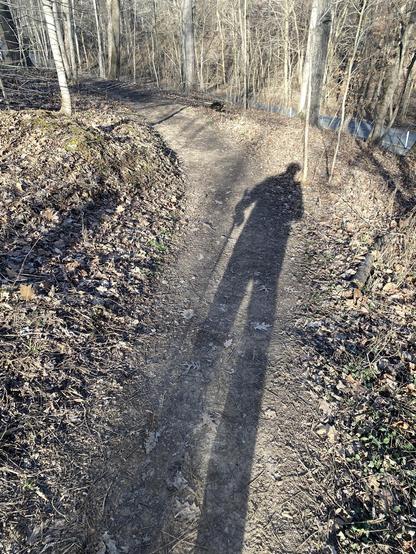
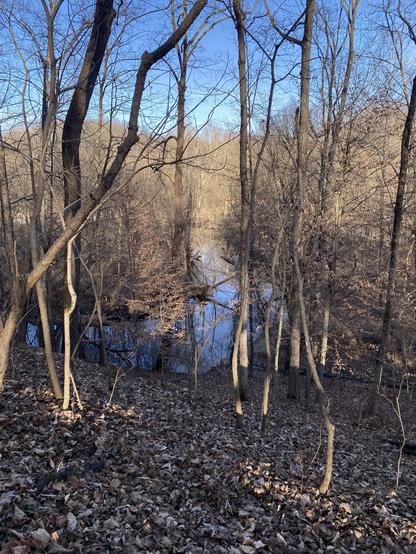
Monday afternoon, I walked in Cherokee Park. It was...brisk. I saw a lot of deer, as is usual this time of year. My average daily mileage since January 1st is up to 2.3 miles, 5600 steps. Longest walk so far in 2026 was 4.3 miles. Yesterday on my #dailywalk, #pilgrimsprogress was 8447 steps, 3.5 miles.

I was tired by the time I got back to the car. I am working to get my wind back, and walk off the weight I gained while recovering from the knee replacements. One foot after another.

When the Shortcut Looks Softer Than the Cross

On Second Thought

Scripture Reading: John 6:65–69
Key Verse: John 14:6

“I am the way, and the truth, and the life. No one comes to the Father except through Me.”
John 14:6

There comes a moment in every serious walk of faith when the question is no longer whether Jesus is admirable, inspiring, or even truthful, but whether He is enough. John 6 records such a moment. After Jesus speaks hard words about eating His flesh and drinking His blood—language meant to press disciples beyond curiosity into costly trust—many turn back. The crowd thins. Commitment is tested. Jesus then turns to the Twelve and asks a question that still echoes across centuries: “Do you want to go away as well?” Peter’s response is not polished theology; it is settled realism. “Lord, to whom shall we go? You have the words of eternal life.” This is not blind loyalty. It is the recognition that all alternatives have been weighed and found wanting.

This same discernment lies at the heart of John Bunyan’s The Pilgrim’s Progress. Christian’s detour into By–path Meadow was not an act of rebellion but of discouragement. The narrow way was difficult, and the grass looked softer elsewhere. Bunyan’s insight is incisive: most spiritual departures do not begin with denial of truth, but with fatigue. When obedience feels arduous, alternatives feel merciful. Yet Bunyan exposes the deception clearly. Shortcuts that promise relief often deliver captivity. The Giant Despair does not live far from By–path Meadow.

Jesus’ words in John 14:6 confront this impulse head-on. He does not present Himself as a way among many viable routes, nor as a guide who merely points toward truth. He identifies Himself as the Way, the Truth, and the Life. Each term is exclusive not because Jesus is narrow, but because reality is. A bridge is not arrogant because it is the only crossing point over a ravine; it is faithful because it holds. In the same way, Christ’s sufficiency is not a limitation imposed on seekers, but a gift offered to the weary.

The temptation to look for “other options” is not new, nor is it limited to overtly false religions. Often the alternatives are more subtle: self-reliance dressed as maturity, moralism mistaken for holiness, spirituality without submission, or compassion detached from truth. These options do not deny Jesus outright; they simply reposition Him as helpful rather than essential. Yet Scripture presses us to a harder clarity. If Jesus is not the way, then He is reduced to a way. If He is not the truth, then truth becomes negotiable. If He is not the life, then we are left managing death with optimism.

Understanding who Jesus is guards us against these seductive compromises. The disciples in John 6 do not claim to understand everything Jesus has said. What they do understand is this: there is nowhere else to stand that leads to life. As Augustine famously wrote, “You have made us for Yourself, O Lord, and our heart is restless until it rests in You.” Restlessness often masquerades as exploration, but it is more often a symptom of displacement—of stepping off the path that actually leads home.

It is important to acknowledge, pastorally, that the way of Jesus is demanding. The Gospel never denies this. The road is narrow, the call is costly, and obedience can feel lonely. Yet Scripture consistently insists that difficulty does not invalidate direction. The way of Christ may be arduous, but it is coherent. It leads somewhere. Other paths promise ease but lack destination. They offer relief without redemption, comfort without transformation.

Jesus’ sufficiency also confronts our desire for control. Alternatives feel appealing because they allow us to remain managers of our own lives. Christ calls us instead to trust, to abide, to follow. This is not passivity; it is reorientation. He gives direction not merely for eternity, but for the present ordering of our loves, decisions, and hopes. His forgiveness is not partial. His love is not supplemental. There truly are no substitutes.

On Second Thought

Here is the paradox worth lingering over: the exclusivity of Christ, which initially feels restrictive, is actually what makes freedom possible. When Jesus says, “I am the way,” He is not narrowing the world; He is stabilizing it. Endless options do not produce peace; they produce paralysis. A thousand possible paths may feel empowering, but they also leave us perpetually uncertain, always wondering if we chose correctly. Christ’s claim removes that burden. The freedom He offers is not the freedom of endless choice, but the freedom of confident belonging.

On second thought, perhaps the real danger is not that we will outright reject Jesus, but that we will quietly supplement Him. We add strategies where He calls for trust, explanations where He calls for obedience, alternatives where He calls for faithfulness. Yet every supplement subtly implies insufficiency. Peter’s confession in John 6 is so enduring because it refuses that implication. “To whom shall we go?” is not resignation; it is clarity. It is the settled understanding that while other paths exist, none lead where the heart truly longs to go.

The way of Jesus may feel demanding, but it is the only way that tells the truth about both God and us. It names our brokenness without abandoning us in it. It calls us forward without pretending the road is easy. On second thought, the narrow way is not narrow because it excludes life, but because it protects it.

FEEL FREE TO COMMENT, SUBSCRIBE, AND REPOST, SO OTHERS MAY KNOW


#discipleshipChoices #followingChrist #JesusTheWay #John146 #PilgrimSProgress #spiritualDiscernment

When the Other Roads Look Easier

On Second Thought

The moment described in John 6 is one of the most quietly revealing scenes in the Gospels. Jesus has just spoken hard words about eating His flesh and drinking His blood—language so unsettling that many who had followed Him begin to drift away. The text does not say they argued Him down or refuted His teaching. They simply walked away. Jesus then turns to the Twelve and asks a question that still echoes through every generation of believers: “You do not want to leave too, do you?” Peter’s reply is not polished or philosophical. It is deeply human and deeply honest: “Lord, to whom shall we go? You have the words of eternal life” (John 6:68–69). This exchange frames the heart of faith not as blind certainty, but as sober choice.

Faith, at its core, is not the absence of alternatives. It is the discernment to see where alternatives actually lead. The Christian life has never been lived in a vacuum of options. From Eden onward, humanity has been surrounded by competing paths that promise ease, autonomy, or relief. Jesus never denies that other roads exist. What He insists upon is their destination. When He later declares, “I am the way, and the truth, and the life. No one comes to the Father except through Me” (John 14:6), He is not narrowing curiosity; He is clarifying reality. The Greek terms are instructive. Hodos (way) implies a road that must be walked, not merely admired. Alētheia (truth) refers to that which is unconcealed, not merely accurate. Zōē (life) speaks of life sourced in God Himself, not simply biological existence. Jesus is not one option among many; He is the only path that actually arrives where the soul longs to go.

John Bunyan captured this tension masterfully in The Pilgrim’s Progress. Christian does not abandon the path because he stops believing in the Celestial City. He leaves because the terrain becomes difficult. By–path Meadow looks softer, quieter, more reasonable. Bunyan understood something we often forget: temptation rarely announces itself as rebellion. More often, it disguises itself as efficiency. Shortcuts always promise relief from strain, but they quietly detach us from truth. Christian’s imprisonment by Giant Despair is not the result of overt wickedness but of a momentary decision to seek comfort apart from obedience. Bunyan’s insight remains pastorally sharp because it mirrors our own interior logic.

Understanding who Jesus is safeguards us from these subtle diversions. When Christ is reduced to a spiritual resource rather than the living Lord, alternatives begin to feel negotiable. Yet Jesus does not offer partial guidance or supplemental forgiveness. His love and mercy are not add-ons to a self-directed life; they are the ground upon which life stands. Scripture consistently testifies that divided trust leads to diminished clarity. James writes, “A double-minded man is unstable in all his ways” (James 1:8). Instability does not come from asking questions; it comes from refusing to let truth settle the question of direction.

The language of “the way” reminds us that discipleship is movement, not mere agreement. Roads shape travelers. They form habits, postures, and expectations over time. The way of Jesus includes suffering not as an interruption but as a refining passage. This is why so many turned away in John 6. They wanted provision without surrender, benefit without transformation. Yet Peter’s confession points to a deeper realization: leaving Jesus does not remove difficulty; it only removes meaning. The other options may appear easier, but they lack words of eternal life. They can soothe for a moment, but they cannot sustain the soul.

What makes this teaching especially relevant today is the sheer abundance of spiritual by–paths. We live in an age that prizes customization, even in matters of faith. Truth is often treated as a menu rather than a revelation. Yet Scripture consistently presents faith as responsive rather than inventive. The Hebrew concept of emunah—often translated as faith—carries the sense of steadfastness and fidelity, not creative experimentation. Faithfulness is not about sampling every road; it is about remaining when the chosen road becomes demanding.

Jesus does not hide the cost of following Him. He speaks openly of carrying a cross, losing one’s life, and enduring hardship. Yet He also speaks with clarity about the outcome. The way may be arduous, but it is coherent. It leads somewhere real. The paradox of Christian faith is that surrender produces freedom, and obedience yields life. Alternatives promise autonomy but often deliver fragmentation. Christ promises Himself—and delivers exactly that.

On Second Thought

There is a quiet paradox embedded in Jesus’ claim to be the only way that we often overlook. At first hearing, exclusivity sounds restrictive, even severe. It seems to narrow the field of spiritual exploration and limit personal choice. Yet when examined more carefully, Christ’s exclusivity actually removes a far heavier burden—the burden of endlessly having to decide who or what will save us. The human soul was never designed to bear the weight of self-direction. Constant evaluation of alternatives, identities, and moral paths eventually exhausts us. Choice, when elevated to ultimate authority, becomes tyranny.

On second thought, Jesus’ words in John 14:6 are not closing doors so much as closing loops. They free us from the anxious need to keep options open “just in case.” Faith does not mean pretending other paths do not exist; it means recognizing that other paths cannot carry the weight of eternity. The moment Peter says, “To whom shall we go?” he is not expressing resignation but relief. He has reached the end of substitutes. What appears narrow from the outside becomes spacious from within, because clarity creates rest.

This paradox challenges the modern instinct to equate freedom with multiplicity. Scripture suggests instead that freedom emerges from alignment. A train is most free when it remains on the track designed to bear its weight. Remove the rails in the name of openness, and the train does not gain liberty—it derails. In the same way, Jesus as the way is not a constraint on life but its necessary structure. On second thought, perhaps the real danger is not choosing Christ too fully, but choosing Him partially while keeping escape routes intact. The call of the Gospel is not to sample Jesus among options, but to trust Him beyond them.

FEEL FREE TO COMMENT, SUBSCRIBE, AND REPOST, SO OTHERS MAY KNOW


#ChristianDiscipleship #faithAndObedience #JesusTheWayTruthLife #John146 #John66569 #PilgrimSProgress #spiritualDiscernment

I took a #morningwalk on the Anchorage (Kentucky) trail. Nicely chilly, brisk, in the 20s F. I saw five deer, six if I count the skeleton. I'm getting back on the path and my step count is up after last year's knee replacements.

#dailywalk #pilgrimsprogress

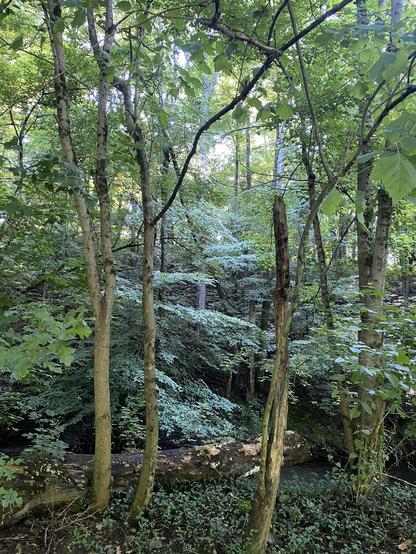
Yesterday I walked in Cherokee Park. Been a while. I left flat screen and doom scroll behind and entered the green world called June, smelling it, touching it, listening to it. The iParasite in my pocket kept track.

#dailywalk, #pilgrimsprogress: 8,316 steps, 2.8 miles

It was a one deer day. I also saw a turtle catch a fish in Beargrass Creek.

FYIFs Update:, I had surgery on May 5 to replace my left knee. 3 weeks and 5 days later, I can walk without assistance, cane, or walker, do stairs, pretty much have almost all my range of motion back. I get tired faster, and it still hurts (in different places as healing progresses). Haven’t tried a hiking trail yet. I feel positive enough about the outcome that Els and I are contemplating getting my right knee done in August. Saturday’s #dailywalk, #pilgrimsprogress: 4,820 steps, 1.7 miles.

The first Universal theme park in Europe is planned for the site of a former brickworks near Bedford.

But no-one seems to have picked up on the fact that it is probably the site of Bunyan's Slough of Despond in Pilgrim's Progress.

Have fun!

(Ooh how about a Pilgrims Progress theme park?)

#Bunyan #PilgrimsProgress #Universal #Bedford

Saturday's #dailywalk, #pilgrimsprogress: 14,193 steps, 5.2 miles.

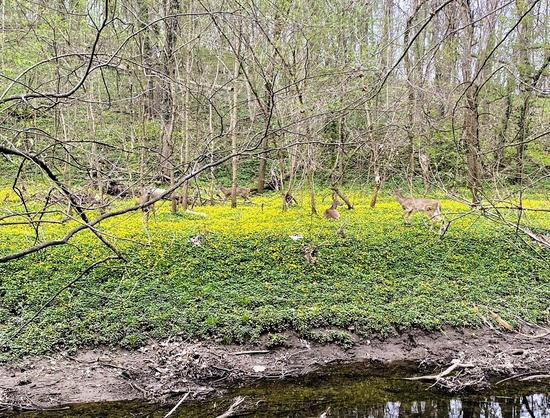
It was a four deer day. Tens of thousands (millions?) of those little yellow flowers blooming in the bottoms by Beargrass Creek #iphonephotography

Saturday's #dailywalk, #pilgrimsprogress: 14,193 steps, 5.2 miles.

It was a four deer day. Tens of thousands (millions?) of those little yellow flowers blooming in the bottoms by Beargrass Creek.