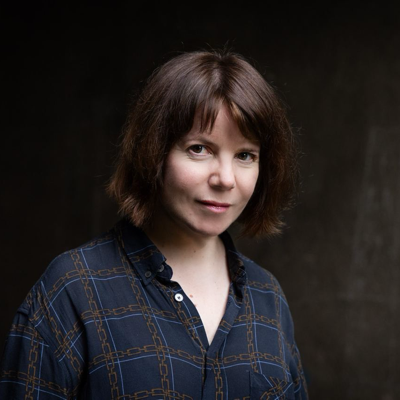
har varit passiv här ett tag för att jag skriver på en nördig bok om fototeori.

på en månad (!) har jag blivit nästan klar med innehållet. så går det när man har koll på sina grejer, tänker fort/snabbt/stort/effektivt, och dessutom skriver snabbt. OCH samarbetar med en AI för textrespons. då går det undan.

det kan rentav bli så att den släpps på kindle/amazon framåt jul! 😮🙏🤶🏻📷✨

http://eye-c.se
https://clubpassionista.se

#fototeori #konstteori #phototheory #arttheory #svenskfototeori

Eye C : p h o t o g r a p h y | p h o t o g r a p h y

Do you see what eye c? Black and white photography by swedish photographer SMP.

Eye C : p h o t o g r a p h y | p h o t o g r a p h y

👀 JOBJOBJOB

PostDoc bei Estelle Blaschke? Hier möglich 👇

#photography #photohistory #phototheory

Much needed palate cleanser after this week by Jörg Colberg.
#PhotoTheory #Photography #Media

A Photo’s Subject is Important, but Don’t Forget the Rest of the Frame

The process of crafting great imagery is something I have been studying for years. One of the undertakings in this riveting pursuit was to study hundreds of great images from many photographers.

The works I studied are both well-known and less well-known, from different backgrounds and with unique seeing profiles across most genres of photography. Today I would like to share with you some of those findings.

When observing the world around us we usually want to find one special, grand, dazzling subject. In other words, we look for the central point around which the image will be built. We dream, fantasize and long for great subjects. To fill the void of interesting subjects we often buy expensive trips to the most scenic places in the world, travel to historic sites, research Google maps for the best views, hire models, look for unique characters -- anything that would give us a visual advantage. That’s not a bad thing at all.

But this is the issue: In this relentless pursuit of a great image, we are sometimes so preoccupied with the subject that we forget about “the rest.” Your subject is important, but it is still only part of your image. In fact, in most photographs, the subject only occupies a tiny portion of the image. What about “the rest?”

The “rest” is something we call negative space or white space. Why am I talking about this? Because after studying hundreds great images, I came to the conclusion that it is just where a good image turns into a great image.

Let me explain. We are living in a very open, loud and colorful world. Nowadays, all you need to do is walk the streets of big cities and you will find plenty of interesting subjects. You can also hop on a plane and be in an exotic location within hours or days. Great subjects are everywhere, and we all have access to them.

If that’s the case, we should have a superfluity of great images but somehow it’s not happening. Why? Because when we encounter a great subject, we are so excited and preoccupied with it that we forget about crafting the entire image. We forget that finding a great subject is just a part of this craft. Not only must we place the subject within the frame but we must also craft the frame (or negative space) ourselves.

I really like the phrase “white space.” It reminds me of how painters create their masterpieces. They start with a white canvas and then carefully add elements inside the frame. They might start with the subject and go from there, or they might put in all the elements and leave appropriate space for the subject. We cannot do this in photography, of course, but what we can do is arrange the frame using a few methods which I am going to talk about in future articles.

Going back to the initial thought, of course the subject is important but once you identify your subject, make sure to shift your attention to everything else. The more work you put into arranging the white space, the more powerful your photograph will become. I often remind myself, okay Olaf, now you have the subject, make sure to pay it adequate respect. Organize the space around the subject so it not only complements it but also invites the viewer to go on a visual journey of exploration and awe.

_The article is courtesy ofELEMENTS Magazine. ELEMENTS is the monthly magazine dedicated to the finest landscape photography, insightful editorials and fluid, clean design. Inside you will find exclusive and in-depth articles and imagery by the best landscape photographers in the world such as Charles Cramer, Edward Burtynsky, Michael Kenna, Erin Babnik, Chuck Kimmerle, Rachael Talibart, Hans Strand and John Sexton, Theo Bosboom to name a few.

CYBER MONDAY : Use the LANDSCAPE code for a 15% discount off the annual subscription._

_About the author: Olaf Sztaba first picked up a camera thirty-five years ago. Since then his passion for “seeing” has become a lifetime journey with photography. Widely known as a visual poet, Olaf’s unique eye and relentless pursuit of visual simplicity allows him to capture “superbly creative and aesthetically pleasing images.” The images, along with his writings, can be found at Olafphotoblog. Discussions on seeing, creativity, inspiration and fine art photography parallel the images.

Olaf is a founder and editor-in-chief of the Medium Format Magazine and co-founder of the ELEMENTS Magazine. Olaf spends most of his time curating, writing, and photographing in the field, usually exploring less-traveled roads. He is a sought-after speaker and educator._

#editorial #opinion #elementsmagazine #landscapephotography #phototheory #theory

Learning How to Find Photography Inspiration Close to Home

Going out with your camera on a regular basis is an important part of expanding your personal growth, creativity, and mental health. During this worldwide pandemic, it means exploring the world close to home. This is not something new to me, but it does require an open mind. There are countless opportunities to make pictures everywhere, regardless of where you happen to live.

During the winter months, I would typically be busy leading workshops in Mexico, Colombia, and Cuba. However, with the worldwide travel restrictions, I’ve found myself at home in Canada for the past fifteen months. This unexpected standstill in my regular travel schedule has allowed me a rare opportunity to explore the world on my doorstep -- a familiar world that many take for granted. As a result, these circumstances have taken me back to my early roots in photography.

The best place to make photographs is wherever you happen to be! Having learned the art and craft of photography long before experiencing the privilege of traveling, it has been a joy to play close to home again. I have often stated to my workshop participants that if you cannot make meaningful images where you live then you will not be able to make expressive images when you travel. Travel is wonderful, of course, but it will not magically improve your personal vision. Having an open mind combined with passion and a willingness to explore and experiment with new ways of seeing will go a long way to developing personal growth.

My usual approach to photography is spontaneous and reactive -- going out with no preconceived notion of anything, the blackboard in my head empty of yesterday’s thoughts -- having the joy and freedom to photograph what excites me. I learned this wonderful approach when I began making pictures in the early eighties. I am grateful for that foundation in the art and craft of photography.

Personal projects are an important way to develop our vision, creativity, and craft. I have visited a nearby provincial park numerous times during the pandemic. There is always something new to explore as the seasons and weather change, presenting a wide variety of material to discover.

A quiet simplicity comes with winter, the interwoven branches of trees clearly delineated after a fresh snowfall. As I was searching for ice formations along a small stream in the forest, I was struck by the simplicity of the trees in the snow-blanketed landscape. For the rest of the day, I turned my lens to the graphic possibilities of natural patterns. The interlacing branches and stark trunks symbolize growth and relationship. The forest floor in winter is covered with these wonderful beech tree saplings, their delicate, graceful branches reminiscent of the Japanese aesthetic of beauty in simplicity. My goal was to explore simplicity on the forest floor and to practice the Zen of seeing. Finding these compositions requires commitment and keen observation as the forest environment is naturally complex.

For many people, winter is not the most comfortable of seasons compared to spring or summer, but it has its own sublime beauty. During a fresh snowfall, I am always fascinated by how quiet the world is. Gently falling snow has its own serenity.

The Art of Slowness

Practice the art of slowness in your photography by scheduling time for relaxation. Relaxation is essential to achieving clarity and energy. You can’t rush creativity and it’s no surprise that a hurried life can exhaust the creative mind. I often notice the effects of hurry sickness on workshop participants as they move restlessly from subject to subject, appearing stuck in fast-forward mode.

It is important to slow down and look beyond the obvious things so often etched in our minds. Most of the time you will be rewarded. Allow yourself to benefit from the habit of going out with no fixed agenda and a clear mind, letting the pictures find you. This approach has worked for me for several years now. My best advice when making pictures is to slow down and think about why you stopped at a particular spot to photograph. This will, in turn, help you address the central idea in your mind’s eye. By taking a slow approach and spending time with an open mind you may end up with a completely different idea than when you started. Many people have preconceived ideas (memorized vision) of how things should look. This is one of the barriers to creativity I have observed over the years during workshops and tours.

Vision

For creativity, originality, and imagination to occur in the context of photography, every effort should be made to free the mind of conventional ways of seeing and thinking. Back in the early eighties when I began to make images, I was fortunate to learn that rules would limit my creative freedom and I never fell into the idea of correctness, obeying in order to gain acceptance. Erasing rules from my mind early on has propelled my photography to its current state. Over the past thirty years when conducting workshops, I’ve often joked about opening a Rehab clinic for photographers.

I learned from Freeman Patterson in the early eighties that the art of seeing is the art of photography. When you start paying attention to little details, they start showing up everywhere. Seeing takes time. You must go beyond the everyday labels and let your eyes explore an object. Notice the light and the way it strikes the object; the highlights and shadows; the gradation of tones; textures and colours. It means noticing sharp lines, soft lines, the tonal shape of the object and the smaller shapes contained within. You must be aware of the depth and perspective inherent in what you are viewing.

Design

When visual structure is present in a photograph it generally introduces order and helps determine internal relationships. Linear pattern, which provides the basic structure, can be considered the skeleton or bones of a composition, supporting the whole design much like the beams and columns support a building. We may have taken a photograph without consciously thinking of structure, but it is always present when there is organization.

In my initial days of image-making, I can remember hearing “not to place things in the center of the picture space.” I soon learned this was nonsense along with all the other so-called rules! My best advice is to make pictures from the heart, trust your intuition, and most importantly think for yourself. Consider it photography without borders.

Organizing these building blocks of design in the picture space to express a feeling is the key to visual expression. This should come completely without ridiculous rules or preconceived notions of how things should look. It should be intuitive and from the heart, never overthinking the process.

Closing Thoughts

When we approach the process of photography as a meditation, we learn to react to what the eye perceives without our intellect causing interference (outside noise and memorized vision). Instead of the usual routine of looking, we begin to recapture the lost art of seeing and create a new awareness of the world.

Abstract expressionist painters have always believed in spontaneity. Personally speaking, spontaneity and a healthy amount of play is the secret sauce in my image-making. When I am out with my camera, I don’t have a plan. The main thing is to be free to express my passion now for whatever I am doing. Goals, agendas, and schedules are my enemies.

The image in this article is a result of slowing down, spending time relaxing in a familiar place close to home, and taking in the sublime beauty of winter during a fresh snowfall. There is something to be said about returning to the same place numerous times and making fresh discoveries. It is always rewarding and never disappointing!

In conclusion, make pictures of what excites you. Photograph what you love, what makes you happy allowing as much joy, freedom, and spontaneity as possible. Most importantly, don’t listen to other people’s noise. You are the original in photography! Make pictures for the joy of it!

The article is courtesy ofELEMENTS Magazine. ELEMENTS is a monthly magazine dedicated to elegant landscape photography, insightful editorials and fluid, clean design. Inside you will find an exclusive and in-depth articles and imagery by the best landscape photographers in the world such as Bruce Barnbaum, Christopher Burkett, Chuck Kimmerle, Christian Fletcher, Charlie Waite, Rachael Talibart, Erin Babnik and Freeman Patterson, to name a few. Use the PETAPIXEL10 code for a 10% discount off the annual subscription.

_About the author: One of the earliest contributors to the ELEMENTS magazine, Richard Martin pursues photography as a medium of visual expression. He is best known for his unique vision with a personal style characterized by a strong sense of composition, colour and the use of light. His work combines an architectural love of geometry, pattern and texture with a painter's sensitivity to colour, light and composition.

Well known for sharing his enthusiasm, creative vision and passion for the medium, Richard continues to inspire participants with his annual photography and visual design workshops in his native Kingston, Ontario since 1990. He also conducts workshops, tours, and seminars around the world, including Cuba, Mexico, Sicily, Venice, Tuscany, Provence, Ireland, and Morocco.

#inspiration #elementsmagazine #essay #landscapephotography #phototheory #richardmartin #theory #travel

Learning How to Find Photography Inspiration Close to Home

Make pictures for the joy of it!

Different Approaches to Seeing the Grand Landscape

The development of personal vision in photography often gets mired in thoughts of what to avoid, the suppression of familiar ideas, and the desire to do something different. Instead of trying to move away from what we want to avoid, it is usually more productive to move through familiar ideas that operate as creative catalysts. This article presents two approaches to seeing the grand landscape that can leverage the familiar in the service of the new.

My photographs are intended to represent something that you don’t see.
-Emmet Gowin

This story is brought to you byELEMENTS Magazine. ELEMENTS is the new monthly magazine dedicated to the finest landscape photography, insightful editorials and fluid, clean design. Use the PETAPIXEL10 code for a 10% discount off the annual subscription.

Breaking trail after a heavy snowfall, you delight in the conditions of a clearing storm. The sky that was previously a grey, textureless ceiling is now showing warmth and structure, and the sudden play of light and soft shadows around you begins to shape the terrain. The river you are following provides a corridor through the snow-flocked forest and is all that indicates the nearby mountains that swell the river with runoff from their hidden heights. Slowly, the clouds begin to dissipate, and your thoughts turn to positioning yourself for a photograph of the drama that is sure to unfold once the jagged peaks begin to break through.

This scenario describes a crucial point in the creative process of photographing a grand landscape scene, the point where seeing becomes transitional to everything that follows. This moment often seems reducible to a simple act of composition, of maximizing visual appeal. Other layers of intention, however, are always at play. Learning to tap into those layers can be fruitful in the same way that practicing composition helps you to see opportunities in the field, even when you aren’t thinking about aesthetics. In my own work, I find it helpful to practice two approaches to seeing photographic opportunities: via formalism and storytelling. Both approaches leverage a process of recognition, evolving and combining familiar ideas to arrive at something new. What follows is an explanation of those approaches and how you might apply them when photographing a grand landscape scene.

In this article, I define the grand landscape as any view of nature taken from a terrestrial vantage point and including an expanse of land larger than most indoor spaces. As one of the earliest genres of photography, the grand landscape is especially traditional, yet it never seems to wane in popularity. It owes much to the development of landscape painting and shares with it an evolution stretching back to early antiquity. With such deep roots, it might seem to be a genre set in its ways, but today’s examples stand alongside a remarkable stream of landscape photography that succeeds in making even the most familiar places seem new again.

Indeed, all art making is essentially a negotiation between old and new, combining familiar references with personal input, so the process of seeing is never wholly separate from recognizing creative solutions that other photographers have already explored. As long as seeing is part of the process, even a grand landscape image that oozes tradition sparkles with originality. Therefore, it can be helpful to practice a range of options for priming your personal vision for greater agility in the field.

Formalism: Seeing Motifs and Patterns

Landscape photography has a certain repertoire of motifs and patterns that tend to work well within the limitations of its medium, but the options for using these structures for the variety found in nature is limitless. The scenario that I set up at the beginning of this article, therefore, places us at a moment of opportunity limited only by the decisions that preceded it. Those earlier decisions include choosing where to go, when to head out, and what camera gear to bring. Along the way to a final framing, positioning your feet is just one point in a narrowing course of decisions driven by personal vision. They are all likely to owe something to the precedents of existing imagery. The process of seeing coherent forms is often like recognizing a musical scale and being able to hum the missing notes. The more patterns you recognize, the greater the potential for creating a photograph that appeals to you and to viewers. It does not mean landscape photography is formulaic but that patterns are inherent in all art forms as the structure that allows understanding.

Composing a landscape photo is usually a process of simplification, so it can be helpful to think reductively in terms of grand forms and the minor forms that support them. An article I wrote in 2015 formulated this idea in terms of patterns with regard to the grand landscape. Called Five Compositional Patterns Worth Finding in Nature (Photo Cascadia Blog), it was the first of a two-part series describing organizational structures that are easy to find in grand landscape scenes. To make them memorable, I gave each one a name. The Plunge, the Echo, the Layer Cake, the Arrow, and the Hub comprised the first five patterns; the second article presented a set of four regarding small scenes and abstracts. Of course, many more possibilities exist as starting points for composition, but patterns can get you going on a first draft of sorts.

For me, refining that first draft involves four aesthetic concepts that are particularly helpful: hierarchy, balance, immersion, and containment. Each concept refers to compositional advice not uncommon in discussions of landscape photography. Thinking only in terms of these aesthetic refinements can be like assembling a jigsaw puzzle without its box top showing the complete image, which is why I introduce the idea of patterns as an initial organizing principle.

All these concepts have in common the fact that they fall within the bounds of a formalist way of seeing and, for most people, are the easiest types of concept to understand and to practice. Nature is notoriously chaotic, meaning it is a creative feat to combine aesthetic principles in taking a compelling photograph. The results are nearly always photographs that make the viewer feel as though they are seeing an image they have not seen before.

Storytelling: Seeing More Than Meets the Eye

Responding to formalist impulses is difficult, as our thoughts are more than the sum of the visual input from our eyes. As individuals, we bring with us a collection of ideas about land and nature that influence everything we see and these interpretations work for us (or possibly against us) whenever we assess our surroundings. Therefore, consulting familiar ideas about a landscape can be a useful way to practice evoking your own imagination.

My background in art history means I cannot help seeing opportunities to interpret a landscape when I’m out with my camera. Any mountain, tree, or cloud appears to be a character in a setting. Natural features gesture toward each other as if in dialogue, and light sets the mood and suggests emotions these characters might express. Similarly, any feature signals the natural process that created it: first this happened, then that, and then the feature took form. Ranging from whimsy to the sublime, these ideas sometimes precede more formalist thinking, but often help me to develop an impulse rooted in pure aesthetics.

This type of storytelling, as I call it, is an essential part of my approach in the field. I use that term to include everything about creating a photograph that involves interpretation or imagination. Many people find it is easier to read a story into an image if it includes a person or an animal, but landscape photographs featuring only land still suggest stories. From structured narratives to symbolism or allusion, photographers can express at least three types of story: a photographer’s personal story, the story of nature at work, and allegorical stories that cast natural elements as protagonists in the setting. I have numerous articles and recorded talks that delve further into describing these different modes of expression with examples from my own portfolio, but for this article, it is important to concentrate on why and how anyone might find them useful as approaches to seeing.

The subjective nature of visual storytelling suggests an inherent lack of predictability in how a photographer’s ideas might translate for viewers. In other words, the story or meaning a visual artist has in mind may not be the same as the one a viewer sees or understands, and that open-endedness is what makes art so powerful. An artist does not need to speak in great detail in order to have something to say. To demand that a photographer’s intended story be legible is to put too fine a point on the idea of visual expression. If viewers find a photograph sufficiently compelling, each will read something into it that speaks to them. Embracing these possibilities is sure to be helpful for any photographer, so long as they are comfortable with ambiguity. In the words of Stephen Covey:

Unless people have a high tolerance for ambiguity…they find it unnerving and unpleasant to be involved in highly creative enterprises. Their need for structure, certainty, and predictability is too high.

To be sure, the idea of invoking the imagination through landscape photography is at odds with the genre’s potential for documentation, but not all landscape photographers want to create objective documents. If you are willing to ponder the possible stories in landscapes, you can prime the mind to see more than meets the eye by recognizing natural features as relatable characters or remarkable allusions.

Photographers who have practiced composition through formalist principles will gain greater fluency in the field, enabling them to make creative decisions without always having to dwell on aesthetics. The same is true for interpretive impulses – practice leads to fluency. With either approach, photographers can explore ideas through the power of recognition, drawing on personal preferences and experiences that make recognition possible. Ultimately, the more we explore and internalize familiar motifs, patterns, and interpretations, the more options we find for producing photographs that build on familiarity to create personal work.

**The article is courtesy ofELEMENTS Magazine. **ELEMENTS is the new monthly magazine dedicated to the finest landscape photography, insightful editorials and fluid, clean design. Inside you will find exclusive and in-depth articles and imagery by the best landscape photographers in the world such as Freeman Patterson, Bruce Barnbaum, Rachael Talibart, Charles Cramer, Hans Strand, Erin Babnik, and Tony Hewitt, to name a few. Use the PETAPIXEL10 code for a 10% discount off the annual subscription.

_About the author: Erin Babnik is known internationally as a leading photographic artist, educator, writer, and speaker. Her ambitious and expressive style of landscape photography brings together an unusual integration of adventurous exploration, progressive techniques, and formal education in the arts. In her writing and public speaking, Erin explores topics with a unique blend of art historical, philosophical, and instructional ideas, an approach that has made her one of the most notable voices among the current generation of landscape photographers.

Erin travels worldwide to teach photography workshops and to give talks about her work and about the genre of landscape photography. Erin is honored to be a Canon Explorer of Light and is also a member of the illustrious nature photography team Photo Cascadia. _

#editorial #opinion #elements #elementsmagazine #erinbabnik #fineartlandscapephotography #landscape #landscapephotography #phototheory #storytelling #theory

Different Approaches to Seeing the Grand Landscape

"My photographs are intended to represent something that you don’t see."