Airbus Zero‑G à Mérignac recrée l’apesanteur en 22 s via vols paraboliques : microgravité accessible pour science & entraînement 🚀
https://entrevue.fr/sciences-tech/a-merignac-lairbus-zero-g-fabrique-lapesanteur-en-22-secondes/
#Space #Science #Innovation #AerospaceEngineering #ZeroG #Microgravity #Airbus #ParabolicFlight #NewSpaceEmerging
À Mérignac, l’Airbus « Zero G » fabrique l’apesanteur en 22 secondes – Entrevue

Un Airbus A310 pas tout à fait comme les autres a décollé mercredi 18 mars avec une promesse simple et presque irréelle: fai.

News France et internationales : médias, politique, sport, culture et people - ENTREVUE.FR
Un vol en apesanteur à bord de l’A310 Zero G de Novespace : 20 paraboles pour flotter comme un astronaute… sans quitter l’Atlantique. www.tf1info.fr/societe/le-f... #Space #Science #AirbusZeroG #ParabolicFlight #Microgravity #FutureSpaceflight

Le frisson de l'impesanteur sa...
Le frisson de l'impesanteur sans le vide de l'espace : à bord de l'Airbus A310 Zero G de Novespace

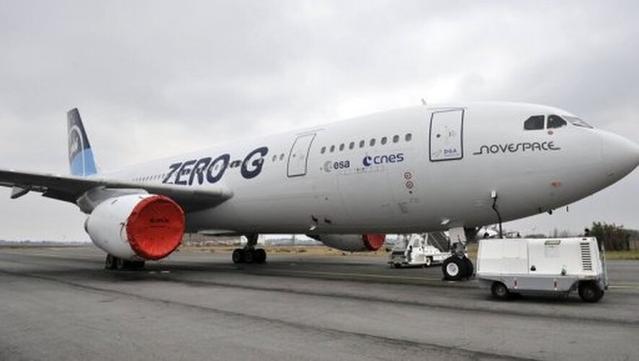
[VIDÉO] ▶️ Unique en Europe, l'Airbus A310 Zero G de l'entreprise tricolore Novespace permet de recréer les conditions de l'apesanteur. Si ces vols sont surtout destinés à la recherche scientifique, ils sont parfois ouverts au grand public. Prix du billet : 7.500 euros. - Le frisson de l'impesanteur sans le vide de l'espace : à bord de l'Airbus A310 Zero G de Novespace (Sujets de société).

TF1 Info
Un vol en apesanteur à bord de l’A310 Zero G de Novespace : 20 paraboles pour flotter comme un astronaute… sans quitter l’Atlantique.
https://www.tf1info.fr/societe/le-frisson-de-l-impesanteur-sans-le-vide-de-l-espace-a-bord-de-l-airbus-a310-zero-g-de-novespace-2381714.html
#Space #Science #AirbusZeroG #ParabolicFlight #Microgravity #FutureSpaceflight
Le frisson de l'impesanteur sans le vide de l'espace : à bord de l'Airbus A310 Zero G de Novespace

[VIDÉO] ▶️ Unique en Europe, l'Airbus A310 Zero G de l'entreprise tricolore Novespace permet de recréer les conditions de l'apesanteur. Si ces vols sont surtout destinés à la recherche scientifique, ils sont parfois ouverts au grand public. Prix du billet : 7.500 euros. - Le frisson de l'impesanteur sans le vide de l'espace : à bord de l'Airbus A310 Zero G de Novespace (Sujets de société).

TF1 Info

Researchers successfully tested a #robotic arm and its robot control #algorithms during a #parabolicflight, bringing the application of torque-sensitive robots equipped with advanced control algorithms in #space a lot closer: http://go.tum.de/812929

🎥M.Mühlbauer/DLR

Collaborative robot algorithms in weightlessness evaluated

Robotic arms require advanced algorithms to perform dexterous manipulation such as assembly and servicing tasks in space. Recently, a research team successfully tested methods developed for the robotic assembly of small square satellites, known as CubeSats, in orbit under zero-gravity conditions during a parabolic flight.

Check out the new issue of the TUMcampus magazine! 📖Learn more about our student Michi Benthaus's #parabolicflight, the new #hyperloop test segment and get to know our TUM Asia campus in #Singapore: http://go.tum.de/168213

#AI #biomedicine #neutrons
📷A. Eckert

The sensation of weightlessness

Studentin Michi Benthaus übt für ihren Traum vom Flug ins All. Wir berichten über ihren Weg - neben vielen anderen Geschichten aus der TUM.

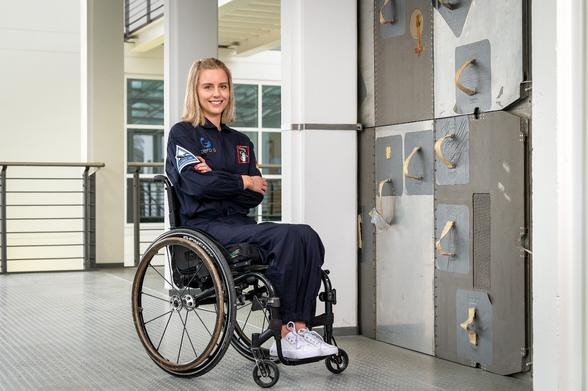
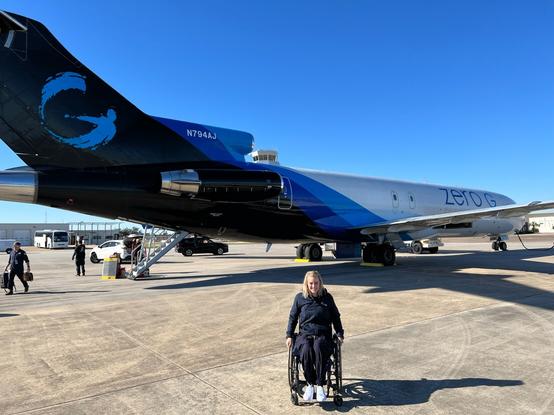
Our #aerospace student Michaela Benthaus experienced #ZeroGravity for the first time during a #ParabolicFlight as part of the AstroAccess program: http://go.tum.de/405566

#DisabilityInclusion #WomenInSTEM

📷A.Eckert/AstroAccess/M.Benthaus

Aerospace student experiences weightlessness during parabolic flight

Michaela Benthaus had dreamed of becoming an astronaut since she was a young girl. Then came the accident that changed her life completely. In December the aerospace student experienced zero gravity for the first time – through a US program that aims to make space accessible to everyone.

ESA participated in the Kid’s Weightless Dreams campaign organised by #Novespace and Rêves de Gosse giving #children with disabilities the opportunity to experience #weightlessness and lunar gravity on a #parabolicflight.

Eight children from five ESA member states – UK, France, Germany, Belgium, and Italy –boarded the Zero-G Airbus A310 in Bordeaux on 24 August.

Read more: http://www.esa.int/Our_Activities/Human_Spaceflight/Astronauts/Granting_weightless_wishes

Credit: ESA/Novespace https://plus.google.com/photos/100720077817157516563/albums/6457855948605392353?authkey=CMb1qYj6677jdA
#HumanSpaceflight image of the week is pointing the way to #augmentedreality in space.

The directions are simple, the conditions less so: press the corresponding physical button indicated on the headset display while experiencing weightlessness. Participants in an experiment running on ESA’s 66th #parabolicflight campaign are helping researchers to develop augmented reality as a useful tool for astronauts on the International Space Station.

Detailed instructions displayed on a laptop often require astronauts to interrupt their workflow and concentration to refer back to checklists. By replacing static displays like laptops with augmented reality headsets, a team at the University of Rostock aim to increase astronauts’ efficiency and accuracy when working science experiments on the Station.

To begin creating a useful device, developers need to understand how users interact with their environment. In the case of space, the lack of a perceivable up or down makes for a unique frame of reference that affects hand–eye coordination and similar skills. Researchers have boarded an aircraft to work with augmented reality systems in the few seconds of weightlessness these specialised flights provide.

The participant pictured is wearing an augmented reality headset displaying 12 targets arranged in a circle as well as motion-capture sensors to track body movement. During weightlessness, she is shown a target that must be touched on a fixed, vertical board in front of her. Developers track her performance to understand field of view and visual-motor skills under weightless conditions. This feedback is then used to tailor the augmented reality software to the subject’s performance in this unique environment.

Essentially, the augmented reality headsets aim to replace the laptop displays that the astronauts currently consult for instructions during science operations on the Station. Developers expect to make technical changes based on the performance measures and to run the experiment in future parabolic flight campaigns, with the ultimate goal of getting the hardware ready for testing on future astronaut missions on the Station.

The 66th parabolic flight campaign is being run by Novespace in Bordeaux with sponsorship from ESA, the DLR German Aerospace Centre and France’s CNES space agency.

Credit: ESA-A.Conigli#HumanSpaceflight image of the week is pointing the way to #augmentedreality in space.The directions are simple, the conditions less so: press the corresponding physical button indicated on the headset display while experiencing weightlessness. Participants in an experiment running on ESA’s 66th #parabolicflight campaign are helping researchers to develop augmented reality as a useful tool for astronauts on the International Space Station.