for anyone in chronic pain - here's a 50th anniversary gift from the academic journal PAIN:
all articles in "PAIN: 50th Anniversary Supplement"—which look towards the future of pain research—are free/open!
for anyone in chronic pain - here's a 50th anniversary gift from the academic journal PAIN:
all articles in "PAIN: 50th Anniversary Supplement"—which look towards the future of pain research—are free/open!
UF researchers create a new pain compound that works without addiction or respiratory risk. Could this be the future of pain relief? #OpioidCrisis #PainResearch #UFHealth
https://geekoo.news/unlocking-a-safer-path-new-compound-targets-pain-without-addiction/
Stanford scientists recreate human pain pathway in lab dish, paving the way for non-addictive chronic pain treatments. #ChronicPain #Neuroscience #PainResearch
https://geekoo.news/pain-in-a-dish-stanfords-breakthrough-in-chronic-pain-research/
#cats #EEG #hats #brainscan #painresearch
Researchers put little hats on cats to measure their brainwaves | Popular Science https://www.popsci.com/technology/cat-hat-science/?utm_source=pocket-newtab-en-us
Why is every pain we experience individual? Markus Ploner, Professor of Human #PainResearch, explains how pain is processed in the #brain - and why we feel it so differently. Watch this episode of ZDF Terra Xplore (in German): http://go.tum.de/184298
📷ZDF
Our new viewpoint paper in the Journal of Medical Internet Research explores the dynamic relationship between daily social contact 🤝 and pain using Ecological Momentary Assessments📱. Understanding these nuances could reshape pain management strategies.
➡️ https://www.jmir.org/2024/1/e53830
Pain is a biopsychosocial phenomenon, resulting from the interplay between physiological and psychological processes and social factors. Given that humans constantly interact with others, the effect of social factors is particularly relevant. Documenting the significance of the social modulation of pain, an increasing number of studies have investigated the effect of social contact on subjective pain intensity and pain-related physiological changes. While evidence suggests that social contact can alleviate pain, contradictory findings indicate an increase in pain intensity and a deterioration of pain coping strategies. This evidence primarily stems from studies examining the effect of social contact on pain within highly controlled laboratory conditions. Moreover, pain assessments often rely on one-time subjective reports of average pain intensity across a predefined period. Ecological momentary assessments (EMAs) can circumvent these problems, as they can capture diverse aspects of behavior and experiences multiple times a day, in real time, with high resolution, and within naturalistic and ecologically valid settings. These multiple measures allow for the examination of fluctuations of pain symptoms throughout the day in relation to affective, cognitive, behavioral, and social factors. In this opinion paper, we review the current state and future relevance of EMA-based social pain research in daily life. Specifically, we examine whether everyday-life social support reduces or enhances pain. The first part of the paper provides a comprehensive overview of the use of EMA in pain research and summarizes the main findings. The review of the relatively limited number of existing EMA studies shows that the association between pain and social contact in everyday life depends on numerous factors, including pain syndromes, temporal dynamics, the nature of social interactions, and characteristics of the interaction partners. In line with laboratory research, there is evidence that everyday-life social contact can alleviate, but also intensify pain, depending on the type of social support. Everyday-life emotional support seems to reduce pain, while extensive solicitous support was found to have opposite effects. Moreover, positive short-term effects of social support can be overshadowed by other symptoms such as fatigue. Overall, gathering and integrating experiences from a patient’s social environment can offer valuable insights. These insights can help interpret dynamics in pain intensity and accompanying symptoms such as depression or fatigue. We conclude that factors determining the reducing versus enhancing effects of social contact on pain need to be investigated more thoroughly. We advocate EMA as the assessment method of the future and highlight open questions that should be addressed in future EMA studies on pain and the potential of ecological momentary interventions for pain treatment.
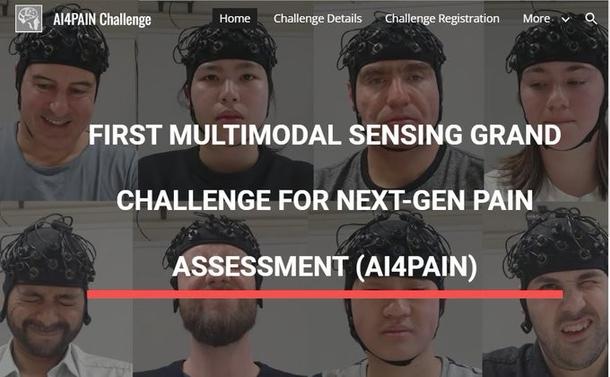
The AI4PAIN Grand Challenge seeks your expertise in developing AI models using fNIRS & facial video analysis.
Join this grand challenge to:
🟡Develop groundbreaking solutions for more accurate pain assessment
🔵Improve patient well-being & advance pain management
🟡Showcase your work at the AAP 2024 Workshop (ACII 2024)
More information on the challenge at https://sites.google.com/view/ai4pain/home?authuser=0
The First Multimodal Sensing Grand Challenge for Next-Gen Pain Assessment (AI4PAIN) Autonomic pain recognition, a fundamental aspect of healthcare and affective computing, stands at the forefront of advancing technologies that can enhance patient well-being and contribute to more empathetic
Yesterday I released an App that I’ve been developing in collaboration with the Biomechanics and Injury Prevention Lab at #UWaterloo
If you need a customizable visual analog scale for pain tracking in your research (or anything else), check it out! (iPad Only)
The Electronic Visual Analog Scale (eVAS) is an ad-free iPad app that allows users to digitally track visual analog scores using 10 cm slider channels with various customizations and export saved data in tables. It can be used as a pain scale tracker or for any other application that requires user i…