‏الحمدلله الذي ما خُتم جهدٌ و لا تمّ سعيٌ إلا بفضلة🌹.

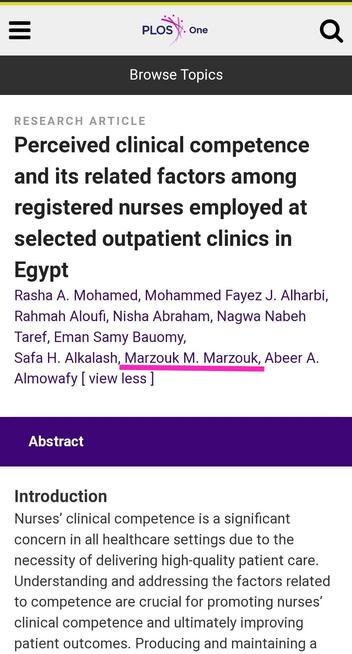
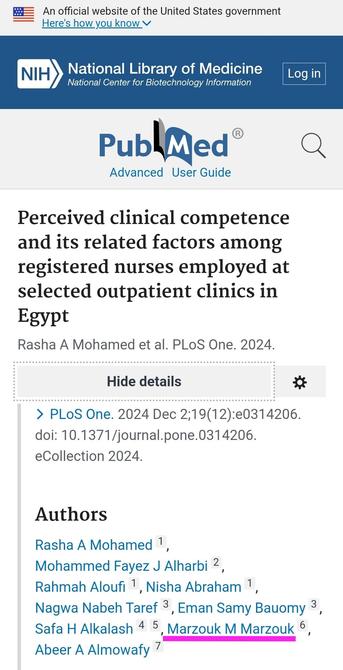
⭕ تم قبول نشر #ورقتنا_البحثية بالمجلة #الأمريكية #PLOS_ONE العريقة ..
(Scientific Report- Q1, IF:4.9)

📍لتكون آخر ورقة لـ #علماء فريقنا البحثي لعام ٢٠٢٤.

🏷️ شكراً جزيلاً للفريق البحثي المميز و آلف مبروك للجميع🌹🤍 ..
Pleased to announce that our #SocialMedia side project "News source bias and sentiment on social media" just appeared in #PLoS_One ! ( #affectivescience , #psychology , #media , #news 1/3) :

https://journals.plos.org/plosone/article/metrics?id=10.1371/journal.pone.0305148

News source bias and sentiment on social media

As social media becomes a key channel for news consumption and sharing, proliferating partisan and mainstream news sources must increasingly compete for users’ attention. While affective qualities of news content may promote engagement, it is not clear whether news source bias influences affective content production or virality, or whether any differences have changed over time. We analyzed the sentiment of ~30 million posts (on twitter.com) from 182 U.S. news sources that ranged from extreme left to right bias over the course of a decade (2011–2020). Biased news sources (on both left and right) produced more high arousal negative affective content than balanced sources. High arousal negative content also increased reposting for biased versus balanced sources. The combination of increased prevalence and virality for high arousal negative affective content was not evident for other types of affective content. Over a decade, the virality of high arousal negative affective content also increased, particularly in balanced news sources, and in posts about politics. Together, these findings reveal that high arousal negative affective content may promote the spread of news from biased sources, and conversely imply that sentiment analysis tools might help social media users to counteract these trends.

Delighted to see our #socialmedia side project published in #PLoS_One:
"News source bias and sentiment on social media"
( #affectivescience , #psychology , #media , #news 1/3):

https://journals.plos.org/plosone/article?id=10.1371/journal.pone.0305148

News source bias and sentiment on social media

As social media becomes a key channel for news consumption and sharing, proliferating partisan and mainstream news sources must increasingly compete for users’ attention. While affective qualities of news content may promote engagement, it is not clear whether news source bias influences affective content production or virality, or whether any differences have changed over time. We analyzed the sentiment of ~30 million posts (on twitter.com) from 182 U.S. news sources that ranged from extreme left to right bias over the course of a decade (2011–2020). Biased news sources (on both left and right) produced more high arousal negative affective content than balanced sources. High arousal negative content also increased reposting for biased versus balanced sources. The combination of increased prevalence and virality for high arousal negative affective content was not evident for other types of affective content. Over a decade, the virality of high arousal negative affective content also increased, particularly in balanced news sources, and in posts about politics. Together, these findings reveal that high arousal negative affective content may promote the spread of news from biased sources, and conversely imply that sentiment analysis tools might help social media users to counteract these trends.

Excited to learn that our side project "News source bias and sentiment on social media" has been accepted for publication in #PLoS_One !
Here's a link to a preprint version -- key points follow in the next post ( #affectivescience , #psychology , #media , #news 1/3) :

https://osf.io/preprints/psyarxiv/jxu95

OSF

@crlamke Found the original science publication: it came out in #PLoS_One @PLOS (2023), May 17;18(5):e0277927.

"The oldest plans to scale of humanmade mega-structures". Rémy Crassard et al.

DOI: 10.1371/journal.pone.0277927

#archaeology #architecture