 Jonathan Emmesedi
🧵 1/2
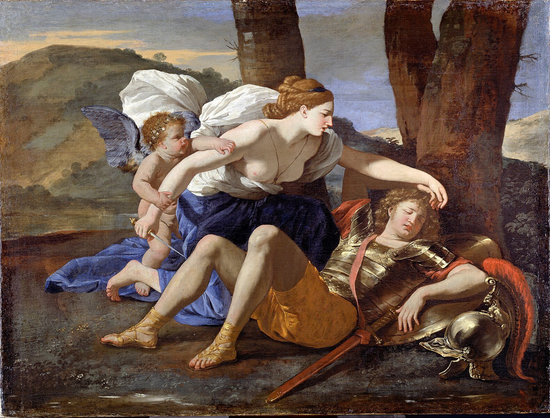
Nicholas Poussin -- Rinaldo and Armida -- 1628/30 -- Dulwich Picture Gallery
>> The subject of the painting comes from the 1581 epic poem Gerusalemme Liberata by Torquato Tasso (1544-95). The poem is set at the time of the First Crusade, at the end of the eleventh century, and follows the tale of fighting Christians and Saracens. In this scene, the Saracen sorceress Armida moves to kill the sleeping crusader Rinaldo. Just as she is about to strike, however, she falls in love with the Christian hero. << (Dulwich Picture Gallery)
I've been engrossed in Richard Wollheim's account of this picture in "Painting as an Art". I won't attempt here to summarize his argument, but will instead jump to his conclusion, "that for Poussin the victory of reason over concupiscence is achieved through reason borrowing the resources of concupiscence. For him the defeat of desire by reason is experienced as the victory of one kind of desire over another."
This understanding of the picture is close to my own approach to thinking about ethics and value, one that owes much to Hume's description of reason as a slave to the passions. Wollheim, however, does not present an argument about metaethics; instead, he invites us join with him at looking deeply into the picture and follow his argument about how we see a picture, how a knowledge of other pictures might help us better understand this one, and how the picture can be both informed by an understanding of psychology and also enrich that understanding.
Some of Wollheim's claims in "Painting as an Art" strike me as tenuously supported conjectures, but his attention to the paintings themselves always excites me. His writing makes me long to go back to the pictures themselves, this stimulus being a sign of good writing about art.
I've written about a closely related scene from Tasso before as represented by....
#Art #Painting #NicholasPoussin #FrenchArt #17thCenturyArt #RinaldoAndArmida #Tasso #GerusalemmeLiberata #RichardWollheim #PaintingAsAnArt
 Andrew Shields