 Christian Mayer
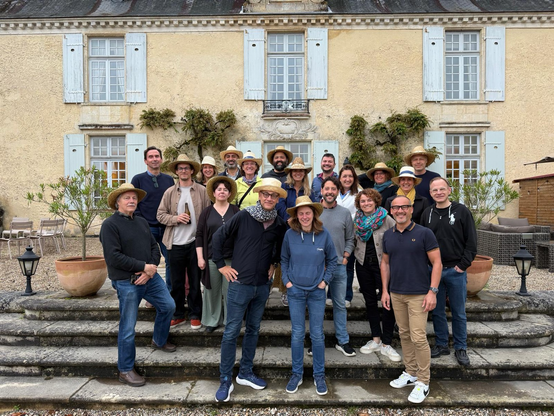
Excellent science and great discussions at the GOLGI III conference in Bordeaux. Many thanks to the organizers and everyone involved for a very engaging meeting in a close and collegial atmosphere. #newsmayerlab
Excited to be in New York this week for the SFARI Investigator Meeting.
Looking forward to discussions on neurodevelopmental disorders, gene regulation, and developmental mechanisms — and to catching up with many colleagues and collaborators. #newsmayerlab
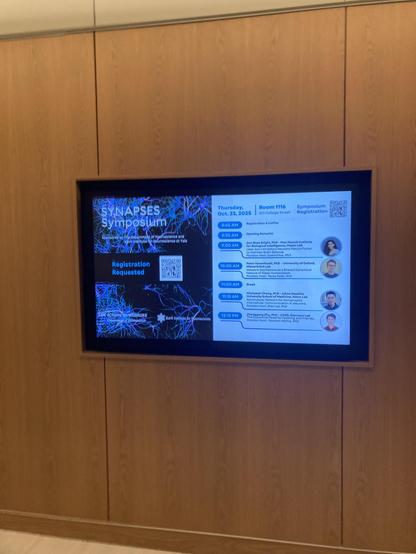
🎉 Congratulations to Ann Bright!
Our postdoc Ann Bright was invited to present her research at the 2025 SYNAPSES Symposium at Yale University — a prestigious and highly selective event showcasing outstanding postdoctoral neuroscientists from around the world.
We’re proud to see her work recognized on this international stage! 👏
#Postdoc #SynapsesSymposium #NewsMayerlab
Was the layered cortex really unique to amniotes? Salamanders, our anamniote cousins, suggest otherwise.
In a new preprint from Maria Antonietta Tosches’ lab (first author Astrid Deryckere), we show that salamanders share core developmental logic with mammals — but with an ancestral outside-in sequence.
Clonal lineage tracing in salamanders reveals that both superficial and deep-layer neurons arise from the same multipotent radial glia.
Glad to have contributed to this work.
#neuroscience #development #evolution #anamniotes #NewsMayerlab
The evolutionary origin of the cerebral cortex, a brain region typically defined by the presence of neuronal layers, remains elusive. While mammals and reptiles have a layered cortex, the amphibian pallium (dorsal telencephalon) is considered unlayered. Here, we identify distinct superficial- and deep-layer neurons in the salamander pallium. Like in mammals, these layers develop sequentially from multipotent radial glia and intermediate progenitor cells. Using lineage tracing and scRNA-seq, we reveal conserved principles of cortical development, including the temporal patterning of radial glia and the association of neuronal birthdate, molecular identity, and projection type. Our findings indicate that the mammalian cortex evolved from this ancestral developmental template through the inversion of the corticogenesis gradient, from outside-in to inside-out, and the diversification of neuronal differentiation programs. ### Competing Interest Statement In the past 3 years, RS has received compensation from Bristol Myers Squibb, ImmunAI, Resolve Biosciences, Nanostring, 10x Genomics, Parse Biosciences and Neptune Bio. RS is a co-founder and equity holder of Neptune Bio. National Institute of General Medical Sciences, R35GM146973 National Human Genome Research Institute, 1RM1HG011014 McKnight Foundation, https://ror.org/003ghvj67, MEFN CU20-0049 Rita Allen Foundation, https://ror.org/0515k5w36, GA\_032522\_FE Chan Zuckerberg Initiative (United States), https://ror.org/02qenvm24, 2023-331758 Deutsche Forschungsgemeinschaft, 549328218 European Molecular Biology Organization, https://ror.org/04wfr2810, ALTF 874-2021 U.S. National Science Foundation, https://ror.org/021nxhr62, GRFP Anusandhan National Research Foundation, ANRF/ECRG/2024/006839/LS TiH Foundation, TIH0018-002
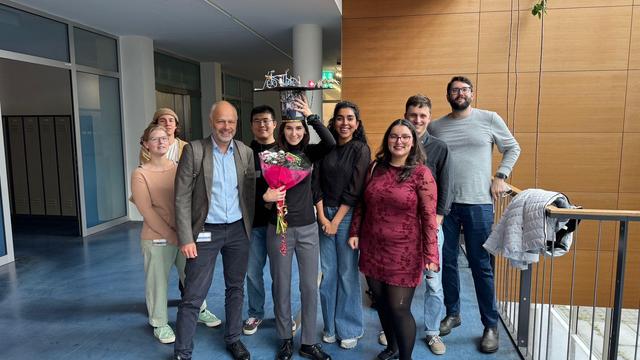
🎉 Big congratulations to Yana Kotlyarenko for successfully defending her PhD!
She carried out her research project in our lab, and it’s been a joy to see her science and ideas grow. Wishing her all the best for the next steps! 🌟
We’ve updated the TrackerSeq pipeline on GitHub! Developed in our lab, TrackerSeq is a tool for processing lineage barcodes in single-cell datasets. Thanks to great work by Connor Lynch, cloneID assignment now uses a network-based approach with Jaccard distance weighting and user-controlled thresholding — reducing false positives while keeping true positives. https://github.com/mayer-lab/TrackerSeq
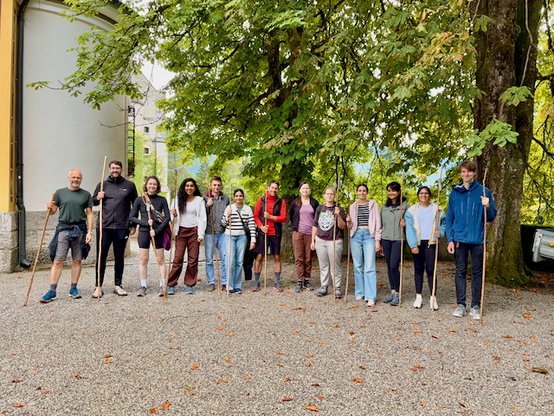
Great science, great views, and great company — our joint retreat with Rodrigo Villaseñor’s lab (LMU) at Schloss Ringberg was a real highlight. Here's a snapshot from our hike — thanks to everyone who made it such a memorable and inspiring few days!
#Neuroscience #LabRetreat #SchlossRingberg #ScienceLife #NewsMayerlab
Excited to share our collaborative study, now out in Nature Communications:
Astrocyte diversity in the cortex arises from two molecularly distinct radial glia lineages.
A beautiful piece of work from Riccardo Bocchi’s lab at the University of Geneva, with Jiafeng Zhou as first author. My lab contributed to the lineage tracing efforts using TrackerSeq.
Read here: https://www.nature.com/articles/s41467-025-61829-4

Astrocytes display diverse molecular and functional features in the brain, but the developmental origins of this heterogeneity are not well understood. Here, the authors show that two separate progenitor types give rise to distinct cortical astrocyte subtypes with specialized roles.
