MHRA to offer early review of non-animal data. The Medicines and Healthcare products Regulatory Agency (MHRA) will offer early review of non-animal data in a decision supporting the government’s strategy to reduce animal testing in drug development.
The move is intended to help drug developers make greater use of New Approach Methodologies (NAMs),
https://www.ddw-online.com/mhra-to-offer-early-review-of-non-animal-data-41080-202603/
#Animaltesting
#MHRA #Science
#Newapproachmethodologies #nams
#Regulatory #videnskab #dyreforsøg
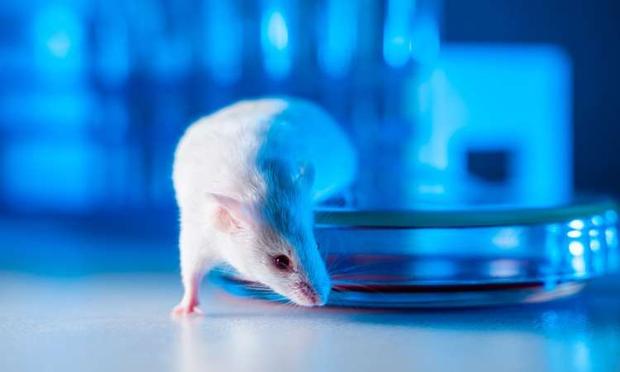
MHRA to offer early review of non-animal data
The Medicines and Healthcare products Regulatory Agency (MHRA) will offer early review of non-animal data in a decision supporting the government’s strategy to reduce animal testing in drug development.
R to @EFSA_EU: #TKPlate is an example of #NewApproachMethodologies #NAMs - an EFSA editorial explains how works, & 3 reports provide a detailed user guide, several case studies that test the platform's performance and reliability.
Check it out 👉 https://europa.eu/!3bM998
🐦🔗: https://nitter.cz/EFSA_EU/status/1724419983302656435#m
[2023-11-14 13:32 UTC]

TKPlate 1.0: An Open‐access platform for toxicokinetic and toxicodynamic modelling of chemicals to implement new approach methodologies in chemical risk assessment
This publication is linked to the following EFSA Supporting Publications articles: http://onlinelibrary.wiley.com/doi/10.2903/sp.efsa.2023.EN-8441/full, http://onlinelibrary.wiley.com/doi/10.2903/sp.efsa.2023.EN-8440/full, http://onlinelibrary.wiley.com/doi/10.2903/sp.efsa.2023.EN-8437/full
RT @MauriceAtEcvam: Fruitful discussions on accelerating transition to modern science based non-animal #NewApproachMethodologies in toxicology and chemical assessment with @EU_ECHA Exec Director Sharon McGuinness and colleagues during their visit to JRC #ECVAM @EU_ScienceHub
https://publications.jrc.ec.europa.eu/repository/handle/JRC127780 https://t.co/hUKDxboS2C
🐦🔗: https://n.respublicae.eu/EU_ScienceHub/status/1655477648120741889


Non-animal Methods in Science and Regulation
The 2021 EURL ECVAM status report describes research, development and validation activities, as well as initiatives that promote the uptake and use of non-animal methods and approaches in science and regulation.
The principle of the Three Rs, i.e. Replacement, Reduction and Refinement of animal use in basic, applied and translational research, as well as for regulatory purposes is firmly anchored in EU legislation, full replacement of animal testing being the ultimate goal.
New Approach Methodologies including a variety of innovative technologies, such as in vitro methods using 3D tissues and cells, organ-on-chip, computational models (including AI) and ‘omics (genomics, proteomics, metabolomics) technology are developed, evaluated and integrated in assessment frameworks with a view to improve the efficiency and effectiveness of chemical and product hazard and risk assessment in a variety of regulatory contexts. Important activities to promote the development and use of non-animal approaches are also pursued in the areas of basic and applied research, where most of the animals are used, as well as for education purposes.
RT @MauriceAtEcvam: Fruitful discussions on accelerating transition to modern science based non-animal #NewApproachMethodologies in toxicology and chemical assessment with @EU_ECHA Exec Director Sharon McGuinness and colleagues during their visit to JRC #ECVAM @EU_ScienceHub
https://publications.jrc.ec.europa.eu/repository/handle/JRC127780 https://t.co/hUKDxboS2C
🐦🔗: https://n.respublicae.eu/EU_ECHA/status/1655424879615791105

Non-animal Methods in Science and Regulation
The 2021 EURL ECVAM status report describes research, development and validation activities, as well as initiatives that promote the uptake and use of non-animal methods and approaches in science and regulation.
The principle of the Three Rs, i.e. Replacement, Reduction and Refinement of animal use in basic, applied and translational research, as well as for regulatory purposes is firmly anchored in EU legislation, full replacement of animal testing being the ultimate goal.
New Approach Methodologies including a variety of innovative technologies, such as in vitro methods using 3D tissues and cells, organ-on-chip, computational models (including AI) and ‘omics (genomics, proteomics, metabolomics) technology are developed, evaluated and integrated in assessment frameworks with a view to improve the efficiency and effectiveness of chemical and product hazard and risk assessment in a variety of regulatory contexts. Important activities to promote the development and use of non-animal approaches are also pursued in the areas of basic and applied research, where most of the animals are used, as well as for education purposes.
 Stop Vivisektion Danmark
 EFSA
EFSA EU_ScienceHub
 European Chemicals Agency - EC