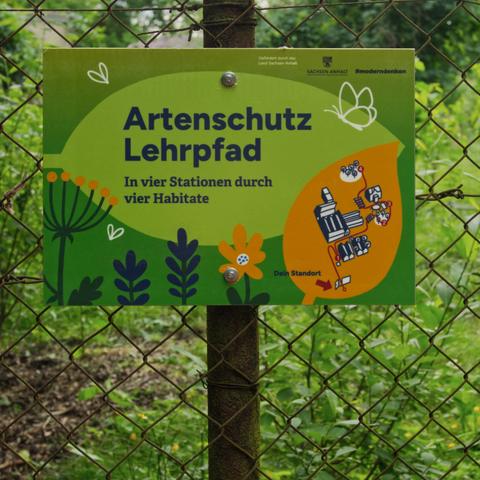
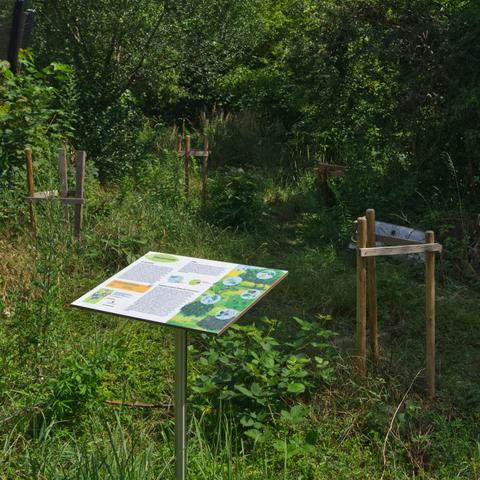
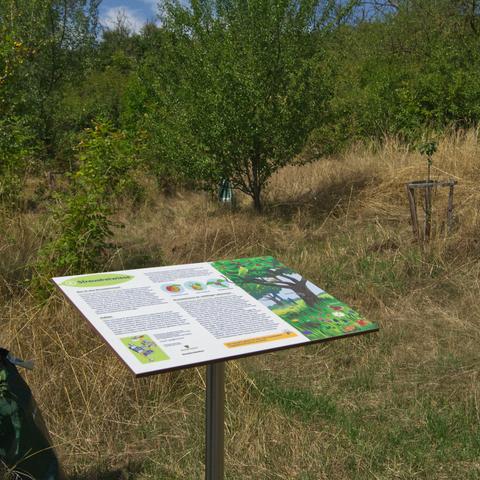
Some views of the finished nature trail on specious protection. The nature trail leads through the community garden »Garten für Alle« and explains at individual stations how habitats for native plants, insects, and birds can be created using simple means, encouraging visitors to foster biodiversity in their own gardens as well.

I took on the entire conception of the nature trail: I wrote the texts, designed the layout, and drew the illustrations—accompanied by rounds of corrections and advices with my great colleagues of »Garten für Alle«. It was a project full of first times and challenges, but at the same time it felt very meaningful, and I am very proud about the result.

In October 2025, we celebrated the opening of the nature trail in the garden. Since then, the trail has invited visitors to explore the garden and all the small and bigger creatures that live there.

The project was funded by the Saxony-Anhalt Ministry of Environment as part of the »NaturWasserMensch« funding programme.

#stadtoasehalle #gartenfürallehalle #halleandersaale #illustration #natureillustration #digitalillustration #graphicdesign #biodiversity #speciesprotection #artenschutzlehrpfad #naturetrail #mehrartenimgarten #climateaction #urbangardening #microhabitat #wearenature #community #neighbourhood #naturwassermensch
And the fourth and last one of the illustrations I made for a nature trail on species protection. The nature trail leads through the community garden »Garten für Alle« and explains at individual stations how habitats for native plants, insects, and birds can be created using simple means, encouraging visitors to foster biodiversity in their own gardens as well.

The illustration belongs to the last station on the trail, the orchard meadow. Orchard meadows are meadows with fruit trees. They are cultural landscapes that are used for fruit growing and as pasture land. Usually, high-stem fruit trees are planted, that also grow to a relatively old age. The different areas of shade and light, as well as old, young, and dead trees growing side by side, create a great variety of structures in such meadows. Unfortunately, orchard meadows are endangered as habitats because they are less profitable for fruit growing than the low-stem plantations that are now common.

The illustration shows the various habitats of a meadow orchard where animals find a home, including tree hollows, wildflower areas, and deadwood corners.

The project was funded by the Saxony-Anhalt Ministry of Environment as part of the »NaturWasserMensch« funding programme.

#stadtoasehalle #gartenfürallehalle #halleandersaale #illustration #natureillustration #digitalillustration #biodiversity #orchardmeadow #streuobstwiese #speciesprotection #artenschutzlehrpfad #naturetrail #mehrartenimgarten #climateaction #urbangardening #microhabitat #wearenature #community #neighbourhood #naturwassermensch
The third one of the illustrations I made for a nature trail on species protection. The nature trail leads through the community garden »Garten für Alle« and explains at individual stations how habitats for native plants, insects, and birds can be created using simple means, encouraging visitors to foster biodiversity in their own gardens as well.

This illustration belongs to the spice forest. Various trees and large shrubs grow here, parts of which can be used as spices – hence the name. The berries of the Szechuan pepper, for example, taste similar to pepper, while the bark of the eastern sweetshrub tastes like cinnamon. Unlike many spice plants, which only grow in tropical climates and whose production requires a lot of resources, these plants can also thrive here and replace tropical spices. The area is also intended to provide shade, serve as a place of rest for gardeners and visitors, aswell as offering food and habitat for various animals.

The illustration introduces the various trees and shrubs that grow in the spice forest and creates a vision of what the area could look like in a few years, once the plants have grown bigger.

The project was funded by the Saxony-Anhalt Ministry of Environment as part of the »NaturWasserMensch« funding programme.

#stadtoasehalle #gartenfürallehalle #halleandersaale #illustration #natureillustration #digitalillustration #biodiversity #spiceplants #speciesprotection #artenschutzlehrpfad #naturetrail #mehrartenimgarten #climateaction #urbangardening #microhabitat #wearenature #community #neighbourhood #naturwassermensch
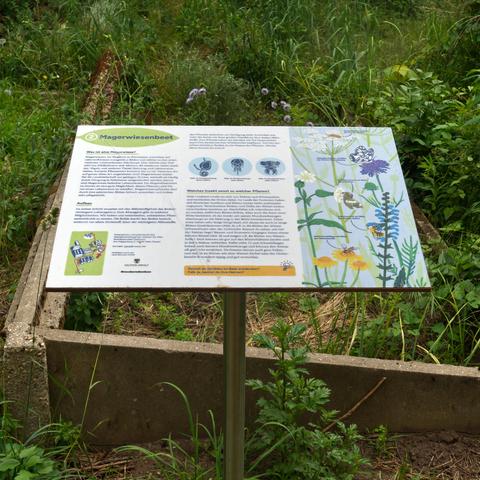
The second of the illustrations I made for a nature trail on species protection. The nature trail leads through the community garden »Garten für Alle« and explains at individual stations how habitats for native plants, insects, and birds can be created using simple means, encouraging visitors to foster biodiversity in their own gardens as well.

This illustration belongs to the second station on the trail, the nutrient-poor grassland bed. Nutrient-poor grasslands, as the name says, develop on nutrient-poor soils and are among the most species-rich habitats at all. A large variety of wild herbs and flowers grow here, which in turn provide food and habitat for many insects, birds, and other animals. For every plant species, there are up to 100 animal species that depend on that particular species! Nutrient-poor grasslands are of little use to agriculture, which is why they are often converted into fertile meadows, making them endangered habitats. A nutrient-poor grassland bed in the garden is a good way to create a habitat for these plants and animals.

The illustration introduces different types of flowers, such as composite flowers and labiate flowers, and shows which insects particularly prefer which types of flowers.

The project was funded by the Saxony-Anhalt Ministry of Environment as part of the »NaturWasserMensch« funding programme.

#stadtoasehalle #gartenfürallehalle #halleandersaale #illustration #natureillustration #digitalillustration #biodiversity #poorgrasslands #speciesprotection #artenschutzlehrpfad #naturetrail #mehrartenimgarten #climateaction #urbangardening #microhabitat #wearenature #community #neighbourhood #naturwassermensch
One of four big illustrations I made for a nature trail on species protection. The nature trail leads through the community garden »Garten für Alle« and explains at individual stations how habitats for native plants, insects, and birds can be created using simple means, encouraging visitors to foster biodiversity in their own gardens as well.

This illustration belongs to the first station, the sand bed. For the sand bed, a layer of sand is applied to the bed before the plants are planted. The sand serves as a mulch layer and thus protects the soil from evaporation. Weeds find it more difficult to grow on the sand, and slugs also avoid it. And why sand beds are interesting for species protection: ground-nesting insects can use the sand layer for nesting.

The illustration shows the development of a wild bee in the sand of the bed, from egg to fully developed insect.

The project was funded by the Saxony-Anhalt Ministry of Environment as part of the »NaturWasserMensch« funding programme.

#stadtoasehalle #gartenfürallehalle #halleandersaale #illustration #natureillustration #biodiversity #speciesprotection #sandbed #sandbeet #artenschutzlehrpfad #naturetrail #mehrartenimgarten #climateaction #urbangardening #microhabitat #wearenature #community #neighbourhood
Skiff and small boats. This likely is a hand carved little single person canoe. Vaikom, Kerala, India 2024

#AbandonedBoat #NatureTrail #Canoe #OutdoorAdventure #Wilderness