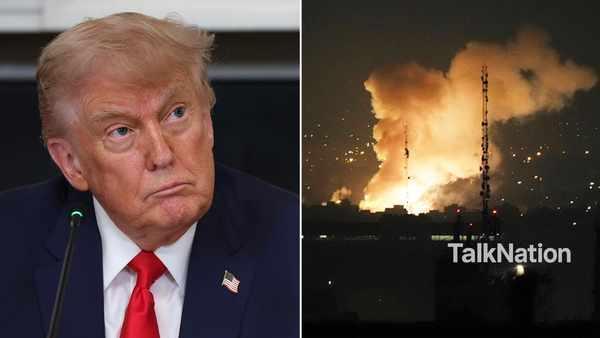
Out of curiosity—when missiles actually hit U.S. bases but the president says "no war happened"... who’s really winning this word game? 🤔 Does redefining war make it safer... or just more invisible? 💣 #TrumpPromises #IranStrikes #DefenseReality #NewWar #Geopolitics2026

👉 Read more: https://www.talknation.site/2026/03/trumps-no-war-promise-vs-iran-strikes.html

🔗 Full Story: https://www.talknation.site/2026/03/trumps-no-war-promise-vs-iran-strikes.html

#news #tech #talknation

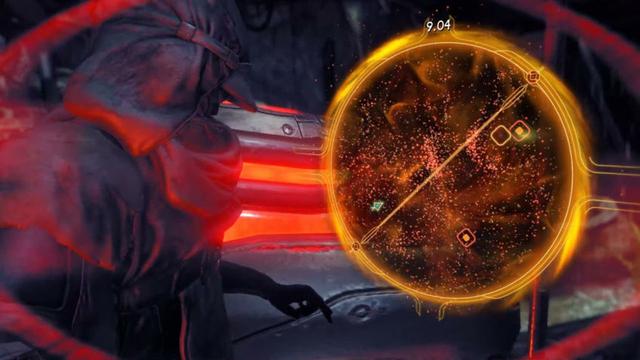
The New War: Drifter Hacking

PeerTube
MEU AMIGO, QUE HISTÓRIA FODA A DE #NEWWAR. Ainda mal tenho umas 2 ou 3h de jogo, e AGORA começaram as missões de verdade, depois do que vimos no anúncio. #Warframe voltou com TUDO!!!!
...E eu já odeio os novos sistemas de hacking. Mas tá certo, os anteriores ficaram muito fáceis.

19-year-old serviceman fatally wounded in Gegharkunik

Twenty year old serviceman Suren Safaryan was killed Monday evening by Azerbaijani forces in Armenia's southern Gegharkunik region during a gunfire exchange on the border between the two countries, reports Armenian's Defense Ministry.

Armenia's Gegharkunik and Syunik regions, both of which have found themselves on the border with Azerbaijan since the end of the 2020 war, have seen escalating violence in the last twelve months.

"At roughly 6:10 pm, units of the Azerbaijani Armed Forces opened fire at Armenian positions on the Armenian-Azerbaijani border, particularly in the village of Norabak, in southern Gegharkunik Gegharkunik region," the defense ministry statement reads. "As of 7:30 pm, the exchange of fire has stopped."

The incident comes after the November 16 attack, which was the largest clash between the sides since last year's war.

The post 19-year-old serviceman fatally wounded in Gegharkunik appeared first on CIVILNET.

#reportsinenglish #border #clashes #deadsoldier #gegharkunik #newwar #surensafaryan

Ceasefire resumes on Armenia-Azerbaijan border after worst fighting in a year leaves 15 Armenian soldiers dead

By Mark Dovich

Armenia and Azerbaijan agreed to a Russia-brokered ceasefire Tuesday evening, ending the deadliest single outbreak of fighting between the two countries since the end of last year’s war in and around Karabakh.

Tuesday’s clashes left at least 15 Armenian soldiers dead, 12 captured, and four wounded, according to Armenian government sources, which also said that Armenia lost two combat positions near the border.

“Under the mediation of the Russian side, an agreement was reached to cease fire at Armenia’s eastern border,” said the Armenian Defense Ministry in a statement. “The situation has relatively stabilized.”

The Azerbaijani government has neither confirmed the ceasefire nor provided a number of casualties. The Armenian Defense Ministry said that Azerbaijan suffered “heavy losses” in the course of Tuesday’s fighting.

Additionally, Prime Minister Nikol Pashinyan said Tuesday evening that Azerbaijani forces now control 41 square kilometers of Armenian territory.

Each side has accused the other of provoking Tuesday’s clashes.

Armenian government sources said that Azerbaijani forces crossed into Armenia near Sev Lake in the southern Syunik region, while the Azerbaijani government said the fighting took place mainly in Kalbajar and Lachin, two areas that Armenia handed over to Azerbaijan as part of last year’s ceasefire agreement. (Armenians also refer to Kalbajar as Karvachar.)

In a statement, the Armenian Foreign Ministry drew attention to the ongoing presence of Azerbaijani troops near Sev Lake, where they have been stationed since May.

“This attack is a continuation of the consistent policy of the Azerbaijani side to occupy the territories of the Republic of Armenia, which began…with the infiltration of the Azerbaijani armed forces into the Syunik and Gegharkunik regions,” the statement said.

Renewed fighting comes amid breakdown of negotiations, rising tensions, and periodic clashes

The fighting followed days of rising tensions between Armenia and Azerbaijan. Most recently, Azerbaijan set up additional border checkpoints along a key Armenian road that it partially controls.

The Goris-Kapan highway, built in Soviet times, runs along the Armenia-Azerbaijan border and crosses it several times due to the region’s difficult, mountainous geography. It is of crucial importance for Armenia’s security and economy because it provides an overland connection to Iran, a key strategic partner.

Azerbaijan has previously closed off parts of the road to Iranian truckers, sparking a crisis in Azerbaijani-Iranian relations.

On Sunday Azerbaijani soldiers advanced into Armenian territory and surrounded four Armenian military posts, according to Armenia’s National Security Council. The Azerbaijani troops reportedly retreated without incident following negotiations. The Armenian government has not stated exactly where Sunday’s incident took place.

Although last year’s ceasefire agreement ended wide-scale hostilities between Armenia and Azerbaijan, tensions remain extremely high, and clashes continue to break out periodically.

Tuesday’s fighting also comes just after the two sides marked the one year anniversary of the end of last year’s war, which left over 6,000 people dead, thousands more injured, and tens of thousands displaced.

Armenia and Azerbaijan were rumored to be preparing to mark the one year anniversary of the war’s end earlier this month by meeting in Moscow to sign two key agreements on borders and transport connections.

That meeting did not take place, apparently as a result of negotiations breaking down. Regional media outlets have reported that the biggest sticking point has been the issue of control over future transport connections linking Armenia and Azerbaijan.

The 2020 ceasefire agreement signed by Armenia, Azerbaijan, and Russia stipulates that “all economic and transport connections shall be unblocked,” including an overland connection between the Azerbaijani exclave of Nakhchivan (also known as Nakhijevan in Armenia) and mainland Azerbaijan via Syunik.

Azerbaijan has repeatedly referred to such a connection as a “corridor,” suggesting that the route would be under Azerbaijani control. The Armenian government, in turn, has consistently pushed back against Azerbaijan’s demands for control over the connection.

Armenia reaches out to close ally Russia

According to reports by Russian news agencies, Russian President Vladimir Putin spoke by phone with Pashinyan on Tuesday to discuss the situation along the Armenia-Azerbaijan border.

In a terse statement posted on the Kremlin website, the Russian government said Putin and Pashinyan agreed to “continue contacts.”

Russian Defense Minister Sergei Shoigu also called his Armenian and Azerbaijani counterparts on Tuesday to urge de-escalation, Russian media reported.

Earlier that day, the Armenian Foreign Ministry called on the Russia-led Collective Security Treaty Organization to intervene and help “remove Azerbaijani armed forces” from Armenian territory.

The CSTO is a mutual defense alliance founded in 1994 by Russia, Armenia, and four other post-Soviet states: Belarus, Kazakhstan, Kyrgyzstan, and Tajikistan. The organization’s founding treaty commits signatories to “immediately launch the mechanism of joint consultations” when a member state is faced with a “menace to safety, stability, territorial integrity and sovereignty.”

“We are addressing Russia with a call for protecting the territorial integrity of Armenia. A written request is being prepared,” said Armen Grigoryan, the secretary of Armenia’s Security Council. So far, Russia has not publicly responded to the request.

But Stanislav Zas, the head of the CSTO, has previously said that Azerbaijan’s incursions several kilometers deep into the Armenian regions of Gegharkunik and Syunik in May do not fall under the CSTO charter on collective defense.

Russia is Armenia’s main ally and partner on the international stage and deployed about 2,000 peacekeepers to areas in and around Karabakh under the terms of last year’s Armenia-Azerbaijan ceasefire agreement.

Russia also controls a military base in Gyumri, Armenia’s second largest city, and maintains an armed presence along much of Armenia’s borders.

Pashinyan appoints new defense minister

On Monday, just a day before the clashes broke out, Pashinyan announced that he was appointing Suren Papikyan as Armenia’s new defense minister, dismissing Arshak Karapetyan, who had held the position since August.

In a speech to the Security Council, Pashinyan said that “this decision was made as a result of analyzing the developments taking place since yesterday,” referring to Sunday’s incident, when Azerbaijani troops surrounded Armenian military posts.

“The situation led me to a decision that there should be a change of the Minister of Defense,” Pashinyan added.

Papikyan is seen as a close ally of Pashinyan and previously served as the head of the Ministry of Territorial Administration and Infrastructure, but has no military experience.

Analyst Benyamin Poghosyan raised the issue of Papikyan’s appointment in a recent column for CivilNet, questioning the timing and motivation behind Pashinyan’s decision. “The reasons for the minister’s dismissal are not clear,” he said.

Poghosyan, who serves as the chairman of the Yerevan-based Center for Political and Strategic Studies, also argued that contradictory messaging from the Security Council and Defense Ministry “continues the policy of providing false information to the public, which was widespread in 2020 during the Artsakh war.” (Armenians also refer to Karabakh as Artsakh.)

“This practice directly undermines public confidence in official information,” he said.

“The events that took place in Armenia during the last 30 hours once again raised a number of unanswered questions for the society.”

The post Ceasefire resumes on Armenia-Azerbaijan border after worst fighting in a year leaves 15 Armenian soldiers dead appeared first on CIVILNET.

#reportsinenglish #armeniaborder #azerbaijaniattack #fighting #gegharkunik #karabakh #newwar #sevlake #shoigu #stanislavzas #surenpapikyan #syunik

Today in Karabakh: Broken ceasefire, wounded soldiers, and silence from peacekeepers

By Mark Dovich

Six Armenian soldiers were shot by Azerbaijani forces in eastern Karabakh (also called Artsakh by many Armenians) on Thursday evening, according to military sources in Armenia and the self-declared Nagorno-Karabakh Republic. Two of the soldiers sustained critical but non-life threatening injuries.

“Azerbaijani armed forces opened fire in the direction of the military base of the defense army located in the eastern border of the republic, which resulted in a gunshot wound to six soldiers,” said a statement from the Artsakh Defense Ministry.

“The Russian peacekeeping military command was immediately informed about the incident,” the statement continued. As of early Friday morning local time, neither the Russian government nor its peacekeeping contingent had not commented on the incident.

In the statement, the Artsakh Defense Ministry said it “continues to adhere to the preservation of the ceasefire regime and urges the Azerbaijani side to also stay away from actions that destabilize the situation.”

The situation along the line of contact in and around Karabakh is now calm, sources say.

Thursday’s incident comes less than a week after an Azerbaijani sniper fatally shot an Armenian man driving a tractor in a pomegranate orchard in Martakert, a large town in northern Karabakh, according to the Nagorno-Karabakh Republic’s police force.

According to Arman Tatoyan, Armenia’s human rights ombudsman, Thursday’s incident took place near the village of Nor Shen in eastern Karabakh, “in the immediate vicinity of which the positions of the Azerbaijani armed forces are located.” He added that “attacks were launched in the direction of Harav and several other civilian communities of Artsakh.”

“The presence of the Azerbaijani armed forces in the vicinity of Armenian civilian communities poses a serious threat to the security and peace of the civilian people, it is a violation of their right to life,” Tatoyan said on Facebook.

Two of the wounded soldiers are receiving treatment for critical but non-life threatening injuries at a hospital in Stepanakert, the region’s largest city, said Artak Beglaryan, who serves as the Nagorno-Karabakh Republic’s state minister. The position of state minister was created in 2018 to replace the post of prime minister and is one of the highest-ranking positions in the self-proclaimed republic.

Beglaryan added that “the Armenian side has no positional and territorial losses” and noted that the “defense army is conducting coordinated work with the authorities of the Republic of Armenia with the command of the Russian peacekeeping contingent aimed at further defusing the situation.”

He urged “everyone to refrain from spreading misinformation and the temptation to become a source of ‘scandalous’ information.”

The Azerbaijani Defense Ministry said in a statement that “the Azerbaijani army has nothing to do with the incident” and that “on the territory of Azerbaijan, where Russian peacekeepers are temporarily stationed, an exchange of fire took place between illegal Armenian armed detachments.”

Thursday’s incident is the single largest escalation of violence in and around Karabakh since December 2020, when Azerbaijan captured the villages of Hin Tagher and Khtsaberd, the only two villages in the Hadrut region of southern Karabakh that remained under Armenian control following last year’s war.

The Russian Ministry of Defense called that incident a “violation” of the fragile ceasefire that Russia brokered between Armenia and Azerbaijan a month earlier, but did not assign blame to either side. Dozens of Armenian troops were captured in Hin Tagher and Khtsaberd, some of whom still remain in Azerbaijan as prisoners of war.

A Russia-brokered ceasefire signed last November ended 44 days of fierce fighting between Armenian and Azerbaijani armed forces in and around Karabakh. The war left Azerbaijan in control of swaths of territory previously controlled by Armenian forces, with thousands dead or injured on both sides and tens of thousands more displaced.

The post Today in Karabakh: Broken ceasefire, wounded soldiers, and silence from peacekeepers appeared first on CIVILNET.

#newsfeed #reportsinenglish #armantatoyan #artakbeglaryan #artsakh #azerbijan #brokenceasefire #ceasefire #hadrut #karabakh #newwar #russianpeacekeepers

Pashinyan proposes establishment of Russian bases along Armenia-Azerbaijan border

By Emilio Luciano Cricchio

In a government session on July 29, Armenia’s Acting Prime Minister Nikol Pashinyan said that the government should consider the deployment of Russian border guard bases along the Armenia-Azerbaijan state border in the Gegharkunik region. He views this as a preventative measure to hinder border demarcation and delimitation actions through military clashes.

Pashinyan stated that the presence of Russian border guards would prevent escalations and outbreaks of violence in the area.

On July 28, units of the Azerbaijani Armed Forces opened fire on Armenian positions in multiple areas of the eastern section of the border in the region of Gegharkunik. Three Armenian servicemen were killed and four others were injured. The losses on the Azerbaijani side are not clear.

Few hours into the fighting, Russia brokered a ceasefire which was broken on Thursday, when Azerbaijani units once again opened fire in Gegharkunik, this time resulting in one Armenian serviceman getting wounded.

Dimitry Peskov, the press secretary for the Russian President Vladimir Putin, told news agency RIA Novosti that the Kremlin is aware of the tensions on the Armenia-Azerbaijan border and is working with both sides.

When asked by reporters whether Moscow was ready to protect Armenia’s borders despite the risk of straining relations with Baku, Peskov responded that dialogue with Yerevan is ongoing.

On Thursday, Pashinyan furthermore proposed that the Collective Security Treaty Organization (CSTO), a Russian led military bloc, deploy a monitoring mission to the Armenia-Azerbaijan border.

Pashinyan stated that the mission would be fact finding in nature and will uncover the reality of the situation.

But weeks ago, Stansilav Zas, the Secretary General of the CSTO, had reiterated that the incursions by Azerbaijani troops into the Armenian regions of Syunik and Gegharkunik do not fall under the Organization’s charter on collective defense.

Pashinyan added that if the deployment of a CSTO monitoring mission is not feasible, then a OSCE Minsk Group monitoring mission may be another option.

The post Pashinyan proposes establishment of Russian bases along Armenia-Azerbaijan border appeared first on CIVILNET.

#reportsinenglish #borderguards #gegharkunik #newwar #russianbasesinarmenia

Pashinyan proposes establishment of Russian bases along Armenia-Azerbaijan border - CIVILNET

By Emilio Luciano Cricchio In a government session on July 29, Armenia’s Acting Prime Minister Nikol Pashinyan said that the government should consider the deployment of Russian border guard bases along the Armenia-Azerbaijan state border in the Gegharkunik region. He views this as a preventative measure to hinder border demarcation and delimitation actions through military clashes. Pashinyan stated that the presence of Russian border guards would prevent escalations and outbreaks of violence in the area.  On July 28, units of the Azerbaijani Armed Forces opened fire on Armenian positions in multiple areas of the eastern section of the border in […]

CIVILNET