 ScubaHankNYC
PADI vs NAUI vs SSI Certification – Which is Best for New Divers?
Starting your scuba journey is exciting. With so many choices, you might be wondering which certification is best: PADI, NAUI, or SSI?
Here’s the good news: all three agencies will make you a safe, certified diver recognized worldwide. The bigger decision is choosing an instructor who matches your learning style and makes you feel comfortable in the water.
🧑🏾🏫 Why Your Instructor Matters More Than the Agency
While PADI, NAUI, and SSI each have their own curriculum and structure, the instructor you choose will have the biggest impact on your experience. A great instructor is patient, knowledgeable, and able to adapt to your pace and personality — and those qualities matter far more than which card ends up in your wallet.
At the end of the day, your certification might say PADI, NAUI, or SSI — but what you’ll carry with you underwater is the quality of training your instructor gave you.
🌍 What PADI, NAUI, and SSI Have in Common
No matter which agency you choose, you’ll get:
- Worldwide recognition – Your certification will be accepted at dive shops, resorts, and liveaboards globally.
- Core skills – Buoyancy, safety procedures, underwater communication, and equipment handling.
- Standard course format – Classroom or e-learning, pool training, and open water dives.
- Safe, reliable training – All three follow international safety standards.
👉 Important: You won’t be prevented from diving if your card says one agency instead of another. All three are accepted worldwide by dive shops, resorts, and liveaboards.
🤿 PADI (Professional Association of Diving Instructors)
- The Global Standard: PADI is the most recognized scuba diving agency on the planet. If there is water and a dive shop nearby, they almost certainly accept PADI certifications.
- Pros: Massive global training network, industry-leading digital learning tools, and seamless integration for divers who want to “refer” their training (finish pool work at home and ocean dives on vacation).
- Considerations: The highly standardized curriculum is designed for consistency; some may find the progression feels more “commercial” or rigid compared to programs that allow for more instructor-led customization.
- Best for: Travelers who want the most recognized “passport” to the underwater world and the widest choice of dive centers globally.
🌊 NAUI (National Association of Underwater Instructors)
- The Academic Choice: As a non-profit association, NAUI prioritizes education over commercial expansion. Their motto, “Safety Through Education,” reflects a deep commitment to the science of diving.
- Pros: Strong focus on dive theory and physiology; significant instructor flexibility allows for a more “custom-tailored” learning experience based on a student’s progress.
- Considerations: A smaller footprint compared to PADI, meaning you may have to search a bit harder to find a NAUI-affiliated facility in some regions.
- Best for: Students who enjoy the technical “why” behind the “how” and want a more academic, flexible approach to their training.
🐠 SSI (Scuba Schools International)
- The Digital Innovator: SSI has revolutionized the learning process with a “digital first” mindset. Their modular training approach allows students to learn at their own pace with a focus on skill mastery through repetition.
- Pros: The MySSI app is a powerhouse—offering free digital certification cards, logbooks, and training materials in one place. Their modular system often makes it the most cost-effective and flexible way to progress.
- Considerations: While growing rapidly, their network is still catching up to PADI’s in certain remote international destinations.
- Best for: Tech-savvy divers who want a modern, app-based learning experience and a highly flexible path to advanced certifications.
Agencies set the standards, but instructors set the bar. Choose the instructor, not just the brand.
🗽 Planning for Challenging Conditions?
If you plan to dive in areas with low visibility or cold water—like the shipwrecks off the Northeast coast—you should immediately set your sights on an Advanced Open Water certification.
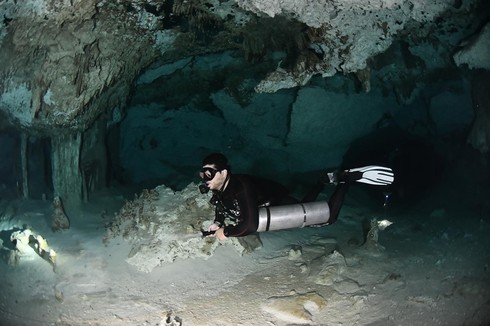
Many world-class wrecks sit at depths that exceed basic recreational limits (60ft/18m). To safely explore these sites, you will eventually want to pursue a Deep Diver specialty or even explore Technical Diving pathways. These advanced courses provide the redundant safety skills and gas management necessary for environments where a direct ascent to the surface isn’t always an option.
A Note for NYC Divers: Split Your Training
If you are currently landlocked or simply don’t want to begin your underwater journey in the cold, low-visibility waters of the Atlantic Ocean, you have a very practical alternative: The Referral.
Instead of spending the first two days of a tropical vacation in a classroom or a swimming pool, you can finish your academic and pool sessions locally. This gets the groundwork out of the way locally so that when you arrive in a warm water destination like the Caribbean, you can head straight to the ocean for your four required check-out dives.
While PADI, NAUI, and SSI all make it easy to start at one shop and finish at another within their own network, you can also utilize a Universal Referral. This allows you to “cross-pollinate”—for example, completing your pool work with a NAUI instructor at home and finishing your ocean dives with a PADI shop abroad. While this is a common industry practice, it does require specific paperwork, so always confirm the details with both your local instructor and your destination dive center before you get started.
✅ Where to Get Certified in NYC
Ready to take the plunge? We recommend local dive shops we trust and train with in New York City.
👉 Check out our guide to the Best Dive Shops in NYC — where you’ll find trusted PADI, NAUI, and SSI options to begin your underwater journey.
Agency Strengths Considerations Best For PADI ↗ Professional Association of Diving Instructors 🌍 Unmatched global footprint; industry-leading digital e-learning platform. Highly standardized curriculum can feel rigid for some learners. Divers seeking maximum recognition and the most local training options worldwide. NAUI ↗ National Association of Underwater Instructors 📘 Non-profit model emphasizing deep dive theory and instructor-led flexibility. Smaller international footprint; specialized training centers may be harder to find. Learners who value in-depth knowledge and a customized educational approach. SSI ↗ Scuba Schools International 📱 Modular “Diamonds” philosophy; often more cost-effective with free digital C-cards. Global reach is expanding but may be less prevalent in some remote regions. Divers who want flexible pacing and a modern, modular learning experience.FAQs
Are PADI, NAUI, and SSI certifications recognized worldwide?Yes. All three are accepted globally at dive shops, resorts, and liveaboards. You will not be turned away from a dive because your card says one agency instead of another.
Beyond global recognition, most major agencies also recognize each other’s certifications as equivalent training for the purpose of continuing education. For instance, if you completed your Open Water with NAUI, you can pursue your Advanced Open Water with PADI. There is no need to repeat the open water requirements. That said, policies can vary by instructor and dive shop, so it’s always worth confirming before you enroll.
How long does it take to get certified?An Open Water certification typically takes between two and four days to complete — assuming you’re doing all portions consecutively. More advanced or specialty certifications vary widely, from a few hours for some specialties to several days for others.
Which certification is best if I want to dive in New York City?If diving local New York waters is your goal, plan to go beyond Open Water. Many of the shipwrecks off the coast are deep. They are beyond the 60-foot recreational limit for new divers. Therefore, an Advanced Open Water certification and a deep water specialty are worth pursuing. Some NYC divers ultimately move into technical diving to access the best local dive sites.
Can I switch agencies after getting certified?The short answer is yes. If you earned your Open Water certification with one agency (like PADI) and want to take your Advanced course with another (like SSI or NAUI), you can transition seamlessly.
Because all major agencies adhere to the same global safety standards set by the WRSTC (World Recreational Scuba Training Council) and ISO, your core skills are recognized across the board. You don’t “transfer” your records; you simply present your current C-card as proof of prerequisite training when you sign up for the next level.
While the agencies recognize each other, the final call always belongs to the instructor. If it has been a while since your last dive, or if you are transitioning between very different diving environments, an instructor may require a quick Scuba Review or a check-out dive to ensure your skills are sharp before starting the next course.
Does it matter whether I choose PADI, SSI, NAUI, or another agency like SDI?Less than you might think. The curriculum differences between major agencies are relatively minor. What varies far more is the quality and teaching style of your instructor. Two divers can go through the same PADI course and have completely different experiences based solely on who taught them. Focus on finding an instructor you trust and feel comfortable with — the agency name on your card matters far less than the training behind it.
#naui #padi #scubaDivingCertification #scubaDivingInstructors #ssi
 Esteban Zapata Rojas
 Esteban Zapata