Why Authenticity Still Finds Us

We live in an era of extraordinary visibility. Photos appear instantly. Thoughts travel across the world in moments. A single image or idea can reach farther than anything in history. There is something remarkable in this. We are able to see more, learn more, and share more than ever before. A building lit in the evening, a flower opening quietly in a garden. These moments can be held and offered to others almost as they happen.

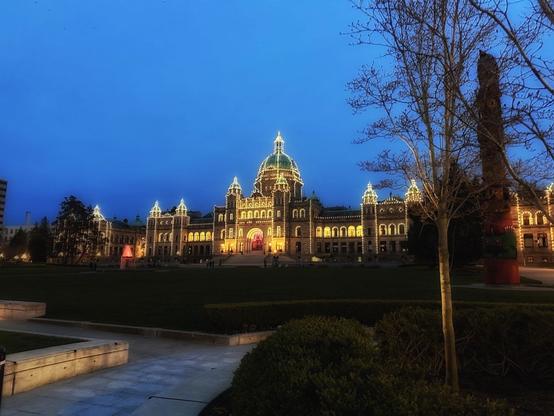
The Legislature Assembly of British Columbia, Victoria, B.C. (Rebecca Budd Photo Archives March 27, 2026)

And yet, alongside this abundance, something else has emerged. When everything can be shared, it is easy to feel that everything must be shaped. We choose the angle. We refine the wording. We consider how a moment will be received. This does not make the moment less real. It simply reminds us that we are aware. And awareness can be a gift. Because within all of the editing, the sharing, the choosing, authenticity has not disappeared. It has become something we recognize more clearly.

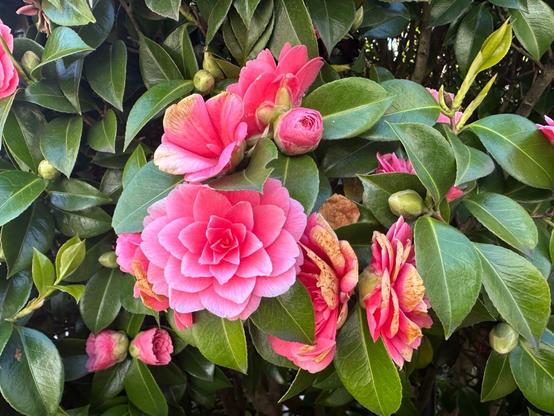
Camellia in Victoria, British Columbia (Rebecca Budd Photo Archives March 23, 2026)

We know it when we see it. A photograph that feels lived rather than staged. A thought that arrives without performance. A moment that carries its own quiet confidence. Authenticity does not require perfection. It does not ask us to remove ourselves from the world we live in. It simply asks that we remain present within it. The tools we use do not define the truth of what we share. We do.

Perhaps the question is no longer whether authenticity is rare, but whether we are willing to notice it and offer it. Because it is still here. In the light that draws us outside at dusk. In the unfolding of a flower that needs no audience. In the quiet decision to share something as it was, not as it could be made to appear. Authenticity has not been lost. It is waiting, as it always has, in the moments we choose to live fully.

Rebecca

#April #Authenticity #MorningReflection #Spring

What Do We mean When we Say “Authentic”?

Reflection Theme for April: Authenticity

Reflection 1: What Do We Mean When We Say “Authentic

Authenticity is one of the most overused words of our time. We see it in branding, social media captions, advertising campaigns, and motivational speeches. Everyone claims to be authentic. Yet many of the spaces where the word appears feel carefully staged. So what does authenticity actually mean?

At its simplest, authenticity means that what we present to the world is aligned with what we truly are. It does not mean perfection. It does not mean constant honesty about every feeling. It means coherence. The outer life and the inner life are not strangers.

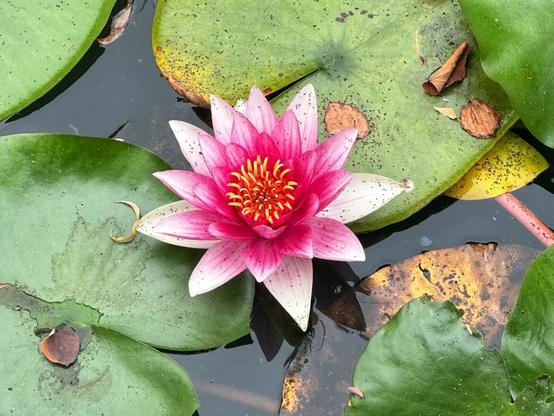
Water Lily (Rebecca Budd Photo Archives August 13, 2024)

In a digital age where images can be filtered, stories rehearsed, and personalities curated, authenticity becomes more valuable, not less. It is one of the few things that cannot be manufactured convincingly for long. We recognize authenticity not because it announces itself, but because it feels calm. A genuine conversation has pauses. A real photograph has imperfections. A true voice does not rush to impress. Authenticity does not demand attention. It earns trust.

Perhaps that is why people are still drawn to real conversations. Beneath the novelty, what people are actually searching for is a mind at work, honestly engaging with the world. Authenticity is not a performance. It is the quiet agreement between who we are and how we show up.

Rebecca

#April #Authenticity #MorningReflection #Spring

Walking Into Spring

Walking Into Spring

March is not a destination. It is a passage. And passages are alive with motion.

Long before our modern calendars, March marked the beginning of the year. Not because everything was finished or secure, but because life was ready to move again. Roads reopened. Fields softened. Work resumed. The world leaned forward. March began the year because momentum had returned. It was named for Mars, not as a god of chaos, but as a guardian of purposeful movement. Mars presided over readiness, over the moment when energy gathered enough strength to step outward again. His role was not to disturb, but to protect what was coming into motion. This is why March feels the way it does.

There is a sense of engagement now. We are no longer conserving energy. We are responding to it. The days stretch. Light stays. The air carries promise. We feel ourselves participating again, not cautiously, but with interest and anticipation. This is not arrival. But it is direction.

Walking Into Spring

In nature, everything is stirring. Buds swell. Birds rehearse their return. The ground hums quietly beneath our feet. Nothing is rushed, yet nothing is static. The crossing is active, alive, and confident in its course. We feel this same vitality in ourselves. We make plans without forcing them. We look ahead with curiosity rather than pressure. We take pleasure in the sense that something is unfolding and that we are part of it. Winter has given us depth. Now movement gives us joy.

March does not ask us to wait. It asks us to walk with what is coming. This in-between space is not a gap or a delay. It is the very moment when becoming feels possible and participation feels natural. We are no longer preparing to begin. We are already underway. The invitation of March is simple and generous. Enjoy the momentum. Let yourself be carried forward by the season’s energy.

March does not rush us toward spring. It walks us there. And in doing so, this month reminds us of something quietly essential. That the crossing is often the most alive place of all.

Rebecca

#March #Mars #MorningReflection #RebeccaSReadingRoom #Spring

Humanity in Conversation with Artificial Intelligence

Welcome to my reading room! This reflection began with a link shared by Paula Bardell-Hedley on her blog Book Jotter. In her December 26, 2025 “Winding Up the Week” post, Paula — a thoughtful and generous curator of literary conversation — pointed readers toward an December 12, 2025 article from EveryWriter.com titled, “When Edgar Allan Poe Fails the AI Detector.” I am grateful to Paula, a consistently insightful blogger, for bringing this piece to my attention and prompting the deeper reflections that follow.

The article described something almost unbelievable: classic works such as Rip Van Winkle, 
The Monkey’s Paw, The Gift of the Magi, and The Necklace were flagged by an AI detector 
as machine-generated. Even Edgar Allan Poe himself failed the test.

At first glance, it is amusing. But beneath the humour lies something more unsettling. If our tools cannot distinguish between canonical human literature and artificial generation, what exactly are they measuring? And perhaps more importantly, what are we measuring when we attempt to detect AI?

We have always been in conversation with our inventions. The printing press unsettled scribes. Photography unsettled painters. The typewriter unsettled calligraphers. Each technological shift raised the same question: Will this diminish us, or reveal something about us?

AI Image via WordPress


Artificial intelligence feels different because it operates in language, our most intimate human medium.  It does not extend muscle or sight. It extends pattern and expression. When we converse with AI, we engage with something that responds in our own symbolic system. That is new in scale and speed.

Right now, we are in a moment of inflection. We ask: Who authored this? Can I trust what I am reading Is this image real? Will I need to write with AI to keep pace?

Detection tools promise certainty, yet mislabel Poe. The irony is profound. AI detectors rely on statistical patterns, but great literature is rich with pattern. Machines trained on human language learn those structures from us. When they mistake human writing for AI, they reveal not the failure of humanity, but the limitation of measurement. Pattern is not presence. Statistics are not conscience.

There is also a subtle anxiety. Writers wonder whether they will need to prove authorship, whether speed will replace depth. The deeper concern is not about tools. It is about identity. Fear tells us we value authenticity, agency, integrity, moral responsibility. But fear alone is not helpful. The answer is discernment. Detection categorizes. Discernment understands. Instead of asking, “Was this written by AI?” we might ask: What is the intention behind this piece? Who stands accountable?

Artificial intelligence does not possess conscience. It does not experience grief, love, memory, or mortality. Humans do. Responsibility remains human.

This conversation will not fade. As robotics and AI move further into medicine, governance, education, and daily life, the questions will deepen. This moment requires calm inquiry, not hysteria. Rational conversation, not accusation. Humility, not certainty.

AI reflects patterns we have created. The greater question is whether we can still recognize the deeper qualities machines cannot measure such as conscience, responsibility, moral imagination. The line between human and artificial may blur in output. It does not blur in accountability. Humanity is now in conversation with a system that speaks our language.  The challenge is not to out-detect it. The challenge is to remain fully human within the dialogue.

We have reached a point in history where we must ask, calmly and honestly, what distinguishes human presence from patterned output. Not to police one another, but to understand ourselves more deeply. Perhaps the greater work before us is not to out-detect artificial intelligence, but to remain attentive to the qualities that cannot be automated: conscience, responsibility, lived memory, moral imagination. We have always shaped our tools. Now our tools echo us back.

The task is not to retreat from the conversation, nor to rush headlong into it without reflection, but to engage with discernment, humility, and courage. If we do that, this will not be a diminishment of humanity.

Rebecca

#AITechnology #Conversations #Humanity #MorningReflection

The Practice of Steadiness

Wind, Rain, Weather, and the Practice of Steadiness

March is a month of wind. Not the dramatic wind of storms that announce themselves, but the persistent kind that unsettles hats, rattles windows, and changes direction without warning. One moment the air is soft. The next, sharp. We step outside prepared for one thing and encounter another. This, too, is part of March’s teaching.

I live in Vancouver, in a temperate rain forest, where March rarely arrives quietly dry. Rain is a steady companion here. It doesn’t rush in and leave. It settles. It lingers. It reshapes the days without asking permission.

After the courage to begin comes the practice of staying steady when conditions refuse to cooperate. March does not reward rigidity. It asks for balance instead. In nature, nothing braces against the weather. Trees bend. Early shoots stay low. Moss thickens patiently. Steadiness is not achieved by resisting movement, but by moving with it. We are learning this again now.

Wind, Rain, Weather, and the Practice of Steadiness

Plans made in January wobble. Expectations set too firmly begin to feel brittle. March reminds us that flexibility is not weakness. It is intelligence. There is a difference between being rooted and being rigid. To be rooted is to know what matters and to stay connected to it, even as circumstances shift. To be rigid is to insist that conditions remain unchanged so we can feel safe. March does not offer that kind of safety. Instead, it offers practice.

Here, the rain teaches it daily. We dress in layers. We carry umbrellas without resentment. We learn that discomfort does not mean danger, and that steadiness does not require dryness. This is steadiness in motion. It is the kind that allows us to remain ourselves even as the world rearranges around us. The kind that trusts we do not need perfect conditions to proceed, only enough awareness to respond.

Perhaps this is what March is asking of us now. Not certainty. Not control. Just presence. A willingness to stand, bend, and continue.

Rebecca

#March #MorningReflection #RebeccaSReadingRoom #Spring #Winter

The Courage to Begin Without Certainty

March: The Courage to Begin Without Certainty

March has never been a settled month. It arrives with movement rather than reassurance. One day bright, the next unsettled. The ground softening here, still frozen there. We feel the pull to begin, even as we know conditions are not yet ideal. This is not a flaw of the season. It is its nature.

Long ago, March was the first month of the year. It was named for Mars, not as a god of chaos or destruction, but as a guardian of movement and readiness, a force invoked to secure peace and protect what was beginning to grow. The year did not begin when everything was safe. It began when action became possible.

The Courage to Begin Without Certainty

We still live this instinctively.

By March, something in us wants to move. Not dramatically. Just enough to feel forward motion again. We tidy a corner. Reach out to someone. Take a small risk. We begin before we are fully sure. This can feel uncomfortable. We like clarity. We prefer plans. But March does not wait for certainty. It asks for willingness instead.

Nature shows us this every day now. Buds swell before the air is warm. Birds return without knowing what storms may come. Nothing insists that conditions be perfect. Life moves because remaining still would cost more. There is a quiet courage in this kind of beginning. It is not loud or triumphant. It does not announce itself. It simply says yes to the next step, even when the path is only partly visible.

Perhaps this is what March offers us. Not confidence, but permission. Permission to begin gently. To move without mastery. To trust that readiness often follows action, not the other way around.

We are standing at the beginning. And that is enough for today.

Rebecca

#Courage #March #MorningReflection #RebeccaSReadingRoom #Spring

Spring Begins Gently

Spring Begins Gently


By February, many of us feel the pull of what comes next. We begin to think ahead. To imagine longer days. To make quiet lists, sometimes without realizing we are doing it. There is a longing for movement, for colour, for something new to begin. But spring does not arrive with force. It does not burst through frozen ground by effort or insistence. It comes because conditions have been honoured. Because time has been allowed to do its work. Because what needed rest was given it.

Winter teaches us this, if we pay attention. Before anything appears above ground, there is a long season of preparation we never witness. Seeds soften. Roots loosen the soil. Life gathers itself slowly, patiently, without announcement. So much of our planning forgets this. We rush toward outcomes. We measure readiness by productivity. We tell ourselves that intention must look like action.

Spring Begins Gently

But spring begins elsewhere. It begins in curiosity rather than certainty. In noticing what draws our attention without demanding our obedience. In listening for what feels quietly alive beneath the frost of habit and expectation. This is not the season for resolutions. It is the season for attunement.

What are you drawn to lately, not because it is useful, but because it feels warm? What questions keep returning, even when you are not searching for answers? These are often the earliest signs of spring.

The earth does not plan spring. It prepares for it. It does not rush the thaw. It waits until the ground can receive what is ready to grow. Perhaps we are being asked to do the same. To make space without forcing shape. To allow longing without demanding outcome. To trust that when the moment comes, we will recognize it.Spring will arrive. It always does.But it begins gently, long before we see it.

Until next Sunday, may your mornings unfold in wonder and light.

Rebecca

#MorningReflection #RebeccaSReadingRoom #Spring #Sunday