Mysterious Times Weekly Roundup W/E 20/05/26

The strange skies have been busy again this week. Between freshly released Pentagon UFO files, reports of mysterious underwater objects off the American coastline, and another surge in crop circle chatter across Britain, the week ending 20 May 2026 has offered plenty of fuel for late night conversations around the campfire.

As always in the world of the unexplained, some stories sit closer to documented fact while others drift into the realms of speculation and folklore. Either way, the boundary between mystery and modern news continues to blur in fascinating ways.

The biggest talking point this week has undoubtedly been the continuing release of declassified American UAP files through the newly launched PURSUE archive. The release, which began on 8 May, includes military footage, FBI files, NASA mission records and historical reports stretching back to the 1940s. Several outlets highlighted photographs connected to the Apollo missions, including strange lights captured during Apollo 17.

Officials stressed that the files do not confirm extraterrestrial life, though many incidents remain officially “unresolved”. ([Sky News][1])

Some of the more intriguing cases include reports of glowing objects making impossible turns over Kazakhstan, military infrared footage from the Middle East, and witness testimony involving luminous spheres over American military facilities. Researchers and sceptics alike have been combing through the material all week, arguing over whether the release represents genuine transparency or simply another carefully controlled data dump. ([Phys.org][2])

Meanwhile, attention has also turned beneath the waves. Reports circulating this week claimed that more than 9,000 unidentified submersible object sightings have been logged near United States coastlines since late 2025.

The reports, compiled through the Enigma sightings database, include accounts of fast moving objects entering and exiting the water, glowing shapes beneath the ocean surface, and apparent “transmedium” craft capable of moving between sea and sky. Retired military officials quoted in the reports expressed concern that at least some of the phenomena may represent unknown technology operating in restricted waters. ([New York Post][3])

Back here in Britain, crop circle season is beginning to stir once more. UFO and anomaly tracking websites have reported an uptick in discussions surrounding unusual formations and strange aerial sightings across southern England.

While no major verified formations have yet dominated headlines, enthusiasts are already watching Wiltshire and Hampshire closely as warmer weather and clearer night skies return. ([Aliens Digest][4])

Elsewhere in the world of oddity and high strangeness, lunar lore unexpectedly entered academic discussion this week through a paper examining Indigenous spiritual objections to commercial activity on the Moon.

While not paranormal in the traditional sense, the debate touches upon something deeply familiar within folklore studies: the idea that celestial bodies are not merely rocks in space, but sacred entities bound to myth, memory and identity. The paper references objections from Native American communities to the scattering of human remains on the Moon and questions how future lunar exploitation may collide with ancient beliefs. ([arXiv][5])

Online UFO communities have also been buzzing over fresh witness submissions involving jellyfish-like aerial anomalies, luminous domes and strange patterned lights appearing in American skies.

As ever, eyewitness testimony remains deeply subjective, but the sheer volume of reports continues to fascinate researchers who track patterns in modern folklore and anomalous experience. ([UFO Stalker][6])

Whether these stories ultimately prove to be misunderstood technology, psychological projection, elaborate hoaxes or something genuinely unknown, they continue to reveal an enduring truth about humanity.

We are still looking upward.

We are still searching dark waters and lonely fields for signs and symbols.

And perhaps most telling of all, we are still telling stories about the things we cannot quite explain.

Further reading and sources:

• [Sky News coverage of the Pentagon UFO files](https://news.sky.com/story/never-before-seen-files-on-ufos-released-by-pentagon-13541565)

• [ABC News report on the UAP archive release](https://abcnews.com/Politics/pentagon-begins-release-decades-unresolved-ufo-files/story?id=132780534)

• [EarthSky analysis of the newly released UAP records](https://earthsky.org/human-world/pentagon-ufo-files-uap-views-from-moon-nasa/)

• [New York Post report on underwater UFO sightings](https://nypost.com/2026/05/14/us-news/ufo-tracker-app-spots-thousands-of-mysterious-underwater-objects-off-us-shores/)

• [UFO Files Watch archive tracker](https://ufofileswatch.com/)

• [UFO Stalker sightings database](https://ufostalker.com/)

[1]: https://news.sky.com/story/never-before-seen-files-on-ufos-released-by-pentagon-13541565 “‘Never-before-seen’ files on UFOs released by Pentagon | US News | Sky News”

[2]: https://phys.org/news/2026-05-flying-discs-orbs-newly-pentagon.html”From flying discs to glowing orbs, these newly opened Pentagon files point somewhere stranger than expected”

[3]: https://nypost.com/2026/05/14/us-news/ufo-tracker-app-spots-thousands-of-mysterious-underwater-objects-off-us-shores/ “Thousands of mysterious underwater UFOs spotted off US shores: report”

[4]: https://aliensdigest.com/ “Aliens Digest – Latest UFO Sightings & UAP Disclosure News”

[5]: https://arxiv.org/abs/2605.17706 “‘Unacceptable to our people’: Diverse cultural beliefs, Indigenous rights, and the future of human activities on the Moon”

[6]: https://ufostalker.com/ “UFO Stalker | Real-Time UFO Sightings Map | Latest Reports, Photos, and Videos”

Copyright © 2026 Mysterious Times / Kirst Mason D’Raven. All rights reserved.

This article and images may not be reproduced, distributed or transmitted in any form without prior written permission from the publisher, except in the case of brief quotations used for review, commentary or scholarly purposes.

#alienEncounters #alienSightings #anomalousPhenomena #bizarreWorldNews #BritishCropCircles #conspiracyTheories #cropCircles #cryptoMysteries #Cryptozoology #declassifiedUFODocuments #extraterrestrialLife #Folklore #ForteanNews #fringeScience #hauntedHeadlines #highStrangeness #ModernFolklore #MysteriousLights #MysteriousTimes #mysteryNews #oddNews #paranormalInvestigation #ParanormalNews #PentagonUFOFiles #skyAnomalies #strangeSightings #supernaturalNews #UAP #UFO #UFODisclosure #uncannyEvents #underwaterUFOs #unexplainedEvents #unexplainedPhenomena #USOSightings #weeklyWeirdNews #weirdNews

Bank Holiday Mondays – Modern Folklore in the Making.

We all love a long weekend in Britain.

You feel it in the air before you even check the calendar. The traffic thickens on the Friday afternoon as if the whole country has collectively decided to slip its leash. Supermarket shelves empty of barbecue charcoal and paper plates. Somewhere, someone is digging out a windbreak that has seen more drizzle than sun. And always, always, that sense of a small, sanctioned pause. A breath taken together.

Our bank holidays, so neatly arranged along the edges of the working week, feel almost natural now. As though they have always belonged to Mondays. As though time itself prefers a gentle easing into rest rather than a sharp interruption midweek. But like so many of the rhythms we take for granted, this one was shaped, nudged, and ultimately engineered. And behind it lies a story that sits quite comfortably alongside the folklore we so often chase.

It is a tale of order imposed on chaos, of ritual replacing randomness, and of a nation quietly agreeing on when it is acceptable to stop.

Before the tidy certainty of modern calendars, holidays in Britain were far less cooperative. Feast days, saints’ days, and civic celebrations fell where they pleased. A Wednesday might be given over to celebration, a Thursday to recovery, and a Friday to the slow, reluctant return to work.

The older rhythm was bound to the Church and the agricultural year. It followed the turning of seasons, the waxing and waning of light, and the deeply rooted human instinct to mark time through story and ceremony rather than efficiency.

When the industrial age tightened its grip, that older rhythm began to jar. Factories did not appreciate sudden pauses. Banks, in particular, required predictability. And so, in 1871, a man named Sir John Lubbock introduced the first formal structure of bank holidays.

It was, at its heart, a practical solution. Certain days would be designated when banks would close, and by extension, much of the country would follow. These early holidays were still scattered, tied loosely to tradition, but they marked the beginning of something important. The state had begun to formalise rest. Even then, though, the placement of these days was not entirely convenient. A holiday landing midweek could feel oddly disruptive. Work would stutter, pause, and then attempt to resume its rhythm as if nothing had happened.

There is something almost uncanny about returning to routine on a Thursday, knowing you have already stepped outside of it once that week. It breaks the illusion of continuity.

By the time we reach the late twentieth century, Britain had changed again. The working week had become more standardised. The weekend had become sacred in its own quiet way. Leisure was no longer incidental but expected. And it was here that the modern shape of the bank holiday was truly carved, through the Banking and Financial Dealings Act 1971.

This Act did something deceptively simple. It moved most of the country’s public holidays to Mondays.

At a glance, it looks like administrative tidying. In truth, it reshaped how we experience time off. By anchoring holidays to the start of the week, it created the long weekend. A contained, predictable pocket of freedom. Three days that feel just large enough to escape the ordinary, but not so large that the machinery of daily life begins to grind.

There is something almost folkloric about this reshaping of time. We often think of folklore as ancient, rooted in pre-industrial landscapes and whispered traditions. But here we see a modern form of it emerging. A shared cultural pattern, repeated year after year, shaping behaviour and expectation. The May bank holidays, in particular, feel like echoes of something older. The ancient festivals of Beltane and the turning of the agricultural year linger just beneath the surface. Fires once lit on hilltops become barbecues in back gardens. Processions and dances become seaside trips and garden centre pilgrimages. The structure may be modern, but the instinct is not.

Monday itself carries a certain symbolic weight in this arrangement. It is the threshold day. The hinge between rest and responsibility. By placing the holiday there, we stretch the liminal space of the weekend. We delay the return. We hold the boundary open just a little longer.

Thresholds have always mattered in folklore. Doorways, crossroads, the moment just before dawn. These are the spaces where transformation is possible, where the ordinary rules loosen. A three day weekend functions in much the same way. It gives us time to slip out of routine, to inhabit a slightly altered version of ourselves. The Monday bank holiday becomes a kind of sanctioned liminality. Not quite work, not quite the wild freedom of a longer break, but something in between.

There is also a subtle psychological kindness in this arrangement. A midweek holiday can feel like a disruption. A Monday holiday feels like an extension. It does not break the rhythm so much as stretch it. The working week resumes on Tuesday, already slightly shortened, already more manageable. It is a small trick, but an effective one.

Of course, not all holidays submit to this logic. Christmas Day and Boxing Day remain fixed, tied to their dates and their deeper cultural and historical meanings. When they fall on a weekend, we bend the rules slightly and observe them on the following Monday. Even here, though, the instinct persists. We still seek that extended pause, that smoothing of time.

What is fascinating is how quickly this arrangement has come to feel inevitable. Few of us question why bank holidays sit where they do. They simply are. Like the turning of the seasons or the lengthening of days in spring. Yet this sense of inevitability is itself constructed. It is the result of repetition, of shared expectation, of decades of lived experience.

And in that, it mirrors the very nature of folklore.

Folklore is not static. It evolves, adapts, absorbs new realities while retaining the shape of older truths. The Monday bank holiday may not be ancient, but it has taken on a life of its own. It has become part of the cultural fabric. It shapes how we plan our lives, how we travel, how we rest. It even shapes the stories we tell ourselves about time and work and what it means to pause.

There is something quietly comforting in that. In a world that often feels increasingly fragmented, the shared experience of a long weekend remains remarkably cohesive. Millions of people stepping out of routine at the same moment. Heading to the coast, the countryside, the pub, or simply the sofa. Complaining about the weather in unison. Making the most of it regardless.

If you stand back and look at it, it begins to feel almost like a modern ritual calendar. Not unlike the old feast days, but translated into the language of contemporary life. The fire festivals replaced by retail sales. The pilgrimages replaced by traffic jams on the M5. The communal gatherings still there, just wearing different clothes.

And perhaps that is the real magic of it.

We did not lose our need to mark time together. We simply found a new way to do it.

So the next time a bank holiday Monday rolls around, and you find yourself lingering over that extra cup of tea, or watching the sky for signs of decent weather, or joining the slow procession of cars heading somewhere that feels just far enough away, it is worth remembering that you are participating in something larger than convenience.You are stepping into a pattern. A shared pause. A modern echo of much older instincts.

And like all good rituals, it works best when we do it together.

#BankHolidayMondays #Folklore #History #ModernFolklore #UK

#WordWeavers Apr. 6 – Can you create a character/place/storyhook/device on the spot, if you need to? If so, share an example.

Once upon a time when tigers smoked tobacco, there was a frog who lived in a well. The frog swam in the water — so if dinner tonight tasted of frog, dear, now you know why — and always looked up at the same square of sky through the opening, and was well-content with its life.

But over time, the square sky stayed blue and clear more and more days, turning gray and rainy less and less often, while the water of the well shrank down and became a little puddle. The frog's skin and throat were so dry, it couldn't sing like it used to. Fewer and fewer faces darkened the frog's little square sky to draw water with the well's hanging bucket, and the world around the well grew quieter.

"Do I leave?" The frog asked itself. "But how? And I shouldn't, the world outside is too big and scary! Mama Frog always said if I left, I would be snatched by a bird or flattened by passing feet!"

And yet things were getting so dry and hot, the frog was suffering every day. So one day, when the long-quiet bucket on its rope creaked again high above, the frog lying splat against the bone-dry dirt opened one gritty, bleary eye and watched the bucket trundle down...

#ModernFolklore #StoryTime #writing

When AI reimagines a holiday Soviet classic, is it creativity… or crossing a line? ❄️ This viral AI video featuring Snegurochka mixes nostalgia, folklore, and modern tools, and people can’t quite agree how to feel about it. What d'you think: clever reinterpretation, harmless fun, or something that feels a bit off? Check it out: https://zorz.it/snegurochka

#Snegurochka #AIVideo #AICreativity #DigitalCulture #ModernFolklore #HolidayNostalgia #ViralVideo #TraditionVsTech #NewYearVibes

My grandfather said when he was a wean, that he was told to put a half bottle of whisky down a rabbit hole on New Year's Day and the #TheWeeFolk would see him right through the year. My grannie said the thing was a saucer of milk on a full moon.

Do I need to sacrifice a calculator now, I wonder?

#ModernFolklore #Folklore #ScottishFolklore #FolkloreTuesday

I'm thrilled to announce that AMARANTH GAZETTE is set to be published on March 31, 2024!

In this volume:

☆ astrology from alternate realities
☆ dreamy poetry
☆ interactive activity pages
☆ an interview with an ultraterrestrial
☆ and more

AMARANTH GAZETTE will be available to purchase on March 31 @ ko-fi.com/ziraphema/shop

---

#WritingCommunity #IndieAuthor #AmaranthGazette #Surrealism #Fiction #Fantasy #SciFi #Zine #Surreal #ZiraPhema #Astrology #Cryptid #HighStrangeness #ModernFolklore

Oh yeah, there’s a video version of our conversation at Somewhere in the Skies - where you can see me mysteriously change location! A rift in time? Proof of multidimensional portals? Can the Frogmen in Black be blamed for it? #highstrangeness #ufotwitter

https://youtu.be/ZrJPpkeSlxk

#meninblack #highstrangeness #ufology #ufohistory #modernfolklore #folklore #ufopodcast

The Swedish Men in Black w/ Fred Andersson | Somewhere in the Skies

YouTube

I had a fantastic time talking Swedish Men in Black and the subject in general with Ryan Sprague at Somewhere in the Skies a while ago and now it’s out!

#meninblack #highstrangeness #ufology #conspiracy #ufos #folklore #modernfolklore

https://podcasts.apple.com/se/podcast/somewhere-in-the-skies/id1227858637?i=1000602868177

‎Somewhere in the Skies: The Swedish Men in Black w/ Fred Andersson i Apple Podcasts

‎Program: Somewhere in the Skies, Avsnitt: The Swedish Men in Black w/ Fred Andersson – 5 mars 2023

Apple Podcasts
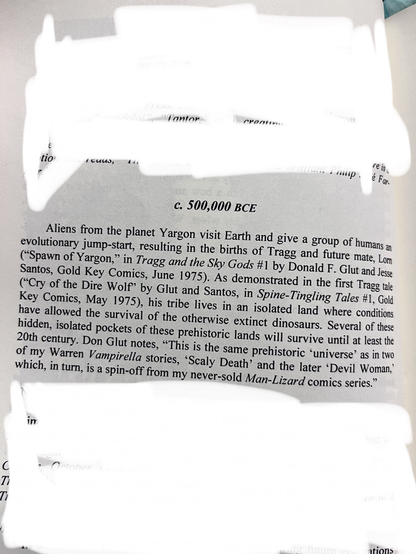
Your Wold Newton Timeline entry of the day
#counterculture #modernfolklore #wyrd
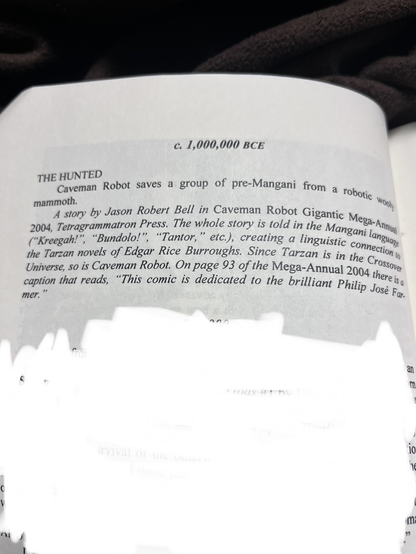
Your Wold Newton Timeline entry of the day
#counterculture #modernfolklore #wyrd