Mahsa Vahdat tours with Amsterdam Sinfonietta: ‘My voice is my home’
The internationally renowned Iranian singer Mahsa Vahdat (Tehran, 1973) tours with Amsterdam Sinfonietta, singing her own settings of Persian poetry. She moved from Iran to the US in 2015, but ‘I live in my voice, my voice is my home’.
From early on Vahdat has felt a deep bond with Persian poetry: ‘The messages of these poets express a universal sentiment of all times, shared by humanity irrespective of geography, belief, or race. The poems, mostly praising love and freedom, have given depth and beauty to life in Iran for centuries. They are like an endless ocean where you can always find treasures, to the benefit of all humankind.’
(c) Tahmineh Monzavi
Ayatollahs silence music
Vahdat was only six years old when the Ayatollahs grabbed the power in 1979, and drastically curbed the arts: ‘Concert halls went silent, music shops shut down, music faculties remained closed for a decade, and women singers were banned from solo performances to this day. Musicians either stayed silent, or went into exile. Music was allowed only if it encouraged participation in the Iran-Iraq war, or was related to religious and revolutionary themes. Traditional and regional instruments are still prohibited on state TV.’
Through her parents and grandmother she became a passionate music lover nonetheless: ‘We had a gramophone and a very good collection of records of classical Persian music. I spent hours listening to them, and my sister Marjan (1976) and I immersed ourselves in this wondrous world. I started to learn music seriously at the age of around 12.’
‘When finding an instrument was tough, we learned that a relative was selling his piano in the North of Iran. My father’s determination led us to that city, where we hired a truck to transport the precious instrument, carefully wrapped in blankets. Then I started to learn Iranian classical singing with different masters, getting to know the diverse and rich Persian music and poetry. Some five years after the ban on the music faculty was lifted, I enrolled at the University of the Arts.’
Unquenchable thirst for singing
Gradually, Mahsa and her sister developed into guardians of the classical Persian style of singing: ‘My father understood our love and passion for music and fully supported us on our way, even though it was challenging to learn and present it. In the beginning, I never thought I would become a professional musician, I simply loved to sing. Little by little I understood that this is an inseparable part of me, the thirst for singing was beyond my control. – Just as you cannot prevent the wind from blowing, or the sun from shining, I trusted that my voice would eventually find its way into a larger community.’
‘My thirst for singing was beyond my control. – Just as you cannot prevent the wind from blowing, or the sun from shining.’
Though younger, Marjan started performing earlier: ‘She sang with friends and family as a child and people loved her voice. I was shy and, as an older sister, limited myself to correcting lyrics for her – which were actually too profound for us kids.’ When she sang at a family and friends gathering herself, this was a life-changing experience: ‘I began to feel my strength and courage and developed an urge to share my singing with others. In 1995 I gave some underground concerts for mixed audiences, two years later I was invited to perform and record in Germany. This got the ball rolling, and Marjan and I were invited to festivals and tours around the world.’
Fight for freedom of expression
In 2007 they released their first album, Songs from a Persian Garden, recorded live in Tehran. Vahdat remembers this vividly: ‘In 2003, Marjan and I met the Norwegian producer and poet Erik Hillestad for a project called Lullabies from the axis of Evil. We started a long-term collaboration, which led to many albums, concerts and cross-cultural projects in collaboration with the Kirkelig Kulturverksted.’ ‘
‘The organization has developed into a powerful platform for freedom of expression in music, related to the restriction of women’s voices in Iran. It also undertakes educational projects for my students, nurturing the next generation of Iranian musicians. In 2007 Marjan and I wanted to do a live concert in Iran, and we thought of the Italian embassy with its beautiful garden and wonderful architecture. The ambassador organised many cultural activities, and for this concert collaborated with the Norwegian embassy. It was recorded and released on CD by Kirkelig Kulturverksted.’
‘Despite all the restrictions I have never doubted my mission to advocate freedom of expression in music.’
In 2010 Vahdat was awarded the Freemuse Award, for ‘resisting all pressures that the conservative sectors of Iranian society put on women musicians’.She was still living in Iran, and the award meant a great deal to her: ‘Despite all the restrictions I had never doubted my mission to advocate freedom of expression in music, though it was challenging and I paid a high price, like many other women and other artists. As a young singer the prize strengthened my motivation, it made me feel stronger and more intent on lifting my art to a higher level.’
‘Music has always been my loyal and true companion, in which I can express all my joy, hope, sorrow, or protest. I was determined to stay in Iran, but from 2015 this became really difficult. The authorities pressurised me and eventually I moved to the United States. I was determined to stay in Iran, but from 2015 this became really difficult. The authorities pressurised me and eventually I moved to the United States. – But I live in my voice, my voice is my home.’
Classical tradition with contemporary expression
Since Vahdat calls her voice her home, how does she choose the poets she sets to music? ‘My musical works form an inseparable part of my life and concerns. Creating each piece is a unique opportunity to reflect my questions, doubts, sensitivities, and desires. In this journey, I have found my home. The texts are by classical poets like Hafez, Rumi and Omar Khayam, or contemporary poets like Forough Farrokhzad and Mohammad Ebrahim Jafari.’
The poems I choose must be deeply connected to different dimensions of my life, to my emotional, social or spiritual life.‘
‘The poems I choose must be deeply connected to different dimensions of my life, to my emotional, social or spiritual life. It is a bit easier to work with classical poets since their metre is closer to the way I was educated, but I love both worlds. Most of my melodies are rooted in the traditional classical and regional Iranian music, but with a contemporary expression.’
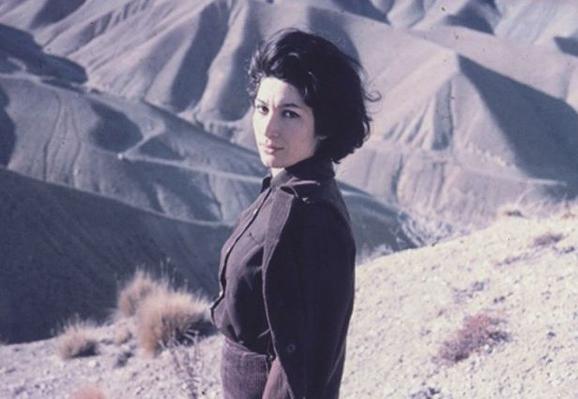
Forough Farrokhzad
Forough Farrokhzad (1935-1967) was a staunch supporter of women’s rights before her premature death in 1967, and Vahdat admires her greatly: ‘She found huge courage in her love experience, and created important poetic treasures. Her expression was rooted deeply in her psyche, in having to grapple with tension and anxiety. She provided an extraordinary new definition and concept of love, where the lover and beloved are one – the man does not rule and the woman is not a sinner. Neither is dominant, the love she talks about is beyond marriage forms and the values society has embraced for centuries.’
Forough Farrokhzad
‘Her poem Another Birth illustrates her strong will: she insisted on her right to own her body, the right of freedom for women, the right of being explicit in emotion, of expressing love. She crossed all gender barriers that had ruled Persian literature for over a thousand years. She was not afraid of being blamed or receiving criticism, she never feared to step into forbidden territories. Her words and deeds were incredible, she created a fantastic heritage in poetry and writing. Moreover she strongly empowered women. Her presence in our modern history has huge importance. Still the censorship’s biting power wants to silence her, but women in Iran who are fighting day and night for their freedom find courage in her. When I sing her poems I get extra power.’
Songs reflect precious life experiences
Vahdat composes most of her songs herself. How does she go about? ‘My mind and heart are always active, they never sleep. I am always alert for sound and inspirations, be it day, night, midnight or early morning, at home, on a plane or train, or walking in the street. When something springs to mind I record it with my phone, and work on it later. As said, I’m very intentional about text. Sometimes I choose the poem first and set it to music, sometimes a melody comes first and I search for lyrics, but there is a story behind each of my songs. I can tell what motivated or inspired me to make them, they are the reflection of precious and intense moments in my life; I had to deal with many changes and challenges for creating them.’
While composing, Vahdat finds inspiration in Radif, a collection of early Persian melodic figures that have been preserved orally through many generations: ‘I have listened to a lot of music all my life and learn constantly from Radif. Also regional Persian traditions show me how to develop motifs into structures and forms, and knowing about improvisation also helped me making music.’
In 2021 the programme with Amsterdam Sinfonietta was cancelled due to covid. Vahdat: ‘Fortunately artistic leader Stephan Heber has now found new dates for our collaboration. We will perform some of my songs that I sang with the Kronos Quartet and others that were arranged by three different musicians, Atabak Elyasi, Jacob Garchik and Sahba Aminikia. I will also sing Dido’s Lament by Purcell, and there will be instrumental pieces by other composers.’
Rose Garden provides hope
There is one song for which Vahdat wrote both the music and the lyrics, Vaya Vaya from 2020. This is very close to her heart: ‘It is a deep expression of love to a beloved, that is constantly transforming into a homeland. Since the pandemic fell upon us in March 2020, for over a year the place I visited most was the Rose Garden in Berkeley. I walked there almost every day at the time of sunset, the moment when the sun turns its glow to my motherland, with whose soil my breath is interwoven.’
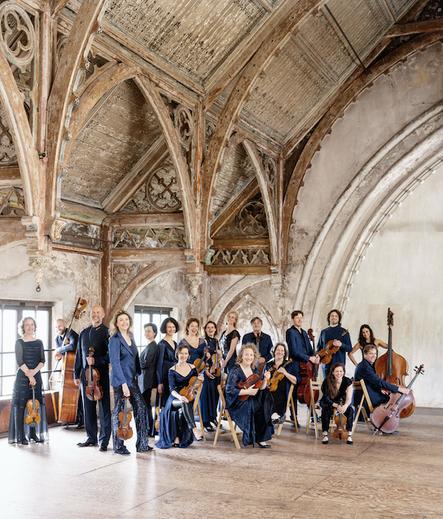
Amsterdam Sinfonietta (c) Marco Borggreve
‘The moment when darkness and light embrace each other and the intense red, dark blue and golden rays in the clouds create a unique image in which passion, rebellion, glow, hope and sorrow intertwine. With my deep longing and desire for my motherland the words and music came to me naturally. This garden in Berkeley is one of my dearest zones in life. Wherever I roam in the world, it will always remain in my heart.’
Her husband Atabak Elyasi arranged the song for the Kronos Quartet during the pandemic and made a new arrangement for the tour with Amsterdam Sinfonietta. Vahdat enjoys working with him: ‘Music is the fruit of our life, we have collaborated ever since we married 23 years ago. We inspire each other a lot musically, I really like Elyasi’s vision and his taste in music. He is well versed in both Iranian and Western styles, and has a very individual and special sense of harmony. He also writes many poems, and I love his texts.’
Vahdat looks forward to her concerts with Amsterdam Sinfonietta: ‘I had one rehearsal with them and this was fantastic, they have a deep understanding of my music. It is a wonderful opportunity for me to be involved in such a profound interactive project where we can go on a musical journey that transcends boundaries and languages, embracing the beauty and universality of human sentiments.’
https://www.youtube.com/watch?v=ankNgeQZ5Wc&ab_channel=AmsterdamSinfonietta
This interview was commissioned by Amsterdam Sinfonietta and appeared in a shorter version on their website. Vahdat tours with them from 10-15 November 2023.
#AmsterdamSinfonietta #AtabakElyasi #ForoughFarrokhzad #MahsaVahdat #MarjanVahdat Thea Derks
 The 🫠 ᴘʀᴇᴛᴛʏ BBC Radio 3 🎶 #NowPlaying Bot
 Contemporary Classical - Thea Derks

 1001 Other Albums

 Pieter

 thomkennon