Newspaper withdrawal at the breakfast table
Mornings haven’t been quite the same around the house since Feb. 26–the last one that started with a print copy of the Washington Post landing somewhere near our front walk, making less of a thud than it once did, sometime before dawn.
That marked the end of a streak of Post home delivery that had run decades, going back to my first apartments out of college in Arlington and D.C. The wanton destruction of much of my old newsroom, followed by my seeing the sad results of Jeff Bezos’s act of civic vandalism and then facing an imminent renewal of our print subscription, pushed me to terminate that streak–in sorrow, not anger.
(The Post’s site didn’t even offer me a discount on my way out.)
Since then, the demise of a daily habit of analog news reading has left me with a breakfast-table problem: What do I read instead to ensure I still start the day by informing myself? Ideally, without bringing a touchscreen device to the table?
One early answer had been collecting dust on other household surfaces: the print magazines we get.
I’m one of the many people who subscribed to Wired in early 2025 in appreciation of that publication’s outstanding coverage of the Trump administration’s abuses of power. But until the dead-tree edition of the Post wasn’t occupying space on the breakfast table, I let copies of that magazine pile up.
We also have back issues of such other print mags as the Air & Space Museum’s Air & Space quarterly and the UVA and Georgetown alumni magazines my wife and I get. I’ve been reminded that they’re worth reading with a morning coffee–among other things, I now know that the coffee company I keep buying from at Costco was founded by another Hoya.
And there’s a slightly less-portable form of printed media, books. My current read is my Post friend Sara Kehaulani Goo’s memoir Kuleana, in which she unpacks her Hawaiian heritage and her family’s struggles to hold on to the last of some ancestral land.
If I must turn to a touchscreen, I’ve realized that my digital reading should be one of the most newspaper-like forms of online publishing, RSS. Catching up with favorite sites via that online-syndication format seems healthier than flipping over to social media.
I can also read the Washington Post on the web or in its Android or iPad apps–my Arlington and D.C. library cards provide free online access, notwithstanding the occasional glitch renewing that freebie. And yet I don’t turn to what I think of as my alma mater of journalism as often as I did when I paid for it. I feel a little bad about that.
#AirSpace #books #digitalMedia #Georgetown #Kuleana #mags #newspaper #printPaper #printSubscription #ReallySimpleSyndication #RSS #SaraGoo #washingtonPost #Wired 🤘 The Metal Dog 🤘
 ProgressivePower
 Rob Pegoraro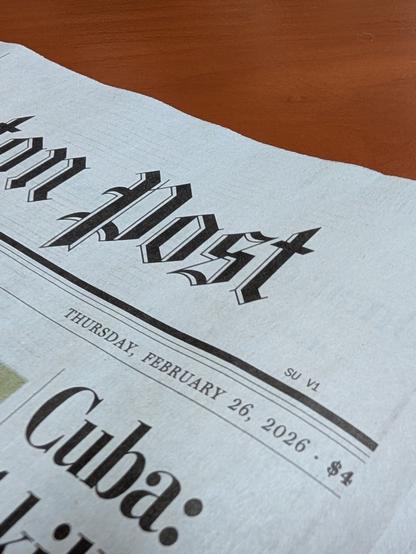
 Ralf Hamm
 Peter "Wraithkal" Christiansen
 Trump Watch 👀