Mini review of the ThinkNode M6 “outdoor solar power for Meshtastic”

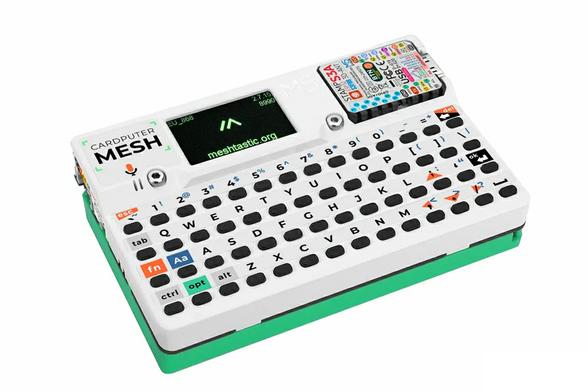
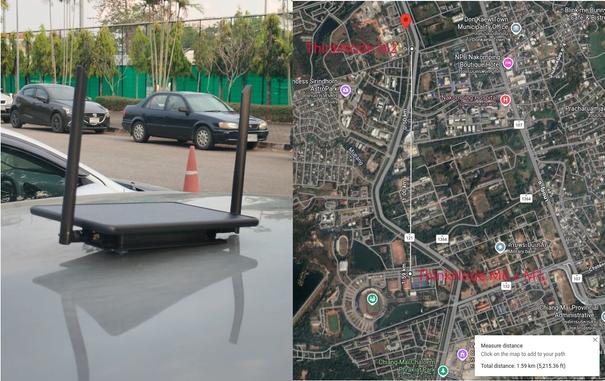
Elecrow has sent us a solar-powered ThinkNode M6 Meshtastic device for review. Last year, I reviewed the ThinkNode M1 and M2 Meshtastic nodes, and I was a bit disappointed by the point-to-point range in a suburban environment, where I got about 550 meters of range after switching to LONG SLOW mode. Nine months have passed since that review, and there still doesn't seem to be any Meshtastic community in the second-largest city in Thailand, probably because typical Meshtastic terminals are more expensive than entry-level Android smartphones, have limited functionality, and the mobile app is still a mess despite a revamp. Nevertheless, when Elecrow asked me whether I wanted to test the "ThinkNode M6 outdoor solar power for Meshtastic", I thought it might be fun. The main purpose of this mini review is to check the range I get using the M6 as a router between the M1 and M2 nodes.

CNX Software - Embedded Systems News

LPWAN Meshes: ClusterDuck Protocol - Purpose-Built for Emergencies

The ClusterDuck Protocol (CDP) was where my mesh networking journey truly began. The story behind Project OWL (Organisation, Whereabouts, and Logistics)—students building emergency communication networks after Hurricane Maria—resonated deeply, highlighting a technology designed not for hobbyists or industry, but for saving lives when infrastructure fails. While I found its concepts “much better thought through” from the outset, the project’s slow pace and patchy hardware support meant my personal involvement never truly moved beyond some initial tinkering.

https://web.brid.gy/r/https://gaggl.com/blogs/2026-03-12-lpwan-meshes-clusterduck-protocol-deep-dive/

LPWAN Meshes: ClusterDuck Protocol - Purpose-Built for Emergencies

The ClusterDuck Protocol (CDP) was where my mesh networking journey truly began. The story behind Project OWL (Organisation, Whereabouts, and Logistics)—students building emergency communication networks after Hurricane Maria—resonated deeply, highlighting a technology designed not for hobbyists or industry, but for saving lives when infrastructure fails. While I found its concepts “much better thought through” from the outset, the project’s slow pace and patchy hardware support meant my personal involvement never truly moved beyond some initial tinkering.

Digital Nomad
Upgraded FGH200M Wi-Fi HaLow module features Morse Micro MM8108 SoC, handles up to 8,191 IoT devices

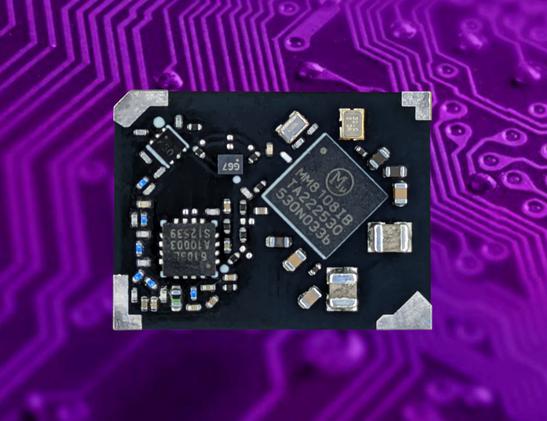
Introduced at MWC 2026, Quectel FGH200M Wi-Fi HaLow module, based on Morse Micro MM8108 SoC, is an upgraded version of the previous MM6108-based FGH100M module designed for long-range, low-power IoT connectivity. It operates in the sub-1-GHz band (850–950 MHz), with a range of up to 1 km, and is designed for applications such as smart homes, industrial automation, smart agriculture, smart cities, building automation, warehouses, campuses, and large-area IoT networks. The module operates on 1/2/4/8 MHz channels, with a maximum physical data rate of 43.3 Mbps and a transmit power of 26 dBm, allowing a single access point to theoretically connect up to 8,191 IoT devices. It connects to the host through USB 2.0, SDIO 2.0, or SPI interfaces. The ultra-compact (11.0 × 10.0 × 2.0 mm) LGA package operates in industrial environments with a temperature range of –40°C to +85°C. Quectel FGH200M Specifications: SoC – Morse Micro MM8108 32-bit

CNX Software - Embedded Systems News
LR2021 LoRa Plus board combines Semtech LR2021 and Nordic nRF54L15 for high-speed FLRC and LoRa connectivity

Last year, Semtech released the Semtech LR2021 LoRa Plus transceiver chip, designed to address the low data-rate issue associated with LoRa, but surprisingly, they didn't release a development board for the chip. Now, almost a year later, Seeed Studio and Semtech have partnered to introduce the LR2021 LoRa Plus development Kit targeting long-range high-speed LoRa and FLRC applications up to 2.6 Mbps. Not only does the board support LoRa Gen 4 technology, providing Sub-GHz, 2.4 GHz ISM, and S/L-band operation, but a XIAO nRF54L15 board also adds dual-core processing (Arm Cortex-M33 + RISC-V) and supports other short-range protocols, including NFC, Bluetooth LE 6.0, Matter, Thread, and 2.4 GHz proprietary protocols. The development board also features a 0.96-inch 128×64 OLED, three Grove connectors for expansion, a USB Type-C for power, SWD debugging, and two Sub-GHz and 2.4 GHz SMA connectors. It is compatible with Arduino Uno, STM32 Nucleo, and Nordic DK

CNX Software - Embedded Systems News
LILYGO T-Echo Plus off-grid LoRa communicator features a climbing hook for hiking, cycling, and remote communication

The LILYGO T-Echo Plus is another off-grid LoRa communicator, similar to Blackout Comms, ThinkNode M2, and Wio Tracker L1 Pro, but it features a metal attachment loop (designed like a climbing hook) for use in hiking, cycling, and off-grid environments. Built around a Nordic Semi nRF52840 MCU, it supports Bluetooth 5, Thread, Zigbee, and 802.15.4. It also adds an SX1262 LoRa transceiver, a 1.54-inch 200×200 SPI E-Paper display, and an L76K GNSS module. Other features include a 6-axis IMU (BHI260AP), a vibration motor, a buzzer, and a larger 2400mAh battery, along with a 1/4-inch mount and a "climbing finger loop" for gear attachment. Additional features include an optional BME280 sensor, Grove expansion, all in a rugged and compact enclosure with a long external antenna for extended LoRa range. LILYGO T-Echo Plus Specifications: SoC – Nordic Semiconductor nRF52840 CPU – 32-bit Arm Cortex-M4F microcontroller @ 64 MHz Memory/Storage – 2 MB Flash,

CNX Software - Embedded Systems News

**SEO-заглавие**
Wi-Fi HaLow (IEEE 802.11ah): дальнобойная альтернатива LoRa и MANET для IoT и автономной связи
**Заглавие**
Wi-Fi HaLow: Wi-Fi, который уходит за горизонт
**Подзаголовок**
Как стандарт IEEE 802.11ah закрывает разрыв между LoRa и военными MANET — по дальности, скорости и цене
**Целевая аудитория (ЦА)**
Инженеры и ИТ-специалисты, IoT-разработчики, исследователи беспроводных сетей, OSINT-аналитики, энтузиасты автономной и децентрализованной связи, специалисты по гражданской защите и критической инфраструктуре.
**Вступление**
Wi-Fi HaLow (IEEE 802.11ah) — редкий случай, когда академический стандарт выходит за рамки лабораторий и начинает конкурировать сразу с двумя мирами: медленными, но дешёвыми LoRa-сетями и дорогими, закрытыми военными MANET-системами. Работая в субгигагерцовом диапазоне, HaLow сочетает километровую дальность, высокую пропускную способность и привычную Wi-Fi-экосистему. Это делает его интересным не только для IoT, но и для сценариев автономной связи — от полевых исследований до чрезвычайных ситуаций, где интернет и сотовые сети перестают существовать как класс.

#WiFiHaLow #IEEE80211ah #SubGHzWiFi #IoT #LPWAN
#АвтономнаяСвязь #ДецентрализованныеСети #MeshNetworking #MANET #LoRa
#EmergencyComms #OffGrid #DisasterResponse #FieldTesting
#WirelessResearch #NetworkSecurity #WPA3 #EndToEndEncryption
#RaspberryPi #BATMANADV #OLSR #PeerToPeer
#AdHocNetworks #CriticalInfrastructure #ResilientNetworks

В этом видеообзоре разбирается Wi-Fi HaLow (IEEE 802.11ah) как практическая технология для автономной и децентрализованной связи вне интернета и сотовых сетей. Показано, чем субгигагерцовый Wi-Fi отличается от LoRa-решений вроде Meshtastic и почему он закрывает нишу между медленными LPWAN и дорогими военными MANET-системами.
На конкретных примерах объясняется, как Wi-Fi HaLow обеспечивает километровую дальность, высокую пропускную способность, нормальную IP-сеть и шифрование уровня WPA3, позволяя передавать голос, видео и файлы напрямую между устройствами. Отдельно рассматривается подключение модулей к смартфонам и Raspberry Pi, формирование локальной сети, а также использование peer-to-peer приложений без центральных серверов.
Видео опирается не на маркетинг, а на инженерную и научную базу: упоминаются академические исследования IEEE 802.11ah, реальные ограничения технологии, регуляторные нюансы и сценарии, где HaLow имеет смысл — от полевых условий и походов до аварийной связи и экспериментов с mesh-сетями.

https://t.me/Decloaking/8073

**Дисклеймер**
Материалы и выводы, приведённые в этом тексте, носят обзорный и информационный характер и не являются прямыми рекомендациями к практическому применению. Реальные результаты зависят от условий эксплуатации, конфигураций оборудования, нормативных ограничений в конкретных юрисдикциях и уровня подготовки операторов. Любые полевые испытания должны проводиться с соблюдением действующих законов о радиочастотах, с учётом требований по электробезопасности и кибербезопасности. Использование сетевых технологий в критических сценариях предполагает обязательное тестирование в контролируемой среде перед внедрением в продуктив.
**Для дальнейшего исследования и испытаний**
Вы можете использовать следующий ресурс для координации, обмена опытом и документирования полевых тестов, а также для сбора ссылок на публикации, схемы, конфигурации и отчёты:
retroshare://channel?name=Wi-Fi%20HaLow%20%28IEEE%20802.11ah%29%3A%20%D0%B4%D0%B0%D0%BB%D1%8C%D0%BD%D0%BE%D0%B1%D0%BE%D0%B9%D0%BD%D0%B0%D1%8F%20%D0%B0%D0%BB%D1%8C%D1%82%D0%B5%D1%80%D0%BD%D0%B0%D1%82%D0%B8%D0%B2%D0%B0%20LoRa%20%D0%B8%20MANET%20%D0%B4%D0%BB%D1%8F%20IoT%20%D0%B8%20%D0%B0%D0%B2%D1%82%D0%BE%D0%BD%D0%BE%D0%BC%D0%BD%D0%BE%D0%B9%20%D1%81%D0%B2%D1%8F%D0%B7%D0%B8&id=693baa50075a061f1e3f5a5e068aee9a&msgid=257270c5e96088f779e148b929377e8d0688f25f
Этот канал может служить концентратором ссылок на:
академические публикации и обзоры по IEEE 802.11ah;
примеры конфигураций оборудования для HaLow;
отчёты по полевым испытаниям vs LoRa и MANET;
методологии тестирования дальности, пропускной способности и устойчивости;
рекомендации по интеграции с приложениями реального времени.

Кому религия не позволяет в ретро: Wi-Fi HaLow: Wi-Fi, который уходит за горизонт
https://orwellboxxx4.blogspot.com/p/wi-fi-halow-wi-fi.html

Пара монет и вот это все: Поддержите проект криптовалютой: Bitcoin, Litecoin, PKOIN и Tari – безопасные донаты без посредников
https://orwellboxxx4.blogspot.com/2025/11/bitcoin-litecoin-pkoin-tari.html

DIN-rail mountable LoRaWAN control terminal offers RS485, analog input, and digital I/Os

The DFRobot LoRaWAN Control Terminal is a compact, DIN-rail mountable industrial IIoT terminal that features long-range LoRaWAN connectivity with local sensing and control capabilities. It’s designed for industrial, agricultural, and building-automation scenarios that need reliable, low-power wireless communication up to 4 km. The terminal supports the standard LoRaWAN protocol (OTAA/ABP, Class A/C) with up to 4 km line-of-sight range and works with private gateways or public networks like TTN. It integrates a 0–10V analog input, optically isolated digital inputs, and RS485/Modbus sensor support, along with a built-in relay output for direct actuation. There's also support for visual rule-based automation for relay switching, RS-485 commands, or uplink messages; the device continues operating offline using preset logic. The unit operates from 12–24V, includes adjustable transmission parameters, and supports firmware upgrades and factory resets. DFRobot LoRaWAN Control Terminal specifications: SoC/Main Controller – TBD Wireless LoRaWAN 863–870 MHz, 16 dBm Tx power (EU, DFR1120-868) LoRaWAN

CNX Software - Embedded Systems News
Zigbee 4.0 introduces ”Suzi” Sub-GHz connectivity and security enhancements

The Connectivity Standards Alliance (CSA) has just announced the release of Zigbee 4.0, integrating security and interoperability improvements, as well as the Suzi Zigbee’s Sub-GHz feature operating in the 800 MHz (Europe) or 900 MHz (North America) band for longer range and lower interference compared to the traditional 2.4 GHz band. Highlights of Zigbee 4.0 release: Simplified certification processes Enhanced information exchange for smart home solutions. Formalized Parent Selection, Unique Link Key Monitoring, and Trust Center Connectivity improve network resilience Standardized network-level retries, more reliable data polling for sleepy end devices, and expanded use of APS acknowledgements increase overall network performance and reduce message loss. Sleepy-to-sleepy communication using Coordinated Sample Listening (CSL) allows direct, low-power exchanges between devices, optimizing energy and further extending battery life Security updates aligned with evolving international security standards Dynamic Link Key, Device Interview, and Smart Energy Authentication Level Control for stronger device authentication, selective communication

CNX Software - Embedded Systems News

Kiva välillä törmätä johonkin uudempaan tekniikkaan missä on edes jotain parannuksia oikeisiin ongelmiin. Toimittajakoulutuksessa tänään törmäsin Fraunhoferin alunperin kehittämään "mioty" LPWANiin. Tärkein muutos 868 alueella on ajallinen alipaketteihin pilkkominen ja toisto sekä taajuushyppely. Eli ajallinen leveä häiriö tai pitkä taajuushäiriä molemmat selätettävissä ilman että tarvitsee kaksisuuntaista protokollaa heti.

https://developers.mioty-alliance.com/explore/

#LPWAN #radio #mioty

Explore - mioty alliance

Explore Welcome to the mioty Developer Page! In this section you will find a comprehensive overview of the new connectivity standard mioty.

mioty alliance

@selea

I'm using #LoRaWAN and #Tasmota for sensors on

- energy metering
- water metering
- level monitoring on oil and rain water tanks
- smoke detectors
- climate monitoring
- window/door monitoring
- charging control for electric cars
- light control
- tracking of my ebike
...

Lots of fun with #LPWAN 😋 but conversation on #Meshtastic seems to be pretty limited to ham level (cq, qsl, hello?, qth, ...)

my #Meshtastic node is high on a mast with up to 25km LOS but not really exciting