 Steven Damian Imparl 🥊
🧠✨ New research suggests **lithium deficiency may trigger Alzheimer’s disease**.
Tiny, natural levels of lithium appear to protect brain cells, while low levels increase risk. In mice, restoring lithium improved memory and slowed damage. Could this simple mineral become a powerful tool in preventing dementia?
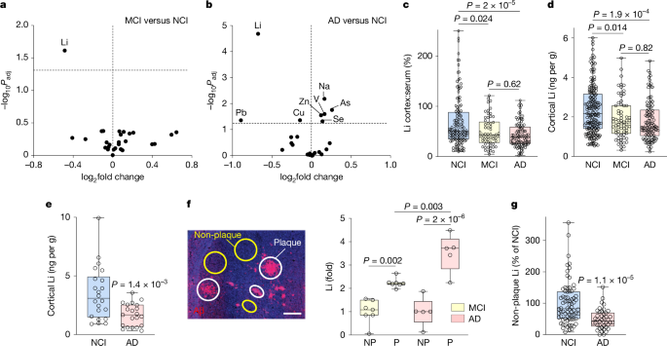
Scientists may have found a surprising link between **lithium deficiency and Alzheimer’s disease**. Lithium is a natural mineral found in soil, water, and even in our bodies in tiny amounts. For decades, doctors have used higher doses of lithium to treat mood disorders like bipolar disease. But this new research suggests that *very small, natural levels of lithium* may play a role in keeping our brains healthy as we age.
The study, published in *Nature* in August 2025, looked at human brain tissue and animal models. Researchers noticed that when lithium levels in the brain dropped, the risk of Alzheimer’s disease went up. Alzheimer’s is a devastating condition that causes memory loss, confusion, and changes in thinking. It is marked by two key features: **amyloid plaques** (sticky protein clumps) and **tau tangles** (twisted fibers inside brain cells). Both were more common when lithium was low.
In mice, scientists tested what would happen if they gave back small amounts of lithium. The results were striking: memory improved, and the buildup of plaques and tangles slowed down. This suggests that lithium might act like a “brain protector,” helping neurons resist the damage that leads to Alzheimer’s. Importantly, the doses used were far lower than those given for psychiatric treatment—closer to what might naturally be found in food or water.
The research also looked at human populations. Areas with naturally higher lithium in drinking water seemed to have lower rates of dementia. While this doesn’t prove cause and effect, it adds weight to the idea that lithium deficiency could be a hidden risk factor for Alzheimer’s.
Why does this matter? Alzheimer’s affects millions of people worldwide, and current treatments only slow symptoms—they don’t stop or reverse the disease. If lithium supplementation at safe, low levels can help, it could open a new path for prevention. Imagine adding a trace mineral to diets or water supplies, much like fluoride was added to protect teeth. Of course, more studies are needed to confirm safety, dosage, and long-term effects in humans.
The authors caution against rushing to take lithium supplements without medical guidance. Lithium at higher doses can be toxic, and the right balance is critical. But the findings give hope that something as simple as restoring a natural mineral could change the fight against Alzheimer’s.
**Key takeaways:**
Lithium is a mineral already present in our bodies in tiny amounts.
Low lithium levels may increase the risk of Alzheimer’s disease.
In mice, restoring lithium improved memory and reduced brain damage.
Human data suggest regions with more lithium in water have lower dementia rates.
More research is needed, but this could be a low-cost, widely available way to protect brain health.
This discovery doesn’t mean lithium is a cure, but it shines a light on a new, promising direction. Sometimes, the smallest elements can make the biggest difference.
Source: https://www.nature.com/articles/s41586-025-09335-x
*Summary courtesy of Copilot AI.*
#Alzheimers #BrainHealth #LithiumResearch #Neuroscience #DementiaPrevention #NatureResearch