SETI Post-Detection Futures: Directions for Technosignature Research and Readiness https://astrobiology.com/2025/07/seti-post-detection-futures-directions-for-technosignature-research-and-readiness.html
Happy to see our NASA DARES White Paper on Post-Discovery/Post-Detection Futures up on arXiv. 6 key areas for growing readiness for the discovery of life beyond Earth.
#astrobiology #SETI #astronomy #LifeInTheUniverse #Readiness #Space #MoreThanHuman #Futures

SETI Post-Detection Futures: Directions for Technosignature Research and Readiness - Astrobiology
This white paper highlights the work that is needed to anticipate the challenges and societal impacts of a possible technosignature detection.
K2-18b made a big splash a couple of weeks ago. Now, a second look! Biosignatures or noise? New analysis of K2-18b data casts doubt
https://www.npr.org/2025/04/25/g-s1-62610/biosignatures-k2-18b-james-webb-exoplanet-doubt #exoplanets #lifeintheuniversehttps://sailing-dulce.nl/home/article-8860 #K218b #lifeintheuniverse #IMF #WorldEconomicOutlook Dinsdag 22-04-2025 Decennialang zoekt men met groeiende intensiteit naar bewijzen van buitenaards leven in het heelal. Vaste lezers weten dat ik het op de voet volg, vanuit de gedachte dat op vele plaatsen in het universum waarschijnlijk leven is ontstaan. Als het bij ons kon, kan het elders ook. 'The Universe could be teeming with live', noteerde ik hier in 2006. Afgelopen week leek het even of het zover was, toen de..

<h2>Gorinchem (25.112)</h2>
Dinsdag 22-04-2025
Decennialang zoekt men met groeiende intensiteit naar bewijzen van buitenaards leven in het heelal. Vaste lezers weten dat ik het op de voet volg, vanuit de gedachte dat op vele pl...

An Infinity of Worlds - Sant Mat Meditation and Spirituality - Medium
Thus is the excellence of God magnified
and the greatness of his kingdom made manifest;
He is glorified not in one, but in countless suns;
not in a single earth, a single world,
but in a thousand…
86.6% of the surveyed astrobiologists responded either “agree” or “strongly agree” that it’s likely that extraterrestrial life (of at least a basic kind) exists somewhere in the universe.
Read Full Article
#ExtraterrestrialLife #Astrobiology #LifeInTheUniverse #SpaceResearch #ScientificConsensusReenviado desde Science News
(
https://t.me/experienciainterdimensional/7460)

🌎 Experiencia interdimensional
86.6% of the surveyed astrobiologists responded either “agree” or “strongly agree” that it’s likely that extraterrestrial life (of at least a basic kind) exists somewhere in the universe.
Read Full Article
#ExtraterrestrialLife #Astrobiology #LifeInTheUniverse #SpaceResearch #ScientificConsensus

Earth-like exoplanets might be in short supply for the Habitable Worlds Observatory
How common are Earth-like exoplanets—also called exo-Earths—and which exoplanetary systems should we target to find them? This is what a recently submitted study hopes to address as a team of researchers investigated potential targets for the planned Habitable Worlds Observatory (HWO), which was recommended during the Decadal Survey on Astronomy and Astrophysics 2020 (Astro2020) and … Continue reading "Earth-like exoplanets might be in short supply for the Habitable Worlds Observatory"

Exomoons: Why study them? What can they teach us about finding life beyond Earth?
Universe Today has had the recent privilege of investigating a multitude of scientific disciplines, including impact craters, planetary surfaces, exoplanets, astrobiology, solar physics, comets, planetary atmospheres, planetary geophysics, cosmochemistry, meteorites, radio astronomy, extremophiles, organic chemistry, black holes, cryovolcanism, planetary protection, dark matter, supernovae, and neutron stars, and how they both individually and collectively contribute to … Continue reading "Exomoons: Why study them? What can they teach us about finding life beyond Earth?"

Extremophiles: Why study them? What can they teach us about finding life beyond Earth?
Universe Today has conducted some incredible examinations regarding a plethora of scientific fields, including impact craters, planetary surfaces, exoplanets, astrobiology, solar physics, comets, planetary atmospheres, planetary geophysics, cosmochemistry, meteorites, and radio astronomy, and how these disciplines can help scientists and the public gain greater insight into searching for life beyond Earth. Here, we will discuss the immersive field of extremophiles with Dr. Ivan … Continue reading "Extremophiles: Why study them? What can they teach us about finding life beyond Earth?"
Why does the universe exist? Neil deGrasse Tyson and comedian Chuck Nice answer fan questions about black holes, wormholes, the expansion of the universe and more! What are our options to solve the crisis in cosmology?
Can we answer the question: wh…
Why Does The Universe Exist? With Neil deGrasse Tyson
Why Does The Universe Exist? With Neil deGrasse Tyson
Why does the universe exist? Neil deGrasse Tyson and comedian Chuck Nice answer fan questions about black holes, wormholes, the expansion of the universe and more! What are our options to solve the crisis in cosmology?
Can we answer the question: why does the universe exist? We discuss the meaning of life and get scientific and philosophical with it. Is it all just physics? What happens to matter when it reaches the singularity and not just the event horizon? Learn about Hawking radiation and spaghettification and the mysteries that still persist.
What’s the deal with the green comet? Find out about Oort cloud comets and where the comet gets its green. How big does an asteroid have to be to blow an atmosphere off a planet? What would happen if you pointed a laser pointer at a black hole? We explore gravitational redshift, time dilation, as well as how artificial intelligence will perceive the universe. Could we establish a wormhole for interstellar travel?
Discover the Big Rip and where the heat energy emitted from stars goes. Is the universe getting colder? We weigh the options for resolving the crisis in cosmology, how the JWST impacts it, and whether we are alone in the universe. Plus, find out time travel theories on how the Titanic really sank.
Thanks to our Patrons Fadi Hayek, Kemlyn Brazda, pascale manales, Jules Martin, and Scott Alderman for supporting us this week.
NOTE: StarTalk+ Patrons can watch or listen to this entire episode commercial-free.
About the prints that flank Neil in this video:
"Black Swan” & "White Swan" limited edition serigraph prints by Coast Salish artist Jane Kwatleematt Marston. For more information about this artist and her work, visit Inuit Gallery of Vancouver. https://inuit.com/
Get the NEW Cosmic Queries book (5/5 ⭐s on Amazon!): https://amzn.to/3dYIEQF
Support us on Patreon: https://www.patreon.com/startalkradio
FOLLOW or SUBSCRIBE to StarTalk:
Twitter: http://twitter.com/startalkradio
Facebook: https://www.facebook.com/StarTalk
Instagram: https://www.instagram.com/startalk
About StarTalk:
Science meets pop culture on StarTalk! Astrophysicist & Hayden Planetarium director Neil deGrasse Tyson, his comic co-hosts, guest celebrities & scientists discuss astronomy, physics, and everything else about life in the universe. Keep Looking Up!
#StarTalk #neildegrassetyson
00:00 - Intro: Grab Bag
1:22 - Why does the universe exist? What is the meaning of life?
11:13 - When matter is consumed by a black hole does it retain its form?
16:17 - Green Comet
21:17 - Can an asteroid blow off the atmosphere?
23:00 - What is gravity's influence on light and time?
29:10 - How will AI perceive the universe?
34:50 - Wormholes for interstellar travel
39:40 - Will individual galaxies get ripped apart as the universe expands?
42:29 - What happens to heat and energy emitted from stars?
45:45 - If you waved at the night sky, is someone waving back?
49:10 - What options are there to resolve the crisis in cosmology?
54:06 - Black holes at the center of galaxies

Searching for Life on Highly Eccentric Exoplanets
When we think about finding life beyond Earth, especially on exoplanets, we immediately want to search for the next Earth, or Earth 2.0. We want an exoplanet that orbits a star firmly in its habitable zone (HZ) with vast oceans of liquid water, and plenty of land to go around. An exoplanet like that most … Continue reading "Searching for Life on Highly Eccentric Exoplanets"
 SETI Post-Detection Hub
 Vermont Citizen Scientist
 Tom Zijlstra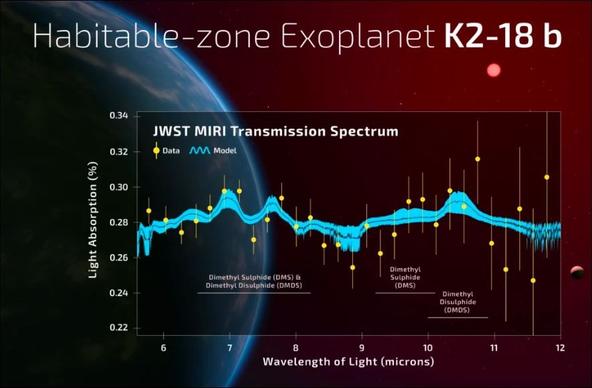
 James Bean
 🌎 Experiencia interdimensional
 Ansgar Schmidt
 Raimondas Lapinskas