
Preparing for New Web Accessibility Requirements -W American Libraries Magazine

Preparing for New Web Accessibility Requirements

Small steps can produce significant improvements

By Carli Spina and Rebecca Albrecht Oling | December 17, 2025

Getting started with web accessibility improvements can feel over­whelming. The ultimate goal should be a website that maximizes accessibility and considers inclusive access in all decisions. But even incremental improvements have real benefits.

A good approach is to look at the most high-impact changes you can make early in the process to improve accessi­bility for users, even if the entire site is not fully accessible. The following sections outline several changes that can have a significant impact without requiring the wholesale redesign of a website.

Structural elements

Structuring digital content clearly can improve accessibility, usability, and readability. While almost all HTML tags contribute to the structure of a page, heading tags are the key.

In April 2024, the US Department of Justice released a final rule revising Title II of the Americans with Disabilities Act,which will now require websites of public entities to comply with Web Content Accessibility Guidelines (WCAG) 2.1, Level AA digital accessibility standards. Public entities with populations of more than 50,000 people must comply by April 2026. Those with populations of fewer than 50,000 people will have until April 2027.

This article, excerpted from The Digital Accessibility Handbook for Libraries (ALA Editions, 2025), provides an overview of initial steps libraries can take to improve their website accessibility.

Heading tags range from level one, which represents the highest-level content, to level six, which represents the lowest level of content. In many content management systems, each level is assigned a different style, such as a different font, text size, or color, which tempts web designers to use these headings aesthetically rather than to reflect the relative structure of the content. But this practice can be confusing for users of assistive technologies.

This is because many assistive technologies enable users to approximate the experience of skimming a page by skipping from heading to heading to first understand an outline of the information before selecting the section relevant to their needs. Without clear and concise headings that allow users to understand the information contained in each section of the page, screen-reader users have limited options beyond having the entire page read to them, in order, from start to finish, which can significantly slow their navigation.

Readability

Creating easy-to-read content using plain language improves both accessibility and usability. A few useful guidelines:

  • Organize content logically, using headings and lists as appropriate, and structuring information from more general to more specific.
  • Use common words and avoid jargon, abbreviations, and other specialized or complicated language.
  • Keep content concise.
  • Use the active voice and present tense wherever possible.
  • Evaluate all text for readability, including reading level, font selection, font size, color contrast with the background, and white space on the page.
  • Know your audience and write with that audience in mind.

Alt text

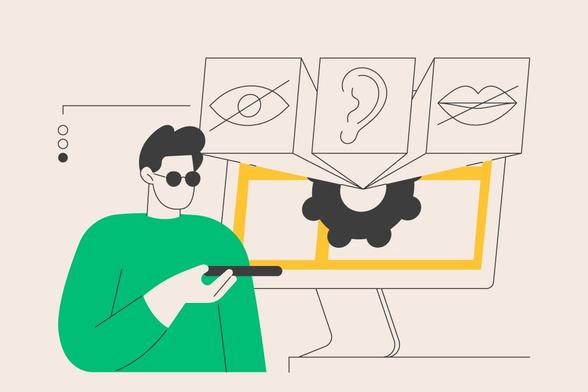
To make photos, graphics, and other static visual content and images accessible to those using screen readers or other assistive technologies, most visual items need alternative text—often abbreviated as alt text—included as part of the HTML image tag. Alt text is a concise description of an image used to convey the nature and content of that image. When a screen reader encounters alt text, it reads the text aloud, enabling the user to understand the content of the image.

Alt text must convey the information that the visual item is providing to users. It should also be as brief as possible, which causes a clear tension. One useful technique is to cut out extraneous words. For example, it isn’t necessary to start alt text with “Picture of” or similar text.

Another approach: Focus on the purpose for which the item is being shared. For instance, the painting Self-Portrait with a Straw Hat by Vincent van Gogh might be presented as a depiction of Van Gogh’s appearance, to demonstrate his use of color, or to show other technical elements of his approach to painting. For each of these uses, the image could have different alt text that empha­sizes those specific elements, rather than attempting to describe all aspects of the piece equally.

Thanks to Library Link of the Day
http://www.tk421.net/librarylink/  (archive, rss, subscribe options) for the article.

Continue/Read Original Article Here: Preparing for New Web Accessibility Requirements | American Libraries Magazine

#Accessibility #Adams #AltText #AmericanDisabilityActADA #AmericanLibraries #AmericanLibrariesMagazine #April2026 #LibraryLinkOfTheDay #NewWebAccessibilityRequirements #Readability #StructuralElements #WebAccess
How artificial intelligence is reshaping college for students and professors – YouTube

How artificial intelligence is reshaping college for students and professors

Fundraiser

https://www.youtube.com/watch?v=rbCQKODKv1o

https://www.youtube.com/watch?v=rbCQKODKv1o
How artificial intelligence is reshaping college for students and professors [PBS NewsHour]
Source: Library Link of the Day, http://www.tk421.net/librarylink/  (archive, rss, subscribe options)

PBS NewsHour, 5.06M subscribers, PBS is an American public broadcast service. Wikipedia

672,728 views Nov 25, 2025
This year’s senior class is the first to have spent nearly its entire college career in the age of generative AI, a type of artificial intelligence that can create new content, like text and images. As the technology improves, it’s harder to distinguish from human work, and it’s shaking academia to its core. Special correspondent Fred de Sam Lazaro reports for our series, Rethinking College.

Watch PBS News for daily, breaking and live news, plus special coverage. We are home to PBS News Hour, ranked the most credible and objective TV news show.

Stream your PBS favorites with the PBS app: https://to.pbs.org/2Jb8twG
Find more from PBS NewsHour at https://www.pbs.org/newshour
Subscribe to our YouTube channel: https://bit.ly/2HfsCD6

Follow us:
TikTok: / pbsnews
X (formerly Twitter): / newshour
Instagram: / newshour
Facebook: http://www.pbs.org/newshour

Subscribe:
PBS NewsHour podcasts: https://www.pbs.org/newshour/podcasts
Newsletters: https://www.pbs.org/newshour/subscribe

Source: https://www.youtube.com/watch?v=rbCQKODKv1o

#AI #artificialIntelligence #College #Education #HigherEducation #LibraryLinkOfTheDay #Newsletters #November2025 #PBS #Podcasts #Professors #Reshaping #Students #YouTube

Inside the old church where one trillion webpages are stored – CNN Business

Inside the old church where one trillion webpages are being saved

By Hadas Gold, Updated 23 hr ago

See inside the old San Francisco church that houses nearly all of the internet’s history…

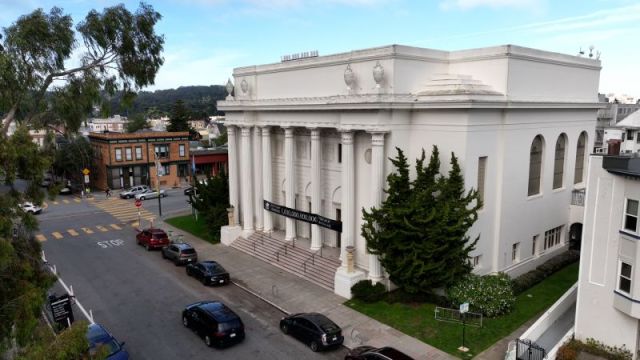
San Francisco  —  Just blocks from the Presidio of San Francisco, the national park at the base of the Golden Gate Bridge, stands a gleaming white building, its façade adorned with eight striking gothic columns.

But what was once the home of a Christian Scientist church, is now the holy grail of Internet history — the Internet Archive, a non-profit library run by a group of software engineers and librarians, who for nearly 30 years have been saving the web one page at a time.

Inside the stained-glass-adorned sanctuary, the sounds of church sermons have been replaced by the hum of servers, where the Internet Archive’s Wayback Machine preserves web pages.

The Wayback Machine, a tool used by millions every day, has proven critical for academics and journalists searching for historical information on what corporations, people and governments have published online in the past, long after their websites have been updated or changed.

For many, the Wayback Machine is like a living history of the internet, and it just logged its trillionth page last month.

Archiving the web is more important and more challenging than ever before. The White House in January ordered vast amounts of government webpages to be taken down. Meanwhile, artificial intelligence is blurring the line between what’s real and what’s artificially generated — in some ways replacing the need to visit websites entirely. And more of the internet is now hidden behind paywalls or tucked in conversations with AI chatbots.

It’s the Internet Archive’s job to figure out how to preserve it all.

The Internet Archive also preserves music, television, newspapers, videogames and books, which archivists digitize page by page using bespoke machines. CNN

“We are here to try to provide a record of what happened, so that people can learn and build on that to build a better future, or to build new ideas that are worthy of being in the (Internet Archive’s) library,” said Internet Archive founder Brewster Kahle.

The internet’s library

Kahle created the archive in 1996 when a year’s worth of saved pages could fit on about 2 terabytes worth of hard drives, the amount of storage you can get today in an iPhone. Now, the archive is saving closer to 150 terabytes, or hundreds of millions worth of web pages, per day.

Kahle is the driving force and personality behind the archive, with the exuberance and energy of your favorite science teacher and like an evangelist whose religion is libraries and technology. Sitting for an interview on the original wooden pews of the church, Kahle said he was inspired to purchase the building because it resembles the group’s logo. But more importantly, he said it’s a symbol of permanence and a reference to the Library of Alexandria in Egypt.

“That was the first time somebody tried to go and collect everything ever written by humans,” Kahle said. “Of course, now that place is the internet, and the Internet Archive serves the whole internet as a library.”

Brewster Kahle created the archive in 1996 when a year’s worth of saved pages could fit on about 2 terabytes worth of hard drives, the amount of storage you can get today in an iPhone. CNN

The Wayback Machine tool does more than just screenshot the page. It also saves the technical architecture — the HTML, CSS, JavaScript codes and more — so that it can attempt to “replay the page as it existed” even if the server is no longer functioning, said Wayback Machine Director Mark Graham.

The rise of artificial intelligence and AI chatbots means the Internet Archive is changing how it records the history of the internet. In addition to web pages, the Internet Archive now captures AI-generated content, like ChatGPT answers and those summaries that appear at the top of Google search results.

 Referred by: Library Link of the Day
http://www.tk421.net/librarylink/  (archive, rss, subscribe options)

Continue/Read Original Article Here: Inside the old church where one trillion webpages are stored | CNN Business

Tags: Archivists, Bespoke Machines, Brewster Kahle, CNN, CNN Business, Digitize Content, Hadas Gold, Holy Grail, Internet Archive, Library Link of the Day, Old Church, Preservation, Presidio of San Francisco, San Francisco, The Internet's Library, Wayback Machine
#Archivists #BespokeMachines #BrewsterKahle #CNN #CNNBusiness #DigitizeContent #HadasGold #HolyGrail #InternetArchive #LibraryLinkOfTheDay #OldChurch #Preservation #PresidioOfSanFrancisco #SanFrancisco #TheInternetSLibrary #WaybackMachine