 Kevin C. Nolan, Ph.D.
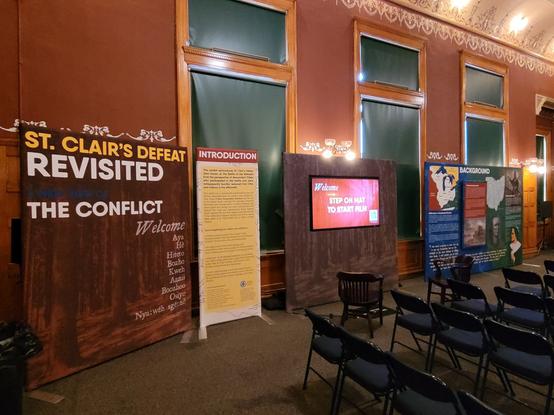
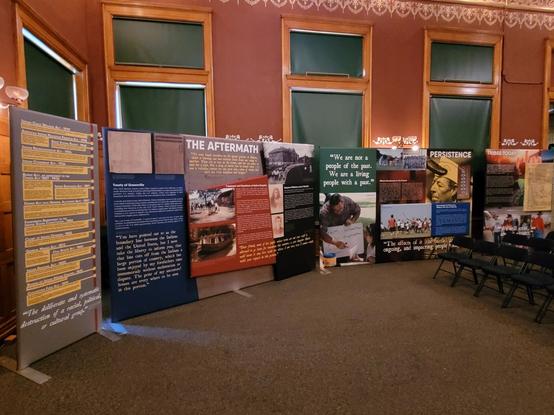
This is your 2nd last Saturday to see St. Clair's Defeat Revisited #travelingexhibit at the @fwhistorycenter. I am here recruiting visitors. #nativeamericanhistory #NEHFunded #archaeology #LearnWorkDiscover https://bit.ly/StClairsDefeatRevisited


The Central Ohio Archaeological Digitization Survey (COADS) documented large samples of prehistoric artifacts, notably points, held by private collectors in south-central Ohio, USA. COADS captured two-dimensional images of over 10,000 points and several hundred three-dimensional images. Many were processed for landmark-based geometric morphometric (LGM) analysis using two standard protocols, for entire points and for stems only. This case study tests for resharpening allometry—the possibility that preferential resharpening of blades caused change in shape with change in size of points—and related LGM concepts of modularity and integration. It justifies allometric tests as logical preconditions to typological and other studies of original design. To date, most LGM studies of this nature in North America involve Paleoindian fluted points. We test for allometry in COADS Kirk points, an Archaic type, using LGM and complementary reduction measures. MorphoJ and limited gmshiny analysis suggest a strong allometric signal with fairly high modularity; blade shape much more than stem shape varies with size, corroborated by independent measures. Separate analysis of stems alone indicates no allometry, as expected since stems vary little in resharpening. Allometry must be considered before attributing variation in whole-object shape to adaptation, drift, or other mechanisms.